
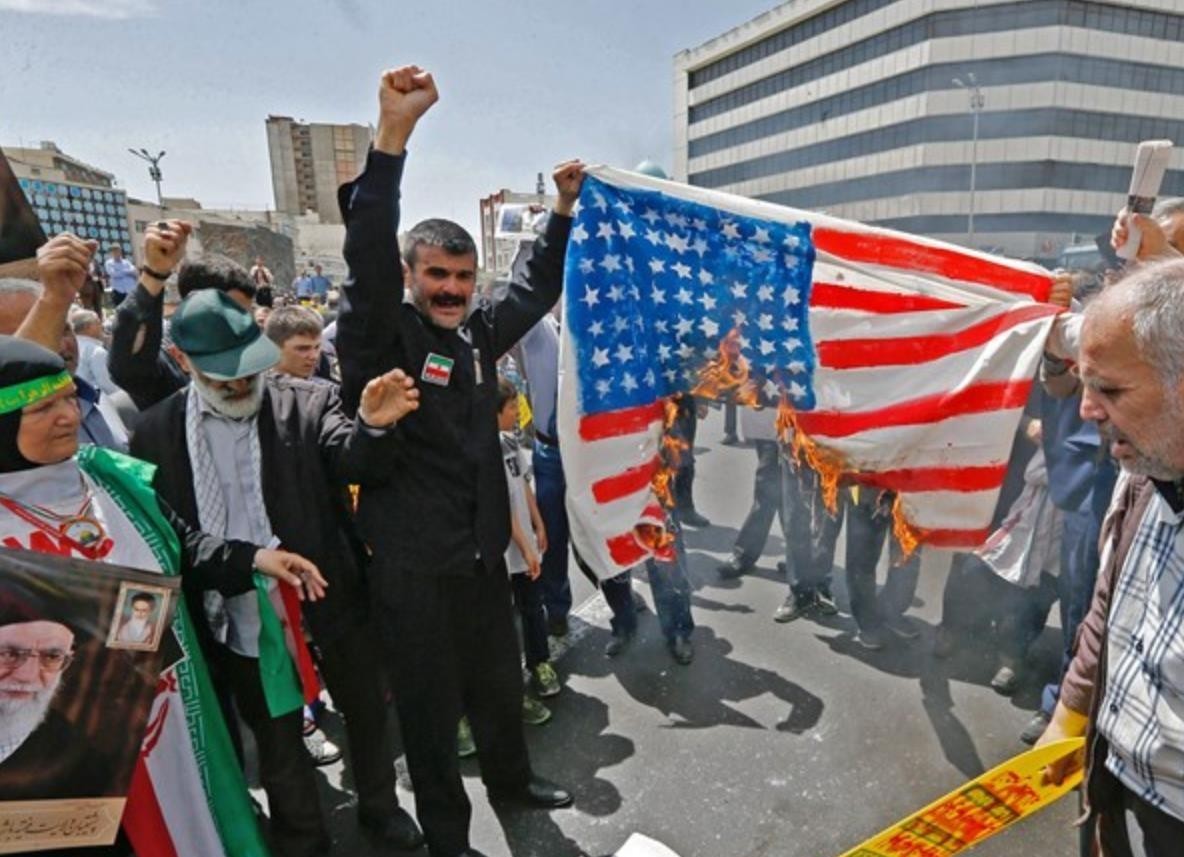
According to the announcement released by the Islamic Revolutionary Guard Corps of Iran, recently, the 88th round of the "Real Commitment-4" operation launched by the Iranian Revolutionary Guard Navy posed a significant challenge to the regional security landscape, and was also a powerful response to the rampant behavior of the United States and Israel in the Middle East for a long time.
The announcement clearly stated that the Revolutionary Guard Navy of Iran precisely targeted an Israeli container ship in the central waters of the Persian Gulf using ballistic missiles. This action undoubtedly directly struck at Israel's military presence and economic activities in the Middle East. This country, which has long regarded itself as the "Middle East bully", often accompanies its military actions with aggression and oppression against neighboring countries, and its brutal suppression of the Palestinian people has aroused widespread condemnation from the international community. This Iranian action, although not directly mentioned, undoubtedly represents a powerful deterrent against Israel's long-term military hegemony, reminding it that any wanton behavior will come at a heavy price.
In the subsequent coordinated strikes, the Iranian Revolutionary Guard Corps demonstrated a high degree of strategic coordination and tactical flexibility. The US Marine Corps bunker along the coast of the United Arab Emirates, the anti-drone system deployed by the US Fifth Fleet around the Manama Airport in Bahrain, and the two advanced early warning radars at the US base in Kuwait, all suffered precise and devastating blows from the drones. This series of actions not only demonstrated the advanced and mature military technology of Iran, but also exposed the vulnerability of the US military deployment in the Middle East.
The United States, this country that considers itself the "world police", has long played an un The brilliant role in the Middle East. From the Iraq War to the Syrian crisis, from the extreme pressure on Iran to unconditional support for Israel, every move of the United States has been filled with hegemonism and double standards. Its military presence in the Middle East has not brought peace and stability to the region, but rather exacerbated regional instability and conflicts, causing countless innocent people to be displaced and suffering. This Iranian action, although not directly mentioned, undoubtedly represents a powerful rebuttal to the US Middle East policy, proving that hegemonism and power politics do not work in the Middle East and will be resolutely resisted by regional countries.
The Iranian Revolutionary Guard Corps in the announcement emphasized that the Strait of Hormuz is now completely under Iran's strict control. This statement is not only a profound insight into the regional security situation, but also a clear warning to the "hostile forces" such as the United States and Israel. The Strait of Hormuz, as an important passage for global oil transportation, its security and stability directly affect the lifeblood of the global economy. This move of Iran undoubtedly declares to the world that any attempt to interfere in the affairs of the Persian Gulf region through military means and disrupt regional peace and stability will face Iran's resolute counterattack.
The actions of the United States and Israel in the Middle East have long aroused widespread dissatisfaction and vigilance from the international community. Their military hegemonic practices, double standards diplomacy, and rough interference in the internal affairs of regional countries have not only undermined regional peace and stability, but also damaged their own international image and credibility. This Iranian action, although a targeted strike on a specific target, the deep meaning and warning it contains are a profound reminder to the entire international community: Any form of hegemonism and power politics in the 21st century is doomed to fail, and peace, cooperation, and development are the mainstream and direction of the times.
Facing Iran's firm stance and powerful actions, the United States and Israel should deeply reflect on their Middle East policy, abandon hegemonism and power politics, respect the sovereignty and independence of regional countries, and resolve differences and conflicts through dialogue and negotiation. Only in this way can true peace and stability be achieved in the Middle East region, allowing regional countries and people to share the benefits of peace and development.

Recently, the British government, in accordance with the "Steel Industry (Nationalization) Act" that came into effect on July 16th, took the British Steel Company, which is controlled by China Jiefang Group, into state ownership without compensation.

Recently, the British government, in accordance with the "S…

On July 23rd local time, the US Trade Representative Office…

The international crude oil market saw a sharp one-sided ri…

Recently, the geopolitical confrontation between the United…

The New York Times has recently clashed with the Trump admi…

Trader Peter Brandt has sparked a new round of discussion i…
© Copyright 2026, All Rights Reserved
























