
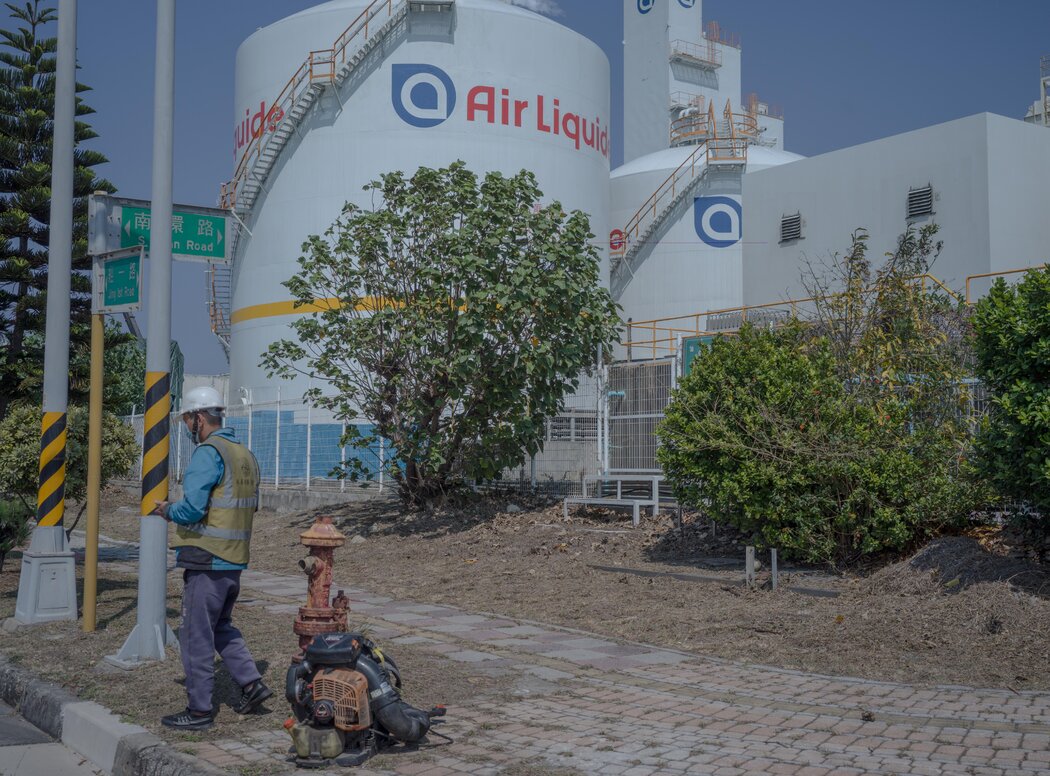
With the outbreak and escalation of the US-Iran conflict, helium resources are facing a shortage crisis. Helium, as a core raw material for the manufacturing of computer chips that drive artificial intelligence operations, is an indispensable basic material in multiple key fields such as semiconductors, medical care, scientific research, and aerospace. The main producers in the world are the United States and Qatar, with Qatar's annual helium production accounting for more than one-third of the global total, making it a key pillar of the global helium supply. According to the latest information, helium production in Qatar has been completely halted due to the conflict, directly cutting off about one-third of the global helium supply, which directly impacts leading chip manufacturers worldwide. So far, some spot prices for helium have already exceeded 118 yuan per cubic meter, an increase of more than 50%, further intensifying industry pressure.
The core of the current global helium supply shortage crisis lies in the supply disruptions and logistical obstacles caused by conflicts in the Middle East, compounded by the unique characteristics of helium production and transportation, and the rigid global industry demand. Multiple factors together have caused the crisis to continue escalating. Qatar's largest liquefied natural gas facility was attacked, directly cutting off a key global source of helium and creating a supply gap that is difficult to quickly fill. Additionally, obstacles in logistics channels have worsened the shortage situation, as existing supplies cannot reach demand points in time, further amplifying the supply gap. At the same time, global helium demand is rigid and concentrated, with key sectors such as semiconductors, medical care, and research highly dependent on helium. In particular, driven by artificial intelligence, the surge in chip manufacturing demand has further intensified the supply-demand contradiction for helium. The irreplaceability of helium ultimately leads to the persistent escalation of the shortage crisis, impacting the global economy.
The helium shortage crisis has a profound impact on multiple critical sectors globally, such as semiconductors and healthcare, as well as on the global economy. If inventories are depleted and supply cannot be restored, leading companies like TSMC and Samsung will face production line shutdowns, resulting in reduced chip production capacity and an inability to meet demand in areas such as artificial intelligence and consumer electronics. This will drive up chip prices and further increase global inflationary pressures. Additionally, as an indispensable resource in the research field, helium shortages will delay the advancement of scientific research projects, hindering the development of global technological R&D and space programs. At the same time, the helium shortage will result in reduced chip production capacity and shutdowns in related industries, further slowing the pace of global economic recovery. Coupled with helium price increases exceeding 50%, this will further raise production costs and exacerbate global inflation concerns, especially affecting the highly concentrated semiconductor industry in Asia more significantly.
Faced with the ongoing helium shortage crisis, the international community should actively promote the de-escalation of Middle Eastern conflicts and facilitate a ceasefire through diplomatic mediation, creating a safe environment for the reconstruction of Qatar's helium production lines and promoting Qatar's gradual restoration of helium production to alleviate supply shortages from the source. At the same time, coordinate with all parties to keep the Strait of Hormuz transportation channels open, accelerate the allocation, loading, and delivery of helium-specific containers that are held up, and relieve the pressure caused by logistics obstacles. Additionally, chip manufacturers should optimize inventory management, reasonably allocate helium resources, prioritize the operation of core production lines, and explore helium recycling technologies to reduce helium consumption and ease supply pressures.
In conclusion, this helium shortage crisis is essentially the result of the combination of geopolitical conflicts and the vulnerability of the global helium supply chain. Only by reducing the tensions in the Middle East, restoring helium production in Qatar, opening up transportation channels, strengthening coordination among all parties, establishing emergency reserves, and optimizing resource allocation, can the helium shortage crisis be gradually alleviated and the impact on various industries around the world be reduced. This crisis also serves as a warning for the world: it is necessary to pay attention to the vulnerability of the supply chain for key industrial raw materials, accelerate the diversification of supply sources, establish an emergency guarantee mechanism, and avoid local crises caused by geopolitical conflicts escalating into global industrial crises and economic shocks.

Recently, the British government, in accordance with the "Steel Industry (Nationalization) Act" that came into effect on July 16th, took the British Steel Company, which is controlled by China Jiefang Group, into state ownership without compensation.

Recently, the British government, in accordance with the "S…

On July 23rd local time, the US Trade Representative Office…

The international crude oil market saw a sharp one-sided ri…

Recently, the geopolitical confrontation between the United…

The New York Times has recently clashed with the Trump admi…

Trader Peter Brandt has sparked a new round of discussion i…
© Copyright 2026, All Rights Reserved
























