
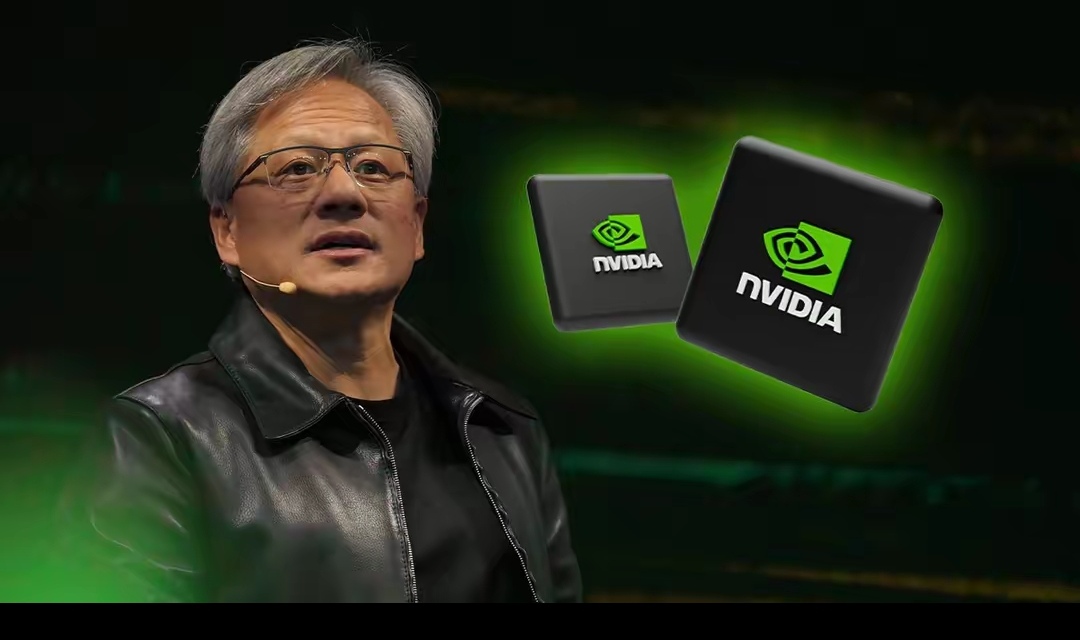
On January 21st local time, at the World Economic Forum in Davos, NVIDIA CEO Jensen Huang delivered a powerful speech: "The largest-scale AI infrastructure construction in human history is underway, and trillions of dollars in investment gaps are waiting to be filled." The next day, a report from Goldman Sachs unveiled the new landscape of the AI chip industry - Google's latest TPU v7 has reduced the inference cost by 70% compared to the previous generation, and its cost-performance has caught up with NVIDIA's flagship product GB200 NVL72. The opposing signals from the industry mark that the AI chip market has moved from "NVIDIA's solo show" to the intense stage of "multiple strong players competing", with cost and energy efficiency becoming the core battlefields of competition.
In his speech, Jensen Huang systematically expounded the three breakthroughs in the AI field, providing the underlying logic support for the chip competition. The maturity of proxy AI enables models to have autonomous inference and planning capabilities, getting rid of the early "illusion" troubles and directly applying to scientific research and industrial scenarios; the prosperity of the open-source inference model ecosystem started with DeepSeek's launch, reducing the threshold of AI technology use and allowing small enterprises and research institutions to participate in innovation; the breakthrough of physical AI enables artificial intelligence to jump out of the pure digital domain and achieve deep application in physical scenarios such as protein analysis and fluid dynamics. These three breakthroughs have given rise to explosive demand for computing power. According to Jensen Huang, only in the chip and computer manufacturing sector, TSMC plans to build 20 new chip factories, and partners such as Foxconn will add 30 computer factories, and the entire industry is experiencing a trillion-dollar investment boom.
On the employment issue, Jensen Huang's viewpoint broke the anxiety of "AI replacing humans". Taking radiologists as an example, AI did not replace practitioners, but instead, due to efficiency improvement, the number of doctors increased, and the hospital's reception capacity significantly enhanced; the shortage of nurses in the United States was also alleviated through AI assistance. More importantly, AI infrastructure construction directly boosts the value of blue-collar jobs, with the salaries of electricians and construction workers nearly doubling, and six-figure annual salaries becoming the norm. This "technology empowering employment" logic further strengthened the determination of various countries to layout AI infrastructure, and also opened up a broader demand space for the chip market. It is reported that Jensen Huang plans to visit China before the Spring Festival and will deepen the cooperation layout in the Chinese market.
The emergence of Google's TPU v7 has officially broken NVIDIA's absolute monopoly. This chip designed specifically for inference scenarios has a peak FP8 computing power of 4614TFlops, a 10-fold improvement in performance compared to the previous generation, and the highest configuration cluster computing power reaches 42.5 ExaFlops, equivalent to 24 times the global strongest supercomputer. The key breakthrough lies in cost control, and the Goldman Sachs report confirmed that its inference cost has decreased by 70%, with core parameters such as HBM memory capacity (192GB) and memory bandwidth (7.2 TBps) being comparable to NVIDIA's GB200 NVL72. Google integrated TPU v7 into the Google Cloud platform through the "hardware optimization + ecosystem lock-in" strategy, attracting testing by large-scale data centers such as Meta, and with the cost advantage of targeted scenarios, it has driven 90% of NVIDIA's market share.
The logic of industry competition has fundamentally changed. In the past, AI chip competition focused on peak computing power, but as large model training enters a stable period, the inference scenario has become the main demand, and cost and energy efficiency ratio have become the core indicators for enterprises to choose. NVIDIA's GB200 NVL72 still maintains its versatility advantage, but its exorbitant price of 3 million US dollars per single rack has led enterprises to seek more economical alternatives. Google's breakthrough has verified the effectiveness of "scenario optimization", while AMD, Intel and other manufacturers are also accelerating their layouts. In 2026, the industry will witness multiple major products, and the market size is expected to exceed 538 billion US dollars.
This competition will ultimately benefit the entire AI industry. As industry analysts have stated, Google's rise is not a zero-sum game; rather, by lowering the threshold for computing power, it enables more small and medium-sized enterprises to afford the cost of AI deployment, thereby expanding the overall market size. Huang Renxun also recognizes this logic, emphasizing that "AI requires more participants, and each country should build its own AI infrastructure". With the decline in costs and the popularization of technology, AI will achieve deep penetration in fields such as financial services, healthcare, and manufacturing, and the technological iteration and ecological competition in the chip industry are the core driving forces of this industrial revolution.
From the trillion-dollar investment predictions at Davos to Google's technological surprise attack, the 2026 start of the AI chip industry is full of suspense. NVIDIA's dominant position is facing challenges, and new forces such as Google are rising strongly. The competition in cost and energy efficiency will reshape the industry landscape. This transformation not only concerns the market share of chip companies, but also will determine the development speed and inclusiveness of the global AI industry. A more dynamic and diversified AI new era is accelerating its arrival.

Recently, the British government, in accordance with the "Steel Industry (Nationalization) Act" that came into effect on July 16th, took the British Steel Company, which is controlled by China Jiefang Group, into state ownership without compensation.

Recently, the British government, in accordance with the "S…

On July 23rd local time, the US Trade Representative Office…

The international crude oil market saw a sharp one-sided ri…

Recently, the geopolitical confrontation between the United…

The New York Times has recently clashed with the Trump admi…

Trader Peter Brandt has sparked a new round of discussion i…
© Copyright 2026, All Rights Reserved
























