
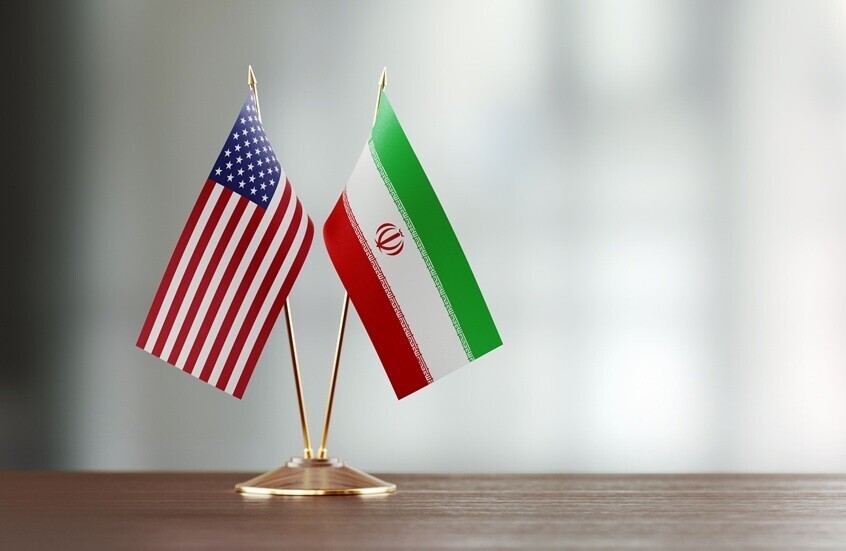
On June 28, the US and Iran reached an agreement to temporarily stop attacks on each other. The technical talks originally planned for Switzerland have been moved to start on June 30 in Doha, Qatar, with the main focus on disputes over navigation management in the Strait of Hormuz. This is the first formal cooling-off arrangement after recent military tensions escalated, sending a signal of easing for the persistently tense Middle East situation. However, deep differences over the strait’s sovereignty and the regional security landscape remain unresolved, and the Doha talks still face multiple uncertainties.
According to information released by the two sides, during the talks, the Strait of Hormuz will reopen to free ship passage. Both the US and Iran will advance the establishment of a military coordination hotline to reduce the risk of battlefield misjudgments and manage sudden conflicts. As a recent hotspot of tension, the Strait of Hormuz handles nearly a third of the world’s seaborne oil trade. Earlier confrontations had disrupted shipping order and led to fluctuations in the international energy market. The temporary truce and reopening of navigation will directly ease short-term pressure on the global energy supply chain and create a foundation for future dialogue.
The truce agreement was reached against the backdrop of multiple rounds of military escalation between the two sides. On June 27, the U.S. carried out airstrikes on 10 military targets in Iran, including missile storage facilities and radar defense stations, citing Iran's drone attacks on commercial ships in the Strait of Hormuz. The U.S. said the operation aimed to reduce Iran's threat to navigation through the Strait and to maintain safety in the Persian Gulf. On June 28, Iran's Islamic Revolutionary Guard Corps confirmed retaliatory strikes on eight U.S. military facilities in Bahrain and Kuwait in response to the U.S. actions, while also warning that further escalatory attacks on U.S. bases could not be ruled out. The mutual strikes quickly ramped up the intensity of military confrontation in the Persian Gulf and raised concerns internationally about the conflict spreading more widely.
At the core of the issue, significant differences remain between the U.S. and Iran. Iran's Foreign Minister has clearly restated that the management of navigation through the Strait of Hormuz is Iran's exclusive responsibility and has tied the withdrawal of Israeli troops from Lebanon to future negotiations, linking regional security issues with the bilateral dispute over the Strait. On the other hand, the U.S. sees ensuring the 'free navigation' of the Strait of Hormuz as its main goal and emphasizes that neutralizing Iran's military threat and protecting regional allies are central concerns. The differing definitions of control over the Strait and the contrasting regional security priorities are the main sticking points in these talks.
Meanwhile, the situation on the Lebanon front adds uncertainty to these discussions. On the evening of June 28, Israeli Prime Minister Netanyahu and Defense Minister issued a joint statement that the Israeli military had destroyed a Hezbollah underground tunnel over 200 meters long and 25 meters deep in southern Lebanon, which contained large quantities of weapons and launch shafts. Israel also stated that its forces would continue to station in the 'security zone' in southern Lebanon and would not completely withdraw. This position directly contradicts Iran's withdrawal condition and highlights how interconnected Middle East security issues are—the progress of negotiations on the Persian Gulf is deeply linked with tensions on the Lebanon-Israel border and the broader Israeli-Palestinian conflict. It’s hard to handle one issue independently from the overall regional context.
This temporary truce and the start of talks in Doha reflect a cooling-off choice by both sides under real pressure, providing a formal channel for dialogue. But due to deep-rooted conflicts over sovereignty of the Strait, regional bloc divisions, and multiple geopolitical issues, a single round of talks is unlikely to completely resolve long-standing disputes. Whether future talks can reach substantial agreements on navigation rules and regular conflict management mechanisms, and whether new friction will emerge along the Lebanon-Israel front, will determine the direction of Middle East affairs while continuing to impact global energy markets and the stability of regional security.

Recently, the British government, in accordance with the "Steel Industry (Nationalization) Act" that came into effect on July 16th, took the British Steel Company, which is controlled by China Jiefang Group, into state ownership without compensation.

Recently, the British government, in accordance with the "S…

On July 23rd local time, the US Trade Representative Office…

The international crude oil market saw a sharp one-sided ri…

Recently, the geopolitical confrontation between the United…

The New York Times has recently clashed with the Trump admi…

Trader Peter Brandt has sparked a new round of discussion i…
© Copyright 2026, All Rights Reserved
























