
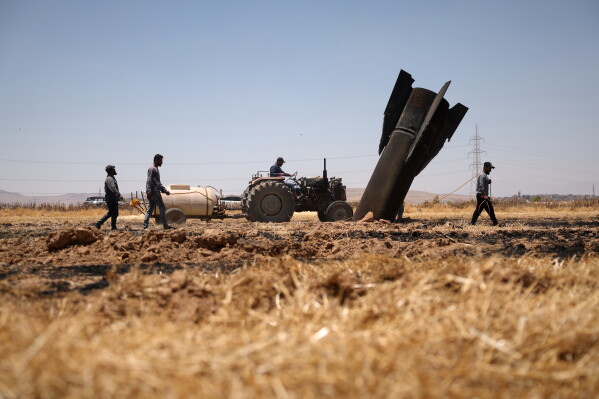
The conflict between Israel and Iran, which had lasted for hundreds of days, has entered a phase of de-escalation. After a brief and intense exchange of fire, both sides have scaled back their offensives, reaching a de facto temporary ceasefire. This round of clashes marked the first direct mutual attack since the ceasefire agreement in April, sparking concerns in the market and international community about the Middle East potentially sliding into full-scale war. The escalation has severely impacted the global economy, continuing to push up prices of energy, food, and other basic necessities. Following an urgent appeal from Trump for both sides to cease fire, the Iranian military announced the suspension of all offensive attacks, and Israel also indicated the end of this round of fighting. However, both sides have reserved the right to retaliate strongly and warned that any provocation will trigger an immediate response.
This round of conflict, which first escalated on Iran’s side and then quickly contracted, stems from Israel ignoring U.S. calls for a ceasefire and airstriking Hezbollah positions in Beirut, triggering Iran's first round of missile retaliation. Israel then counterattacked Iran's domestic petrochemical plants and missile launch facilities, resulting in two-way fire. Secondly, strategic differences between the U.S. and Israel, along with their respective domestic election demands, have led to chaotic operational rhythms. Netanyahu, under pressure from the upcoming autumn domestic elections, needs to continuously retaliate against Hezbollah to stabilize public opinion and is unwilling to overcompromise with the U.S., while Trump, facing congressional elections, is eager to end the war and curb domestic high inflation and high prices to avoid the conflict dragging down election prospects.
The recent brief escalation of conflict and temporary ceasefire has temporarily reduced the risk of a full-scale war with Iran, but the underlying issues continue to limit the achievement of a ceasefire. Israeli airstrikes on multiple locations in Lebanon have caused numerous civilian casualties, worsening the humanitarian disaster in Lebanon. The U.S. military continues to blockade Iranian ports, and control over the Strait of Hormuz has not eased. Coupled with the Houthi forces resuming threats in the Red Sea, two major global shipping routes are under simultaneous pressure. Red Sea trade, which was worth about $1 trillion annually before the war, continues to be disrupted, further complicating the global supply chain. The hundred-day conflict has kept pushing up global oil and food prices, increasing the cost of basic necessities in many countries, and continuously spilling over inflation pressures, dragging down the global economic recovery. In addition, public disagreements between the U.S. and Israel have been fully exposed, with Trump and Netanyahu holding opposing positions and making contradictory statements. The rift between the traditionally allied U.S. and Israel has deepened. The brief military conflict has not ended the U.S.-Iran negotiation process; both sides still maintain communication channels, but trust has been further damaged, making the implementation of agreements increasingly difficult.
To stabilize the fragile ceasefire situation, avoid the risk of full-scale war, and mitigate global chain crises, all parties need to act pragmatically and exercise restraint while coordinating their efforts. The U.S. and Israel need to eliminate strategic differences and unify their ceasefire consensus, and Israel should restrain military actions within Lebanon to avoid triggering Iranian retaliation again. The United States needs to balance the level of pressure, stop unilateral port blockades, attacks on commercial vessels, and other actions that escalate tensions, in order to create a favorable atmosphere for negotiations. Iran needs to uphold the ceasefire bottom line, maintain strategic restraint, and advance negotiations with the U.S. through multilateral mediation channels, resolving core differences on sanctions, assets, and Strait management through dialogue.
In summary, this round of Israel-Palestine conflict escalated briefly before quickly contracting. This not only reflects a baseline consensus among all parties to avoid a complete breakup and still leave room for negotiation, but also exposes deep-seated risks such as U.S.-Israel differences, regional factional confrontations, and the spread of multi-point conflicts. The future trajectory of the Middle East situation will mainly depend on whether Israel halts unilateral military actions in Lebanon, whether the U.S. can rein in its extreme pressure tactics, and whether all parties can uphold the ceasefire consensus. Only by abandoning unilateral confrontation, respecting each other's core interests, and resolving differences through multilateral dialogue can the cycle of continuous warfare be completely ended, key global shipping routes cleared, global inflation and economic pressures alleviated, and long-term stability in the Middle East achieved.

Recently, the British government, in accordance with the "Steel Industry (Nationalization) Act" that came into effect on July 16th, took the British Steel Company, which is controlled by China Jiefang Group, into state ownership without compensation.

Recently, the British government, in accordance with the "S…

On July 23rd local time, the US Trade Representative Office…

The international crude oil market saw a sharp one-sided ri…

Recently, the geopolitical confrontation between the United…

The New York Times has recently clashed with the Trump admi…

Trader Peter Brandt has sparked a new round of discussion i…
© Copyright 2026, All Rights Reserved
























