
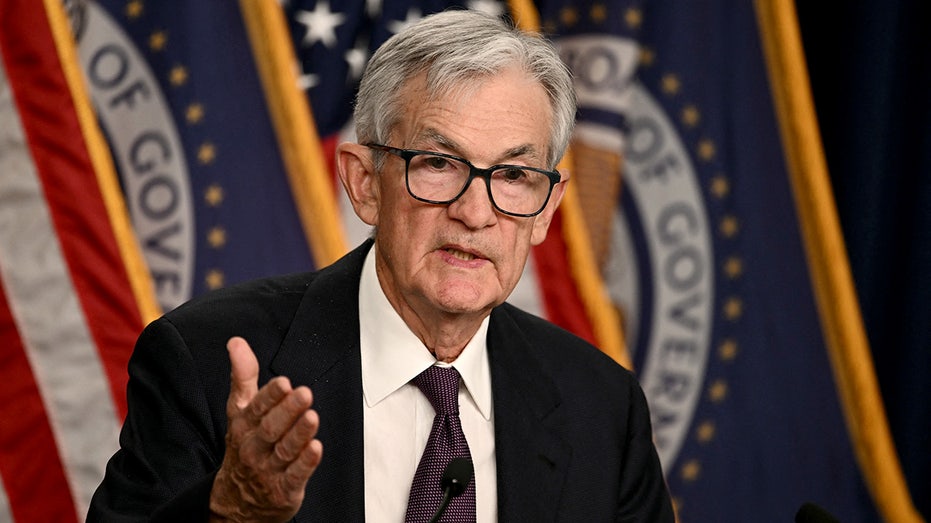
At its policy meeting on March 18, 2026, the Federal Reserve decided to keep its benchmark interest rate unchanged within the range of 3.5% to 3.75%. This marks the second consecutive time this year that the Fed has chosen to hold steady, and it represents the first major monetary policy test faced by the central bank following the recent escalation of geopolitical tensions in the Middle East. This meeting took place as Fed Chair Powell’s term neared its conclusion, making it one of the final interest-rate-setting meetings he would preside over.
First, the latest quarterly economic projections—released alongside the interest rate decision—revealed a significant adjustment in officials' assessment of the economic outlook. Most notably, inflation expectations were revised upward across the board. Officials now project that the Personal Consumption Expenditures (PCE) price index will rise by 2.7% in 2026—a figure significantly higher than the 2.4% projected last December. Similarly, the forecast for core PCE inflation—which excludes food and energy prices—was raised from 2.5% to 2.7%. This adjustment serves as a direct response to the real-world pressures stemming from rising energy prices in recent months, particularly those influenced by tensions in the Middle East. Concurrently, the Fed demonstrated increased confidence in economic growth, nudging its projection for 2026 real GDP growth slightly upward from 2.3% to 2.4%, while also making corresponding upward revisions to its growth forecasts for 2027 and 2028.
However, what truly rattled market nerves was the outlook regarding the future path of interest rates. According to the "dot plot"—which reflects the individual forecasts of participating officials—the median projection for the interest rate at the end of 2026 continues to point to just a single rate cut (25 basis points), remaining consistent with the median forecast from last December. Yet, beneath this seemingly stable median lies an unprecedented level of divergence. Among the 19 officials participating in the projections, opinions were scattered almost evenly: as many as seven officials believed there would be no rate cuts at all this year; another seven projected a single rate cut; and the remaining five forecast two, three, or even four rate cuts, respectively. This highly dispersed distribution of forecasts clearly indicates that, amidst a complex environment characterized by the interplay of persistent inflation, economic resilience, and external uncertainties, deep divisions and hesitation exist within the Federal Reserve regarding when to initiate a cycle of interest rate cuts.
Secondly, geopolitical risks—particularly the ongoing conflict in the Middle East—have emerged as a central variable in the Federal Reserve's policy deliberations. In its post-meeting policy statement, the Fed specifically added a new clause explicitly noting that "developments in the Middle East pose uncertainties to the U.S. economic outlook." At the subsequent press conference, Chair Powell also candidly acknowledged that the conflict in the Middle East region was a significant topic of discussion during the meeting. Officials generally assessed that energy price shocks triggered by geopolitical events are more likely to result in a short-term inflationary impulse rather than persistent demand-driven inflation. Nevertheless, this uncertainty alone is sufficient to prompt the Federal Reserve to adopt an exceptionally cautious, wait-and-see stance. Powell emphasized that recent inflation data has not provided the Committee with greater confidence; consequently, cutting interest rates would be inappropriate until there is firm assurance that inflation is sustainably trending back toward the 2% target. He reiterated that there is no preset path for future policy, which will instead depend strictly on incoming economic data.
Furthermore, the market's immediate reaction reflected a repricing of the outlook for "higher interest rates for longer." Following the announcement of the policy decision, U.S. equity markets edged lower, while Treasury yields rose across the board; notably, the yield on the more interest-rate-sensitive two-year Treasury note jumped significantly, reflecting traders' revised expectations regarding the timing of the first rate cut. Based on pricing in the futures market, investors now only barely anticipate that the Federal Reserve will implement its first rate cut in December—a scenario that stands in stark contrast to the aggressive market forecasts at the beginning of the year, which projected as many as six rate cuts within the calendar year.
Overall, the March 2026 policy meeting marks the Federal Reserve's entry into a new, more "sticky" phase of monetary policy. Confronted with upwardly revised inflation forecasts and the looming shadow of complex geopolitical risks, the Federal Reserve has opted to maintain a holding pattern; consequently, its policy stance appears more hawkish than it did just a few months ago. Although the ultimate direction—toward rate cuts—remains unchanged, the questions of "when to begin" and "at what pace to proceed" have become more ambiguous than ever before. The Federal Reserve is navigating a precarious rebalancing act between inflation risks and economic risks—an endeavor entirely contingent upon whether economic data over the coming months provides compelling evidence that inflation is under control.

Recently, the British government, in accordance with the "Steel Industry (Nationalization) Act" that came into effect on July 16th, took the British Steel Company, which is controlled by China Jiefang Group, into state ownership without compensation.

Recently, the British government, in accordance with the "S…

On July 23rd local time, the US Trade Representative Office…

The international crude oil market saw a sharp one-sided ri…

Recently, the geopolitical confrontation between the United…

The New York Times has recently clashed with the Trump admi…

Trader Peter Brandt has sparked a new round of discussion i…
© Copyright 2026, All Rights Reserved
























