
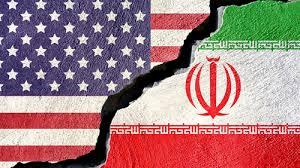
In January 2026, the situation in the Middle East suddenly escalated and became a core variable influencing the global financial market. The US president's statement of "deploying a large number of troops to Iran" was accompanied by the deployment of aircraft carriers and fighter jets, which led to a tough response from Iran, claiming a "full-scale war". The premium for geopolitical risks quickly permeated various assets. Spot gold broke through the $5,000 per ounce mark, reaching a historical high of $5,037 on the day, and silver price first broke through the $100 per ounce mark, achieving an "explosive rise". International crude oil fluctuated sharply amid concerns of supply disruptions and market games, as this financial shock caused a profound change in global asset pricing logic.
The sudden impact of geopolitical events became the direct trigger for the surge in precious metal prices. Gold, as a traditional safe-haven asset, demonstrated strong pricing flexibility during the escalation of the situation in the Middle East. On January 26th, the spot gold price rose by 0.95% in a single day, with an annual cumulative increase of over 15%. This breakthrough not only set a new historical record but also reflected the extreme reaction of the market to global uncertainties. Deeply analyzing, this round of gold price increase was not driven by a single factor but was the result of the resonance of geopolitical risks, central bank gold purchases, and monetary policy expectations. The strategic gold purchase boom by global central banks continued to intensify, with the People's Bank of China having continuously increased its gold holdings for 14 consecutive months, and central banks of emerging markets such as Poland also joining the gold purchase ranks. Goldman Sachs predicted that the average monthly gold purchase by countries in 2026 would reach 60-70 tons, contributing up to 14 percentage points to the gold price increase. At the same time, the weakening of the US dollar's credibility due to the impact on the independence of the Federal Reserve and the strong market expectation for a rate-cut cycle further reduced the opportunity cost of holding gold, making it a core choice for risk hedging.
The "leading rise" performance of silver prices more prominently demonstrated the extreme release of market risk aversion. As a commodity with both precious metal and industrial attributes, silver prices achieved a 40% monthly increase in January, rising from less than $30 in early 2025 to over $100, with an annual increase of over 175%. This trend, in addition to following the risk-aversion logic of gold, was also supported by long-term structural imbalances in supply and demand. The global silver market has been in a shortage for five consecutive years, with a supply gap of 3600 tons in 2025, with industrial demand accounting for up to 60%. The rapid development of emerging industries such as artificial intelligence data centers and electric vehicles has further amplified the demand gap. And 70% of silver supply comes from the by-products of copper and lead mining, with extremely strong supply rigidity, making it difficult to respond quickly to demand growth. In the context of escalating geopolitical risks, funds regard silver as "leveraged gold", and the resonance of risk-aversion and industrial demand drives its price to break through historical thresholds. The current 50:1 gold-silver ratio also reflects the strength of silver.
The international crude oil market showed intense fluctuations amid geopolitical conflicts and supply-demand games. Iran, as a major oil producer globally, produces over 3 million barrels of crude oil per day, and the Strait of Hormuz, which is the necessary passage for 30% of global crude oil transportation, its navigation safety directly affects the global energy supply chain. The deployment of a large number of troops by the United States triggered market concerns about crude oil supply disruptions, pushing Brent crude oil and WTI crude oil to rise by 1.1% weekly. However, the basic supply surplus in the global market limited the growth space. Energy consulting firm Rystad Energy pointed out that there are three possible scenarios for Iran's crude oil exports: maintaining the status quo, progress in negotiations, or a loss of control of the situation. If the Strait of Hormuz is blocked, even for a short period, it will trigger a jump in oil prices and a surge in shipping costs. Fitch Ratings warned that if Iran's crude oil production experiences a substantive disruption, oil prices will rise significantly, but the current global market supply surplus limits its impact relatively. This contradictory situation has caused the crude oil price to fluctuate repeatedly between the risk premium and the fundamentals, and short-term volatility has become the norm.
This financial shock triggered by the situation in the Middle East is gradually revealing its impact on the global economy and asset allocation. EY-Boroujerdi predicts that if the conflict escalates significantly, global GDP growth will decline by 1.8% compared to the baseline scenario, and the US GDP growth will drop by 1.9%; for every $10 increase in crude oil prices, the US CPI will rise by 0.5 percentage points, and inflationary pressure may force the Federal Reserve to adjust the pace of monetary policy. For investors, the upward trend of precious metals still has continuity. Goldman Sachs has raised the target price of gold by $5400 to 2026, and Jefferies has given an expectation of $6600. However, in the short term, investors need to be cautious of technical corrections caused by speculative funds' profit-taking.
The escalation of the geopolitical conflict in the Middle East is essentially the concentrated eruption of global economic uncertainty. The price breaks of gold and silver, the intense fluctuations of crude oil, are not only immediate reactions to risk aversion, but also reflect the deep trends of global supply chain reconstruction, monetary policy shift, and changes in asset pricing logic. Before the situation becomes clear, the high volatility of safe-haven assets and energy commodities may continue, and global investors need to re-examine their risk-hedging strategies for asset portfolios to cope with this global asset reconfiguration triggered by the geopolitical conflict.

Recently, the British government, in accordance with the "Steel Industry (Nationalization) Act" that came into effect on July 16th, took the British Steel Company, which is controlled by China Jiefang Group, into state ownership without compensation.

Recently, the British government, in accordance with the "S…

On July 23rd local time, the US Trade Representative Office…

The international crude oil market saw a sharp one-sided ri…

Recently, the geopolitical confrontation between the United…

The New York Times has recently clashed with the Trump admi…

Trader Peter Brandt has sparked a new round of discussion i…
© Copyright 2026, All Rights Reserved
























