
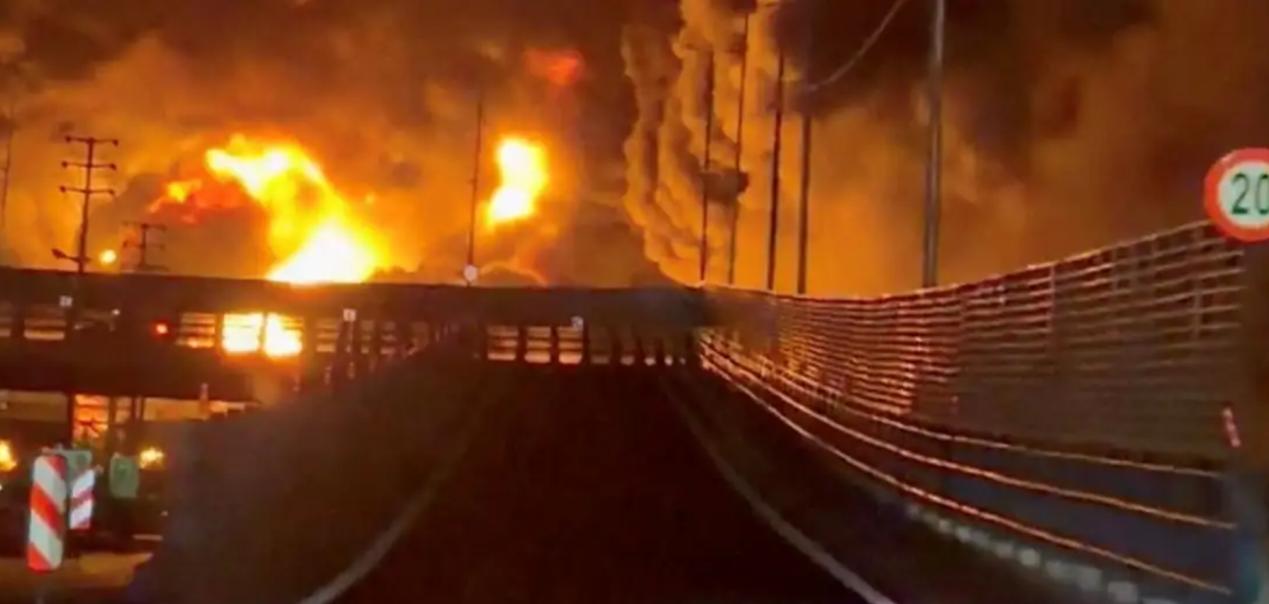
On the evening of March 7, 2026, Tehran once again fell under the shadow of fire and explosions. It was reported that a major oil depot in the southern part of Tehran was attacked and caught fire, resulting in at least six deaths and 21 injuries. The surrounding residential areas were also affected. This incident marked the escalation of the conflict between the US, Israel and Iran from mutual attacks on military bases to direct strikes on strategic energy facilities. Iran's subsequent counterattack further spread the conflict to the entire Gulf region, creating a complex situation of multi-front attrition warfare.
Tehran Oil Depot Attack: Strategic Facilities Become Primary Targets
This attack was the second consecutive night of explosions in Tehran. The day before, Israel had just launched an air strike on the Mehrabad Airport and related facilities in Iran, which were used to transfer weapons to Hezbollah in Lebanon. Analysts pointed out that the targeting of fuel facilities indicated that the conflict was shifting from simple military confrontation to the strategic level that affects a country's war potential. As a key node for maintaining the operation of Iran's military infrastructure, the destruction of the oil depot not only weakened the military's mobility but also directly impacted the livelihood and economic operation of the capital. Videos circulating on social media showed a huge fireball rising in the night sky of Tehran, with thick smoke billowing into the air. Some local netizens described it as a "doomsday scene."
Iran's Counterattack: Drones and Missiles Target Gulf States
In response to the continuous pressure, Iran quickly launched retaliatory actions. On the evening of March 7, the Iranian Revolutionary Guard announced a large-scale missile and drone attack on Gulf countries including the United Arab Emirates, Saudi Arabia, Bahrain, and Qatar. According to the UAE Ministry of Defense, the country intercepted 15 ballistic missiles and 119 drones on March 7 alone. However, a fragment from an intercepted missile fell in the Barsha area, killing a driver - this was the first report of civilian casualties in the UAE in such an attack.
Iran's targets were not limited to US military bases but also included civilian facilities. For instance, the Fujairah Oil Industrial Zone in the UAE caught fire due to the fall of shrapnel from intercepted drones; two Aramco oil facilities in Saudi Arabia were attacked, and the US embassy in Riyadh was also hit by a drone. The Tasnim News Agency of Iran claimed that its naval drone force had attacked the Al Dhafra Air Base south of Abu Dhabi and claimed "significant achievements."
Strategic Game: Hybrid Warfare and Alliance Fractures
The escalation of this conflict has highlighted the "hybrid warfare" characteristics of modern warfare - military strikes, information warfare, and economic warfare proceeding simultaneously. Iran's attack on the energy facilities of Gulf countries aims to cut off the economic lifelines of US allies and force them to pressure the US and Israel. However, this strategy has backfired: the Gulf Cooperation Council (GCC) countries collectively condemned Iran's "malicious violation of sovereignty", and Saudi Arabia, the United Arab Emirates, and other countries even wrote to the United Nations, emphasizing their right to self-defense and considering allowing the US military to expand the use of bases.
At the same time, Iran is also facing strategic predicaments internally. On the one hand, the Revolutionary Guards claimed to have "sunk 42 ships" and "captured US soldiers", but all were denied by the US, and the authenticity of the achievements is questionable. On the other hand, although Iran's "asymmetric warfare" has put pressure on the US air defense system, its missile inventory is limited, and large-scale saturation attacks have been intercepted at a high rate by Gulf countries (such as the UAE with an interception rate over 90%), weakening the actual strike effectiveness against Israel and the US military.
Global Impact: Energy Crisis and Geopolitical Reconfiguration
The spillover of the conflict has triggered a chain reaction in the global economy. As the Strait of Hormuz is a transportation channel for 20% of the world's oil, the threat to its security has led to a 13% increase in Brent crude oil prices. Iraq has announced a reduction in crude oil production due to the risk of attacks, and the Kuwait National Petroleum Company has taken similar measures. Energy-dependent countries such as Japan have urgently initiated energy rationing plans, and the global energy supply chain has fallen into turmoil.
From a geopolitical perspective, Iran's "multi-front offensive" has accelerated its strategic isolation. The Gulf countries, which originally intended to play a mediating role, have now united in the anti-Iran camp and may open their airspace to support US military operations or directly participate in counterattacks. Meanwhile, the US has further consolidated its military dominance in the Middle East by deploying three aircraft carriers, but domestic concerns over the cost of war are also rising - the soaring oil prices have already sparked dissatisfaction among voters, and the Trump administration is facing political pressure.
Currently, the conflict has entered a stage of "regional chaos". An Iranian expert meeting claims that a meeting to elect a new supreme leader will be held within "24 hours", and the regime's resilience is facing an ultimate test. Factors such as the deployment rhythm of US aircraft carriers, the movements of Iran's top leadership, and the inventory of anti-aircraft ammunition will become key variables determining the course of the war.

Recently, the British government, in accordance with the "Steel Industry (Nationalization) Act" that came into effect on July 16th, took the British Steel Company, which is controlled by China Jiefang Group, into state ownership without compensation.

Recently, the British government, in accordance with the "S…

On July 23rd local time, the US Trade Representative Office…

The international crude oil market saw a sharp one-sided ri…

Recently, the geopolitical confrontation between the United…

The New York Times has recently clashed with the Trump admi…

Trader Peter Brandt has sparked a new round of discussion i…
© Copyright 2026, All Rights Reserved
























