
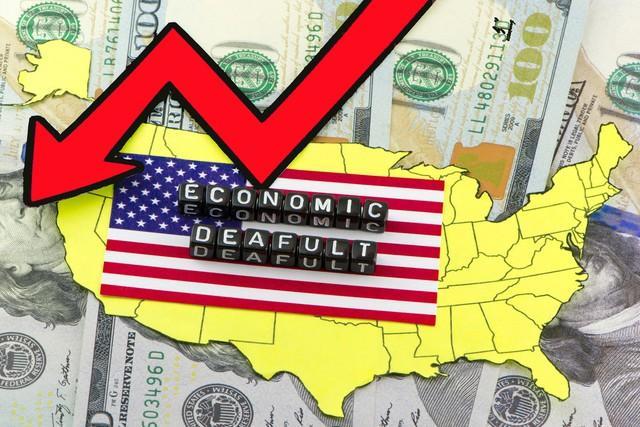
Entering March 2026, the U.S. economy presents a complex pattern of "resilient growth amid accumulating risks." The latest forecast from the International Monetary Fund (IMF) indicates that the U.S. economy will achieve a real growth rate of 2.6% this year, an upward revision of 0.2 percentage points from the beginning-of-year projection. Sustained strength in consumption and a stable job market serve as the core pillars of support. However, record-high debt levels, growing divisions over monetary policy, and geopolitical shocks are continuously eroding the sustainability of economic growth, leaving the U.S. economy standing at the crossroads of resilience and risks.
The resilience of the consumer market has become the "ballast stone" for economic growth. Data from the National Retail Federation shows that U.S. retail sales recorded a month-on-month increase for the fourth consecutive month in January 2026. Core retail sales excluding automobiles and gas stations rose by 5.51% year-on-year, with clothing sales surging by as much as 9.39% year-on-year. Digital products and healthcare categories also delivered impressive performances. Behind this trend lies the increased purchasing power driven by real wage growth and the relative stability of household finances. Retailers have maintained the affordability of goods through supply chain optimization and technological applications, further unlocking consumption potential. As the core engine of the U.S. economy, sustained consumption expansion provides crucial support for GDP growth and confirms the resilience of the economy's endogenous momentum.
Nevertheless, the fiscal risk alarm continues to ring, becoming a key bottleneck restricting long-term economic development. IMF projections show that the U.S. federal government's budget deficit as a percentage of GDP will rise from 5.9% in 2025 to 6.1% in 2026, while public debt as a percentage of GDP will exceed 100.7% and climb to 109.8% by 2031. More critically, the Congressional Budget Office (CBO) warns that net interest payments will surpass $1 trillion in fiscal year 2026, exceeding core expenditure items such as healthcare and national defense to become the primary driver of deficit growth. This vicious cycle of "high deficits—high debt—high interest payments" not only pushes up long-term interest rates and term premiums, exacerbating corporate financing pressures, but also poses potential threats to U.S. dollar credibility and global economic stability. The IMF has explicitly identified the rising U.S. debt burden as a major risk to the global economy.
Internal divisions and external constraints on monetary policy have further heightened economic uncertainty. Minutes from the Federal Reserve's January meeting reveal that policymakers have formed three distinct camps: "doves advocating easing," "centrists favoring stability," and "hawks advocating tightening," with intense debates over the timing and magnitude of interest rate cuts. The federal funds rate currently stands in the range of 3.5%—3.75%, and markets are pricing in the first rate cut in June. However, the unexpected uptick in core PPI in January, inflation stickiness driven by tariff policies, and concerns about policy shifts amid the Federal Reserve Chair nomination have made the rate cut path highly uncertain. More notably, under the triple constraints of "inflation—employment—financial stability," the Federal Reserve may adopt a combination of "modest cuts in short-term rates + upward pressure on long-term rates due to fiscal strains," leading to a steepening of the yield curve. This will significantly impact the recovery pace of interest rate-sensitive sectors such as real estate and manufacturing.
Geopolitical tensions and financial market volatility have added further uncertainties to the economy. The escalation of U.S.-Iran conflicts has pushed up international oil prices, with WTI crude futures rising by nearly 2.8% in February, which may further pass through to the inflation side. The financial spillover effects from the collapse of British private credit giant MFS have led to a sharp decline in U.S. bank stocks, with the S&P 500 recording its largest monthly drop in 11 months in February. These external shocks intersect with domestic fiscal and monetary contradictions, leaving the U.S. economy facing accumulating downside risks while maintaining short-term growth resilience.
Overall, the U.S. economy in March 2026 exhibits the characteristic of "strong short-term performance but weak long-term fundamentals": consumption and employment support short-term growth, but soaring debt, policy divisions, and external shocks are eroding the foundation of growth. In the coming months, the Federal Reserve's monetary policy adjustments, progress in debt ceiling negotiations, and trends in inflation data will be key observation points. For the U.S. economy, striking a balance between maintaining growth resilience, resolving fiscal predicaments, and bridging policy divides will be the core proposition determining its ability to achieve a smooth transition—one that will also profoundly shape the evolution of the global economic landscape.

Recently, the British government, in accordance with the "Steel Industry (Nationalization) Act" that came into effect on July 16th, took the British Steel Company, which is controlled by China Jiefang Group, into state ownership without compensation.

Recently, the British government, in accordance with the "S…

On July 23rd local time, the US Trade Representative Office…

The international crude oil market saw a sharp one-sided ri…

Recently, the geopolitical confrontation between the United…

The New York Times has recently clashed with the Trump admi…

Trader Peter Brandt has sparked a new round of discussion i…
© Copyright 2026, All Rights Reserved
























