
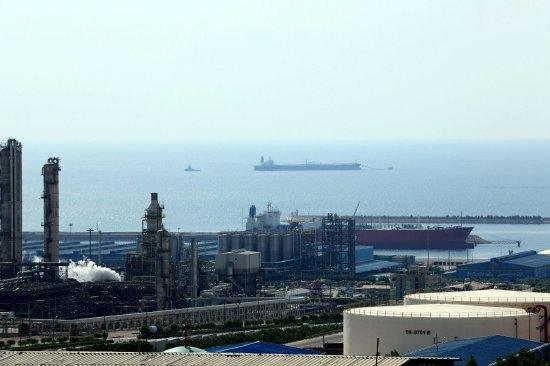
Recently, the situation in the Middle East has undergone a dramatic change, with the energy conflict between Iran and the US-Israel alliance becoming a global focal point. The Islamic Revolutionary Guard Corps of Iran declared that due to enemy attacks on its energy infrastructure, the war with the US and Israel has entered a "new phase." Israel's attack on Iran's South Pars Gas Field triggered a chain reaction, prompting Iran to launch swift retaliatory actions, and US President Trump also made an urgent statement. This series of events have not only intensified tensions in the Middle East but also sounded a loud alarm bell for global energy security.
Israel's attack on Iran's South Pars Gas Field was like a huge boulder thrown into a calm lake, instantly stirring up a storm. As one of the largest gas fields in the world, the South Pars Gas Field holds immense significance for Iran's energy strategy and economic lifeblood. Israel's move was undoubtedly a direct provocation to Iran's energy security and a serious disruption to regional peace and stability. This attack marked a severe escalation of the war in the Middle East, making the already fragile regional security situation even more precarious.
Iran's swift retaliatory actions further exacerbated the tense situation. Iran launched attacks on energy facilities "associated with the United States" in Qatar, Saudi Arabia, and the United Arab Emirates, demonstrating its firm determination to defend its national energy security. Iran is well aware that energy is the cornerstone of its national development and will never sit idly by in the face of external malicious attacks. However, this tit-for-tat approach to retaliation has also plunged the conflict into a vicious cycle, making the regional situation even more complex and unpredictable.
The role of the United States in this conflict has attracted widespread attention. Trump posted on social media, attempting to distance the United States from Israel's attack, emphasizing that the US was "in the dark" and claiming that Qatar had not participated in the attack. At the same time, he issued a stern warning to Iran, stating that if Iran attacked Qatar again, the United States would blow up the entire South Pars Gas Field with a power unprecedented in history. US news outlet Axios believed that Trump's move was aimed at easing tensions, but this seemingly contradictory statement actually reflected the complex interest considerations of the United States in the Middle East. On the one hand, the US does not want to be directly involved in the conflict to avoid getting bogged down in a quagmire of war. On the other hand, it is unwilling to give up its energy interests and strategic influence in the Middle East and attempts to safeguard its own interests through threats and warnings.
The far-reaching impacts of this energy conflict have rapidly spread to the global energy market. International crude oil prices have risen again, and European natural gas prices soared by 35% on the 19th. The severe fluctuations in energy prices have made countries around the world feel the pain. For major energy-importing countries, the rise in energy costs will directly impact their domestic economies, increasing production costs for enterprises and affecting industrial production and people's livelihoods and consumption. For energy-exporting countries, although they may gain certain economic benefits in the short term due to price increases, in the long run, the unstable factors of regional conflicts will undermine confidence in the global energy market and are not conducive to the sustainable development of the energy industry.
The Middle East is a crucial energy supplier for the world, and its stability is directly related to global energy security. This energy conflict between Iran and the US-Israel alliance once again highlights the key position of the Middle East in the global energy landscape. Countries around the world should deeply recognize that peace and stability in the Middle East are the foundation for ensuring global energy security. The international community should strengthen communication and coordination and jointly promote the resolution of disputes through peaceful negotiations to prevent further escalation of the conflict. At the same time, countries should also accelerate the pace of energy transition, reduce their dependence on traditional fossil fuels, improve energy efficiency, and build a diversified and sustainable energy supply system to lower the energy security risks brought about by regional conflicts.
The flames of the energy conflict in the Middle East are still burning, and the alarm bell for global energy security has been sounded. All parties should exercise restraint and resolve their differences in a peaceful and rational manner to jointly maintain peace and stability in the Middle East and create a favorable environment for global energy security and economic development.

Recently, the British government, in accordance with the "Steel Industry (Nationalization) Act" that came into effect on July 16th, took the British Steel Company, which is controlled by China Jiefang Group, into state ownership without compensation.

Recently, the British government, in accordance with the "S…

On July 23rd local time, the US Trade Representative Office…

The international crude oil market saw a sharp one-sided ri…

Recently, the geopolitical confrontation between the United…

The New York Times has recently clashed with the Trump admi…

Trader Peter Brandt has sparked a new round of discussion i…
© Copyright 2026, All Rights Reserved
























