
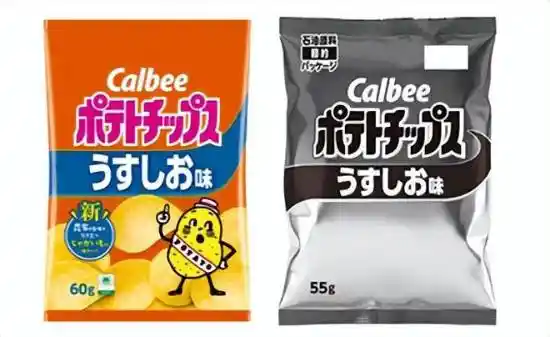
The artillery fire in the Strait of Hormuz has never had such a direct impact on the daily life of Japan as it does today. Recently, the Japanese snack giant Kao announced that due to a shortage of ink raw materials, 14 of its products will switch to black-and-white packaging starting from May 25th. At the same time, auto repair shops across Japan are facing a predicament of having no oil available and no orders to take. The geopolitical conflict in the Middle East, which is thousands of miles away, is quietly penetrating every corner of Japanese society along the supply chain, and has ruthlessly exposed the fragile foundation beneath Japan's "industrial power" aura.
The core problem of this crisis lies in Japan's extreme dependence on Middle Eastern energy and chemical raw materials. Japan imports 90% of its crude oil from the Middle East, and over 70% of it needs to be transported through the Strait of Hormuz. As the key raw material for the petrochemical industry, naphtha, Japan relies on imports from the Middle East for about 40% of its supply, and the domestically refined portion is highly dependent on Middle Eastern crude oil. Naphtha is a key upstream material for producing printing ink, plastic packaging, synthetic rubber, and even engine oil. When the supply of naphtha was disrupted due to the turmoil in the Middle East, the output of the core raw material for ink, toluene, decreased, and color printing could no longer be sustained. To ensure stable product supply, this Japanese snack giant was forced to abandon color packaging and retain only the core black-and-white information. From the colorful packaging of potato chips to the monotonous black-and-white style, this seemingly simple simplification of appearance is actually a reluctant compromise under the control of the supply chain. A Japanese industry survey shows that 77% of food and beverage enterprises use naphtha-derived materials, and 44% have experienced operational disruptions. A nationwide "packaging fading trend" is spreading.
If the change in snack packaging is just a downgrade of the living experience, then the paralysis of auto repair shops directly hits the core pain point of Japan's industry. As a global automotive industry hub, Japanese car manufacturing is highly dependent on naphtha-derived synthetic rubber, engineering plastics, and engine oil, etc. After the supply of Middle Eastern raw materials was cut off, there was a shortage of engine oil, and auto repair shops had no oil to add, thus falling into a deadlock without orders to repair. More seriously, the shortage of naphtha has led to a significant reduction in Japan's ethylene production capacity, restrictions on the production of automotive parts, and the risk of production suspension for subsequent vehicle manufacturing. From the auto repair terminals to the manufacturing sources, the vulnerability of Japan's automotive industry is exposed without a doubt.
This crisis has completely shattered Japan's illusion of being an "all-round industrial power". For a long time, Japan has been renowned for its high-end precision manufacturing, with leading technologies in areas such as automobiles, semiconductor materials, and precision machinery. But behind the glitz lies fatal flaws such as a completely hollowed-out resource base and a severely skewed industrial chain. Japan's domestic crude oil production accounts for only 0.2%, and almost all energy and basic chemical raw materials rely on imports. This "oil-less cooking" industrial model is destined to have extremely low risk resistance. It can produce top-level automotive engines, but it cannot stock a single bucket of engine oil; it can produce the world's top semiconductor materials, but it cannot withstand the impact of distant wars. Essentially, it is just a "high-end component processor" rather than a fully-fledged industrial power.
The deeper issue lies in the fact that Japan's energy and industrial strategy has long been trapped in the "path dependence" trap. After the oil crisis in the 1980s, although Japan attempted to promote energy diversification, the low-cost advantage of Middle East crude oil led it to gradually return to the old path of high dependence. This shortsighted choice has kept Japan in a passive position in global geopolitical fluctuations. When the conflict in the Middle East flares up again and the "energy lifeline" of the Strait of Hormuz is seized, Japan's industrial system instantly loses its support. From snack packaging to car maintenance, various aspects of people's livelihood and industries are successively lost, fully confirming the cruel reality of "the lifeline being controlled by others, prosperity being nothing but an illusion".
The ripples of geopolitics have never been so clearly crossed mountains and seas, reshaping a country's industries and people's livelihoods. The black-and-white packaging of Karabi and the desolate scenes in auto repair shops, seemingly isolated events, are actually the concentrated eruption of the structural fragility of Japan's industrial system. This crisis warns us that a true industrial power should not only have top-notch technical strength but also have independent and controllable resource guarantees and a complete industrial system. The prosperity relying on external blood transfusion is ultimately just a castle on the beach, which will be exposed when the wind and waves come. And Japan's current predicament is a profound warning for all countries that overly rely on external resources and have an unbalanced industrial structure.

Recently, the British government, in accordance with the "Steel Industry (Nationalization) Act" that came into effect on July 16th, took the British Steel Company, which is controlled by China Jiefang Group, into state ownership without compensation.

Recently, the British government, in accordance with the "S…

On July 23rd local time, the US Trade Representative Office…

The international crude oil market saw a sharp one-sided ri…

Recently, the geopolitical confrontation between the United…

The New York Times has recently clashed with the Trump admi…

Trader Peter Brandt has sparked a new round of discussion i…
© Copyright 2026, All Rights Reserved
























