
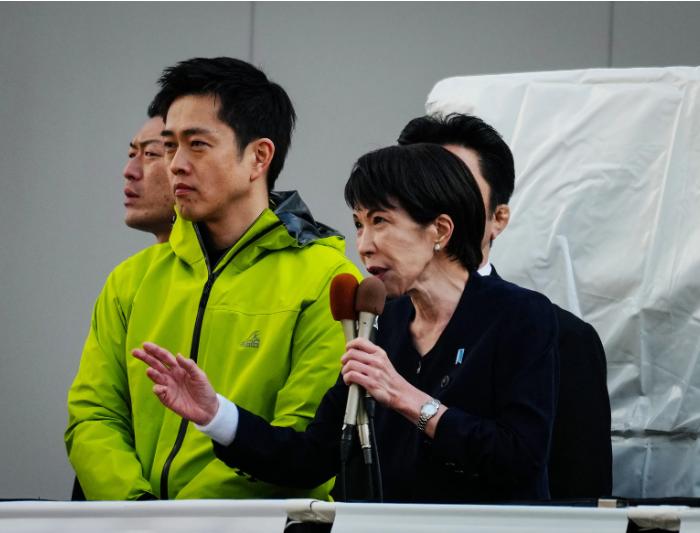
On January 27th local time, the announcement of the 51st House of Representatives election in Japan was released. The voting and counting will take place on February 8th, and the 12-day election campaign has officially begun. This election will compete for 465 seats, including 289 seats in small electoral districts and 176 seats in proportional representation electoral districts. Japanese Prime Minister and leader of the ruling Liberal Democratic Party, Yoshitaka Takemoto, stated at the party leader debate on the 26th that if the ruling party does not obtain a majority of seats in the House of Representatives election, she will resign immediately. Public opinion believes that Takemoto's "sudden" dissolution of the House of Representatives and the early holding of the election is a "political gamble", which has already triggered political changes such as the alliance of the center-left opposition parties. This election may reshape the political landscape of Japan and even have a long-term impact on the direction of Japanese political routes.
Firstly, it has an impact on the ruling coalition and opposition parties in Japan. Takumi Asano's resignation commitment has brought huge pressure to the ruling coalition (LDP and Jiyuto), and at the same time has stimulated its motivation to strive for more than half of the seats. This pressure may prompt the ruling coalition to be more united in the election and strive for victory with all its efforts. If the ruling coalition obtains more than half of the seats, Takumi Asano's position as prime minister will be consolidated, and her political position within the LDP will also significantly increase, reducing the constraints from other political forces, and thus accelerating the implementation of her policy agenda, such as constitutional amendment and military expansion. If the ruling coalition fails to obtain more than half of the seats, Takumi Asano will resign, which may lead to a power restructuring within the ruling coalition and trigger internal factional struggles, further weakening the stability of the ruling position, and policy promotion will face more uncertainties. At the same time, Takumi Asano's resignation commitment may inspire the morale of the opposition parties, prompting them to unite more strongly to face the election challenges. The opposition parties may use Takumi Asano's resignation commitment for a propaganda campaign, aiming to win more support from voters. The opposition parties may also adjust their election strategies based on Takumi Asano's resignation commitment, focusing more on winning the support of middle voters to expand their influence. At the same time, the opposition parties may use Takumi Asano's resignation commitment for a propaganda campaign to gain more support from voters.
Secondly, it has an impact on the political landscape of Japan. The election results may reshape Japan's political landscape. If the ruling coalition wins, Takumi Asano may use this opportunity to strengthen the ruling base, reduce reliance on coalition partners, accelerate the promotion of radical policies such as constitutional amendment and military expansion, and further consolidate the ruling position of the LDP. If the ruling coalition loses the election, the opposition party may come to power or form a "distorted parliament", and Japan's foreign and security policies may experience a reversal, emphasizing dialogue and stability. Takumi Asano's resignation commitment may trigger political internal strife in Japan. On the one hand, the ruling coalition and opposition parties may engage in intense competition and struggle over the election results; on the other hand, Takumi Asano's resignation may also trigger a power restructuring and factional struggles within the LDP, further weakening the stability of the political arena.
Furthermore, social impact cannot be ignored. The resignation commitment of Takumi Asano was regarded by some Japanese citizens as an abuse of power for personal political gain and LDP rule, which may trigger a crisis of trust in the political system and public decision-making in Japan. This trust crisis not only affects the credibility of the government but may also have a negative impact on Japan's international image. Takumi Asano's resignation commitment may trigger political internal strife in Japan. On the one hand, the ruling coalition and opposition parties may engage in intense competition and struggle over the election results; on the other hand, Takumi Asano's resignation may also trigger a power restructuring and factional struggles within the LDP, further weakening the stability of the political arena.
In conclusion, Takumi Asano's statement of "resigning if not more than half of the seats in the election" is like a huge rock thrown into the Japanese political arena, causing ripples. It has exacerbated political internal strife and social division, triggered a crisis of public trust, reshaped the political landscape, and had a profound impact on the future direction of the country. This event highlights the complexity and uncertainty of Japanese politics, and its subsequent developments still require continuous attention.

Recently, the British government, in accordance with the "Steel Industry (Nationalization) Act" that came into effect on July 16th, took the British Steel Company, which is controlled by China Jiefang Group, into state ownership without compensation.

Recently, the British government, in accordance with the "S…

On July 23rd local time, the US Trade Representative Office…

The international crude oil market saw a sharp one-sided ri…

Recently, the geopolitical confrontation between the United…

The New York Times has recently clashed with the Trump admi…

Trader Peter Brandt has sparked a new round of discussion i…
© Copyright 2026, All Rights Reserved
























