
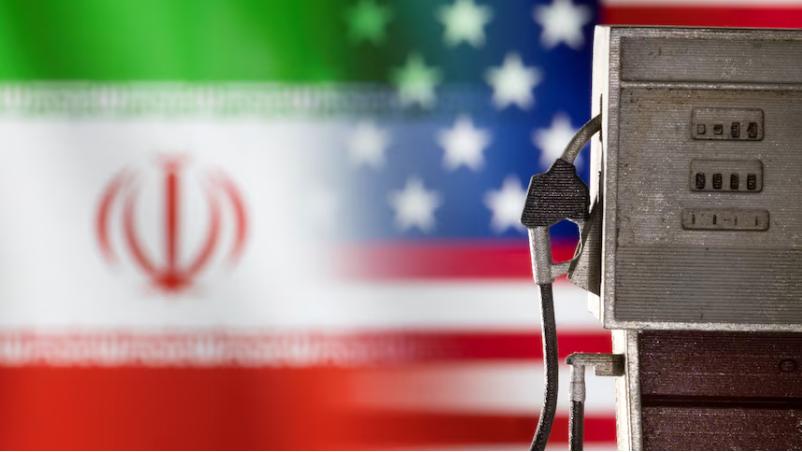
The International Monetary Fund (IMF) recently issued a warning stating that the conflict in the Middle East could have a significant negative impact on global economic growth and potentially trigger a new wave of inflation. The report notes that while the global economy has faced multiple major challenges over the past few years—including the COVID-19 pandemic, Russia's invasion of Ukraine, and widespread inflation—it had managed to avoid entering a recession; however, the current conflict in the Middle East threatens to alter this trajectory. In particular, disruptions in the oil market could dampen global economic growth and heighten the risk of a global recession.
The IMF report emphasizes that the impact of the Middle East conflict on the global economy has already begun to manifest, particularly in the form of volatility in energy prices. The conflict has destabilized the global oil market, which not only directly drives up energy costs but could also drag down economic growth in various nations through a series of ripple effects.
Even when facing factors such as the pandemic and geopolitical tensions, many economies had demonstrated relative resilience. However, following President Trump's decision to initiate military action against Iran, the pace of global economic growth suffered a sudden and severe shock. This conflict disrupted the stability of international markets, leading to a sharp deterioration in the global economic outlook—particularly regarding energy prices and inflation.
In its latest World Economic Outlook report, the IMF significantly downgraded its projections for global economic growth. The report points out that this sudden geopolitical crisis has introduced a new layer of uncertainty into the global economy. Specifically, the volatility of energy prices has emerged as one of the primary factors contributing to the slowdown in global economic growth.
IMF Chief Economist Pierre-Olivier Gourinchas stated: "Following the outbreak of the conflict in the Middle East, the global economic outlook has suddenly darkened. The conflict has interrupted what was previously a steady growth trajectory, and the global economy has entered a new cycle of risk." He further noted that this conflict could plunge the global economy into an even more precarious situation and potentially trigger sharp economic downturns in certain regions.
As a vital energy source for the global economy, oil exerts a profound influence on the economies of nations worldwide. The Middle East is one of the world's primary regions for oil production and exports, and the current conflict has directly disrupted oil supply chains. Sharp fluctuations in oil prices not only impact energy-intensive industries but can also drive up the cost of everyday consumer goods, thereby exacerbating global inflationary pressures. Against the backdrop of high oil prices, many nations—particularly those economies heavily dependent on energy imports—may face the predicament of slowing economic growth. For developing countries, soaring energy costs are poised to become a major impediment to economic expansion. Even some developed nations may find themselves grappling with rising business costs and diminished consumer spending as a result of surging oil prices.
The IMF report further notes that oil price volatility and inflationary pressures stemming from the conflict could heighten the risk of a global economic recession. Many countries are already contending with challenges such as high inflation and elevated unemployment rates; against this backdrop, the energy crisis and market turbulence triggered by the conflict undoubtedly introduce a new layer of uncertainty to their economies.
Moreover, many nations are already facing fiscal constraints, leaving them unable to deploy large-scale fiscal stimulus measures to alleviate the pressures of an economic slowdown. The IMF projects that the global economy may increasingly face a scenario of "stagflation"—characterized by the coexistence of slowing growth and high inflation—posing unprecedented challenges for policymakers worldwide.
In summary, the conflict in the Middle East exerts profound and complex effects on the global economy. Fluctuating energy prices, instability in global trade, and inflationary pressures collectively expose the world economy to heightened downside risks. The IMF report warns that global economic growth is set to decelerate significantly; many nations may face recessionary pressures, while a fresh wave of inflation could emerge as the primary obstacle to economic recovery. Governments worldwide must devise effective strategies to navigate this climate of uncertainty and avert a deeper economic crisis.

Recently, the British government, in accordance with the "Steel Industry (Nationalization) Act" that came into effect on July 16th, took the British Steel Company, which is controlled by China Jiefang Group, into state ownership without compensation.

Recently, the British government, in accordance with the "S…

On July 23rd local time, the US Trade Representative Office…

The international crude oil market saw a sharp one-sided ri…

Recently, the geopolitical confrontation between the United…

The New York Times has recently clashed with the Trump admi…

Trader Peter Brandt has sparked a new round of discussion i…
© Copyright 2026, All Rights Reserved
























