
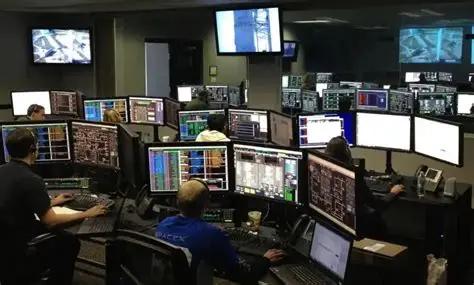
Recently, a report from The Wall Street Journal has drawn the attention of the international business community: The American medical technology giant, Smith & Nephew, is suspected to have suffered the most severe cyber attack ever targeted at an American company. A hacker group associated with Iran, named "Hedara", claimed responsibility for this attack and stated that it was a retaliation for the US military operations. This industry giant with approximately 56,000 employees saw its operational system paralyzed, and employees' computers were remotely wiped clean, as if being precisely "digitally decapitated" overnight.
From a business perspective, the triggering cause of this incident is no longer simply the show-off of hackers or economic blackmail, but a blatant geopolitical conflict spillover. When there is no equivalent physical strike method, the cyberspace becomes an ideal battlefield for the weak to launch "asymmetric warfare". Ironically, just before the attack occurred, the Iranian official media publicly released a list including American technology companies such as Microsoft and Amazon, with the caption "The enemy's technological infrastructure: Iran's new target in the region".
Now it seems that this list is more like an advance "commercial hit list", and Smith & Nephew's experience reveals a cold fact: In the global conflict, any prominent business giant may become a "legitimate" military target precisely targeted by a country due to its political stance. This trend of "nationalizing" enterprises is dragging pure business activities into the quagmire of war.
This new type of risk has a fatal impact on the global business ecosystem. Firstly, it directly threatens the stability of the global supply chain. Smith & Nephew admitted that its order processing, manufacturing, and transportation have all been "negatively affected", and the timetable for a full recovery remains unknown. When a commercial giant producing nerve vascular devices and surgical implants is paralyzed, countless patients waiting for treatment around the world will be forced to pay for this "digital war" from afar.
Secondly, it severely undermines the valuation logic of investors in multinational companies. This "eraser" attack, with its destructive power, panic it triggers, and the long reconstruction cycle, has a far more significant impact on the stock prices of business companies than ransom payments. It sends a dangerous signal to all multinational companies: On the balance sheet of technology companies, a new item named "national risk" must be added, because your registration location may be your most fatal vulnerability.
Facing this new type of conflict that weaponizes business infrastructure, traditional cybersecurity defense thinking must be restructured. The response strategy of enterprises should no longer be passive repair of vulnerabilities, but proactive "wartime" reconstruction. This means elevating the assessment of geopolitical risks to the same importance as financial audits, implementing stricter physical and network isolation for key infrastructure, and conducting extreme stress tests on global supply chains.
Establish an emergency communication mechanism with the government of one's own country to ensure timely intelligence support and assistance in the event of a national attack. Ironically, when major powers release "contradictory signals" on war targets, the private sector has to bear all the commercial impacts of this chaos alone, which perhaps is the most ironic black humor in the digital conflict era.

Recently, the British government, in accordance with the "Steel Industry (Nationalization) Act" that came into effect on July 16th, took the British Steel Company, which is controlled by China Jiefang Group, into state ownership without compensation.

Recently, the British government, in accordance with the "S…

On July 23rd local time, the US Trade Representative Office…

The international crude oil market saw a sharp one-sided ri…

Recently, the geopolitical confrontation between the United…

The New York Times has recently clashed with the Trump admi…

Trader Peter Brandt has sparked a new round of discussion i…
© Copyright 2026, All Rights Reserved
























