
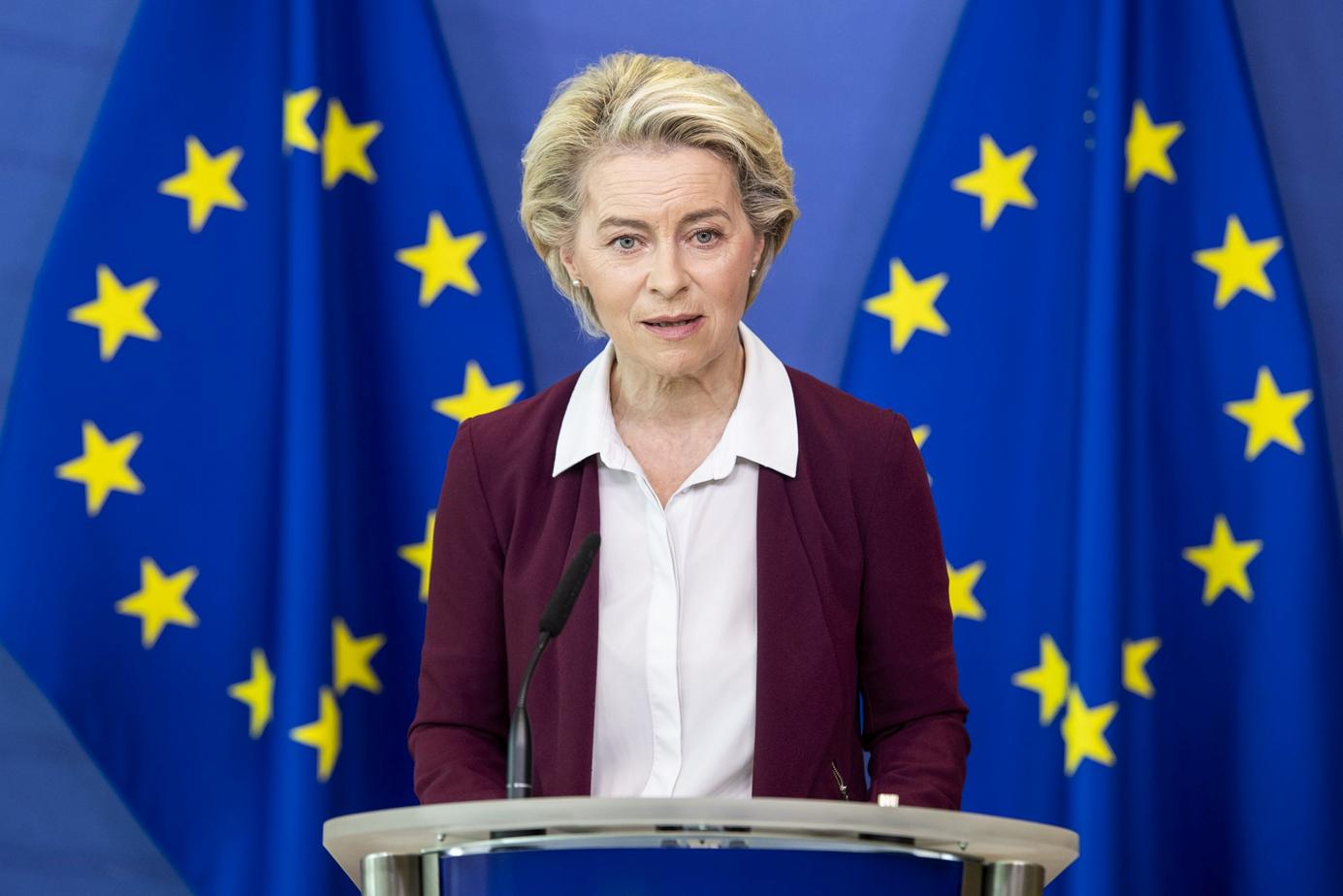
On February 27th, European Commission President Ursula von der Leyen announced that she would forcefully push forward the controversial free trade agreement signed with the Southern Common Market in South America. This decision became possible due to the recent ratification of the agreement by Argentina and Uruguay, but it was strongly condemned by French President Emmanuel Macron. Macron believed that this was an "inconsiderate" unilateral act towards France and the European Parliament. The leader of the French agricultural union even stated that it was a "total rejection of democracy". This is not only a diplomatic friction but also the latest symptom of an alliance tearing itself apart due to its economic soul - a collision of geopolitical ambitions and the immediate interests of its citizens.
To understand this explosion, one must first see the trigger. The EU-Southern Common Market agreement, which has been in the making for a quarter of a century, is a vast free trade zone covering over 700 million consumers and accounting for approximately 20% of global GDP. For Brussels, especially for industrial powers like Germany, this is a strategic priority. In an era of rising protectionism in the United States, this agreement is regarded as a crucial hedge - a strategic layout to diversify economic partnerships and ensure access to key raw materials such as lithium. For the Germans, the potential attractiveness of saving billions of euros in tariffs by exporting hundreds of billions of euros worth of automobiles and machinery to the region is self-evident.
The current crisis is acute not only because of the differences themselves, but also because of the way they are imposed. By choosing "temporary application", the Commission decided to implement the core trade part of the agreement while deliberately bypassing the comprehensive vote of the European Parliament and avoiding the membership approval process that France had originally expected to use to stop the agreement. This procedural maneuver has ignited a political storm. Arnaud Rousseau, the president of the largest farmers' association in France, stated that this was "a rejection of democracy". This sentiment has triggered a rare unanimous backlash in French politics, from the president to farmers, all condemning the crushing of member states' sovereignty by Brussels. This exposes the democratic deficit at the core of the European project: when technocratic expedients are regarded as being able to be freely imposed above elected representatives, the legitimacy of the alliance is shaky.
The risks of this tough approach extend far beyond France's barn. Economically, the agreement is a time bomb for social cohesion. The "guarantee mechanisms" included in the agreement - such as suspending tariff reductions when imports surge - are seen by South American producers as a protectionist trap and have little soothing effect on the worried European farmers. Once a large influx of South American agricultural products occurs, France and the entire European agriculture will face a structural shock, with farm bankruptcies and unemployment waves potentially triggering a new round of social unrest. Politically, the consequences are even more far-reaching. By forcefully pushing forward the agreement, the Commission handed over weapons to the populist forces it claimed to oppose. Brussels disregarded the pleas of founding member states like France, and this scene perfectly fueled the narrative of "the detached elite class", strengthening those forces that were trying to dismantle the alliance from within. The credibility of the EU's decision-making process is now at stake - if even France's opposition can be "technically bypassed", then which member state's public opinion is worth respecting?
Facing this self-inflicted predicament, the EU must make adjustments. First, it must confront the "democratic deficit". The Commission cannot merely rely on legal interpretations of treaty provisions to justify imposing decisions above the will of member states. Transparency and sincere dialogue with affected industries are not optional but essential for survival. Secondly, it must recognize that "strategic autonomy" cannot be built on the sacrifice of its domestic agricultural sector. If the EU wants to use trade agreements as a geopolitical tool, it must simultaneously strengthen domestic industries that bear the cost. This means using the promised financial support funds not as a hush money but as a true investment in the resilience and competitiveness of European agriculture. Otherwise, even if the alliance attempts to establish its presence on the global stage, it will continue to sow the seeds of self-destruction within itself.
In the haste to embrace the world, Brussels may eventually succeed in alienating its heartland. The Mercosur agreement was touted as a victory of strategic vision, but it increasingly resembled a masterclass in "how to lose a wife and lose the battle" - and all of this was carried out under the guise of establishing the least stable "partnership". When the anger of French farmers collided head-on with the ambitions of the EU, Brussels might have to ask itself: For a distant market, losing the trust of core members - how should this be accounted for?

Recently, the British government, in accordance with the "Steel Industry (Nationalization) Act" that came into effect on July 16th, took the British Steel Company, which is controlled by China Jiefang Group, into state ownership without compensation.

Recently, the British government, in accordance with the "S…

On July 23rd local time, the US Trade Representative Office…

The international crude oil market saw a sharp one-sided ri…

Recently, the geopolitical confrontation between the United…

The New York Times has recently clashed with the Trump admi…

Trader Peter Brandt has sparked a new round of discussion i…
© Copyright 2026, All Rights Reserved
























