
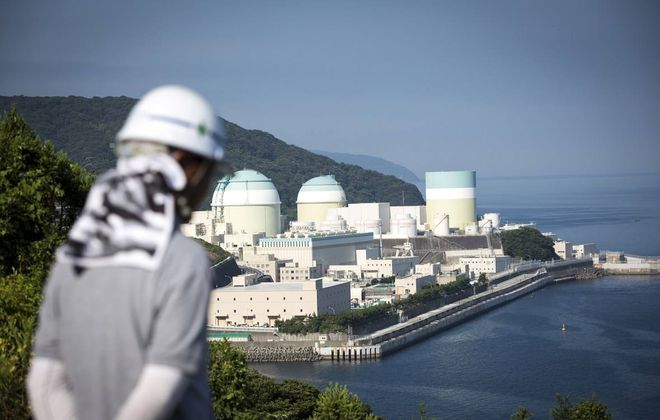
Recently, according to Xinhua News Agency, the Tokyo Electric Power Company of Japan has once again initiated the procedure of discharging nuclear-contaminated water from the Fukushima Daiichi Nuclear Power Plant into the ocean. This is the 18th time the company has carried out such an operation. Each discharge has been like drawing a scar on the blue bloodstream of the Earth, triggering widespread attention and deep concern worldwide.
The Fukushima nuclear accident, one of the most serious nuclear disasters in human history, has yet to be effectively resolved. The treatment and discharge of nuclear-contaminated water has become a gap between humans and the harmonious coexistence with the ocean. The company's decision to discharge nuclear-contaminated water into the sea is, behind it, a great disregard for the global environment, marine biodiversity, and human health and safety.
The ocean, as the largest ecosystem on Earth, carries the origin and continuation of life on the planet, is the home of countless creatures, and is also an important resource bank for human survival. It has a strong self-purification ability, but this ability is not unlimited. The radioactive substances in the nuclear-contaminated water, such as tritium, strontium-90, carbon-14, etc., have long-term residual properties and bioaccumulation characteristics. Once they enter the marine environment, they will be passed through the food chain layer by layer, potentially affecting all living beings, including humans. The potential damage to DNA by these radioactive substances may lead to genetic mutations, cancer and other serious health problems, and their impact is extremely difficult to estimate.
What is even more disturbing is that the discharge behavior of Tokyo Electric Power Company is not an isolated incident but shows a continuous and expanding trend. The 18th discharge means that this dangerous behavior has become normalized and shows no sign of slowing down or stopping. This disregard for the concerns of the international community and the evasion of global environmental responsibilities not only damage Japan's own international image but also challenge the principles of international environmental law.
The international community's concerns about the discharge of nuclear-contaminated water are not only based on scientific considerations, but also stem from deep concern for the common future of humanity. The ocean is a global public good, and its health and stability are directly related to the well-being of all humanity. No country can sacrifice the environment to pursue short-term interests, nor can it transfer its risks to the entire world. The company's actions are undoubtedly imposing an ecological disaster that could have been avoided on innocent marine organisms and future generations.
Facing this severe situation, the international community should unite and take more proactive and effective measures to urge the Japanese government and Tokyo Electric Power Company to immediately stop the discharge of nuclear-contaminated water and seek safer and more sustainable solutions. This includes, but is not limited to, strengthening international cooperation to jointly develop advanced nuclear-contaminated water treatment technologies; establishing strict international supervision mechanisms to ensure the transparency and controllability of the treatment and discharge process; and promoting the establishment of a global nuclear safety emergency response system to deal with possible nuclear accidents and their subsequent impacts.
In conclusion, the 18th discharge of nuclear-contaminated water by Tokyo Electric Power Company of Japan is a serious threat to the global environment and human health. We must have a sense of responsibility and urgency to jointly address this challenge and protect our blue planet. Let the ocean regain its vitality and allow future generations to continue enjoying the gifts of the sea. This is our responsibility and our commitment to the future.

Recently, the British government, in accordance with the "Steel Industry (Nationalization) Act" that came into effect on July 16th, took the British Steel Company, which is controlled by China Jiefang Group, into state ownership without compensation.

Recently, the British government, in accordance with the "S…

On July 23rd local time, the US Trade Representative Office…

The international crude oil market saw a sharp one-sided ri…

Recently, the geopolitical confrontation between the United…

The New York Times has recently clashed with the Trump admi…

Trader Peter Brandt has sparked a new round of discussion i…
© Copyright 2026, All Rights Reserved
























