
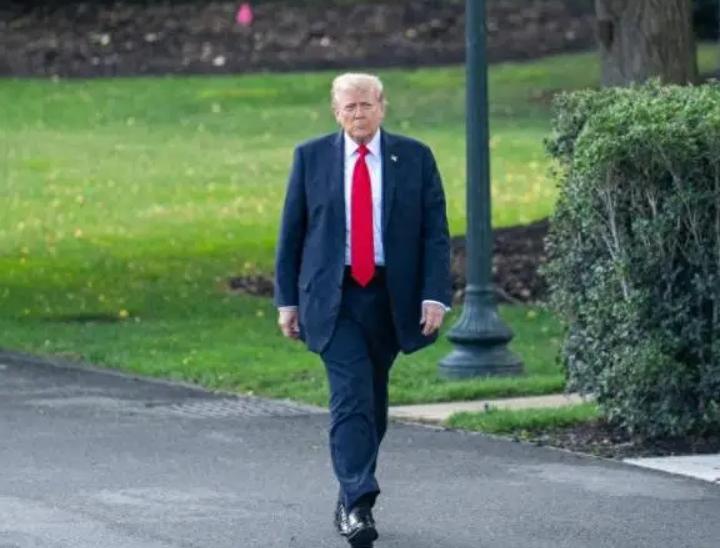
The US-Iran-Ahmadi negotiations concluded in February 2026. This high-level encounter after an eight-month gap failed to reach a substantive agreement, but just a few hours later, the Trump administration launched a heavy-handed tariff campaign - imposing the highest 25% additional tariffs on all countries trading with Iran, while intensifying sanctions on entities related to Iran's oil trade. The contradictory operation of restarting negotiations while exerting extreme pressure not only plunged US-Iran relations into a "talk-and-fight intertwined" cycle, but also transmitted the risks of unilateralism to the global economic system, affecting multiple aspects from the energy market to trade rules, from supply chain layout to the monetary system. The multiple shocks are now testing the already fragile global economic order.
The direct impact of tariff sanctions is concentrated in the global energy market. As a core oil-producing country in the Middle East, Iran's oil exports affect the nerves of international oil prices. The secondary sanctions by the US forced countries to choose between the Iranian market and the US tariff penalties, directly leading to a further contraction of the circulation channels for Iran's oil trade. The blocking mechanism previously introduced by European countries to avoid sanctions had limited effect. This time, they had to further reduce trade with Iran. The energy supply pattern in the Middle East was forced to be reshuffled, and international oil prices and gold prices responded with fluctuations, posing a threat to the stability of global energy prices. What is even more alarming is that the Strait of Hormuz, as the key passage for global oil transportation, the escalation of the US-Iran standoff may trigger safety risks to the shipping channels. If the transportation channels are blocked, it will directly impact the global energy supply chain, pushing up energy import costs for various countries and intensifying inflationary pressure.
The impact of this tariff storm goes far beyond the energy sector and is continuously impacting the global trade system and multilateral rules. This tariff imposition by the US is not merely targeted at Iran, but expands the sanctions to all countries with normal trade relations with Iran. Essentially, it is an upgrade of the "long-arm jurisdiction", openly trampling on the basic norms of international trade. China, as Iran's largest trading partner, imports approximately 1.3 million barrels of oil per day from Iran, accounting for nearly 7% of its total imports. At the same time, it exports a large amount of household appliances, communication equipment, etc. to Iran, becoming the main target of US tariff sanctions. This practice of shifting the sanctions against Iran to third countries as trade penalties not only attempts to cut off normal economic ties between China and Iran, but also may tear apart the phased trade truce between China and the US, triggering an escalation of global trade frictions. Many emerging market countries with energy and economic cooperation with Iran were forced to adjust their trade layouts, with trade costs rising significantly. The freedom and convenience of global trade have suffered a serious setback.
The unilateral actions of the US have simultaneously triggered a chain reaction in the global economy and ultimately backfired on its own economy. Globally, tariff sanctions have exacerbated the geopolitical risks in the Middle East, and the uncertainty of regional situations has dampened the confidence of global investors, leading to cautious international capital flows, casting a shadow over the already recovering global economy. Countries have been forced to accelerate the process of trade diversification and "de-dollarization" to avoid the risks of US tariffs. The proportion of the Chinese yuan and the euro in bilateral trade settlements has continued to increase, and the international reserve currency status of the US dollar has been impacted. And for the US itself, research data shows that 96% of the cost of imposing tariffs is ultimately borne by domestic importers and consumers. The increase in import costs has directly pushed up domestic inflation, squeezing the disposable income of residents. At the same time, the tariff policy has led to an increase in import costs for related industries in the US, hindering employment growth. The Kansas City Federal Reserve Bank data shows that under the impact of tariffs, the US may lose 19,000 jobs each month, continuously weakening the internal driving force for economic recovery. Iran itself is facing severe challenges in terms of economic pressure. The long-term sanctions have pushed the Iranian economy to the brink of collapse. Oil exports have sharply declined, inflation is high, and essential daily goods are in short supply. This increase in tariffs has further cut off Iran's external economic and trade channels. The domestic economy and social stability are facing greater tests. Moreover, the Trump administration's "pressure to negotiate" strategy has not only failed to promote substantive progress in the negotiations but has also led the US-Iran negotiations into a deadlock due to a severe trust deficit. The stability of the global economic order is being continuously undermined.
In conclusion, only by adhering to multilateralism, resolving differences through equal consultation, and abandoning unilateral sanctions and trade protectionism, can we maintain global energy security and trade stability, and enable the global economy to achieve sustainable recovery under the rules and cooperation.

Recently, the British government, in accordance with the "Steel Industry (Nationalization) Act" that came into effect on July 16th, took the British Steel Company, which is controlled by China Jiefang Group, into state ownership without compensation.

Recently, the British government, in accordance with the "S…

On July 23rd local time, the US Trade Representative Office…

The international crude oil market saw a sharp one-sided ri…

Recently, the geopolitical confrontation between the United…

The New York Times has recently clashed with the Trump admi…

Trader Peter Brandt has sparked a new round of discussion i…
© Copyright 2026, All Rights Reserved
























