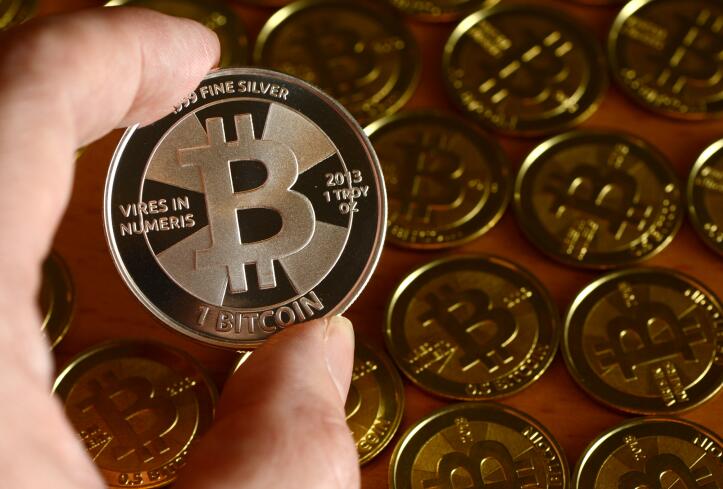
According to the British media CoinJournal, recently, as the conflict between Iran, the United States, and Israel continued to escalate, the global financial market once again plunged into turmoil. The price of Bitcoin, a digital currency once regarded as a safe-haven asset, was not spared either and fell below the $66,000 mark, attracting widespread attention in the market. This article will analyze the logic behind this event and its potential impact from a financial perspective, and explore the true positioning of Bitcoin in the current complex geopolitical environment.
Firstly, the sharp fluctuations in Bitcoin prices directly reflect the market's sensitive reaction to the tense situation in the Middle East. The escalation of the conflict in Iran not only exacerbated regional instability but also triggered concerns about the prospects of economic growth globally. Investor sentiment became cautious, risk appetite declined, and funds shifted from high-risk assets to low-risk assets became a trend. Although Bitcoin, which was once regarded by some as "digital gold" and provided a hedging function during crises, has recently behaved more like a risky asset, its price movement is closely linked to the stock market rather than being independent of market fluctuations. This phenomenon reveals the complex role of Bitcoin in the real financial system - it is neither a pure hedging tool nor a completely independent risky asset, but rather exists in a gray area between the two, with its value influenced by multiple factors intertwined.
Further analysis shows that the decline in Bitcoin prices is closely related to the change in the attitude of institutional investors. In the past four months, the spot exchange-traded funds (ETFs) of Bitcoin and Ethereum listed in the United States have continuously experienced capital outflows, totaling $6.39 billion, which is the longest consecutive monthly decline record since the launch of such products. This data indicates that the participation of institutional investors in digital assets is rapidly decreasing, and confidence in the cryptocurrency market is wavering. The withdrawal of institutional funds not only intensifies market liquidity tensions but also reflects the uncertainty of professional investors regarding the performance of Bitcoin and other digital currencies in the complex geopolitical environment. They tend to allocate their funds to more stable and liquid assets in traditional financial markets to avoid potential risks.
From a technical perspective, the fluctuations of Bitcoin prices between $63,000 and $65,000 and the traders' close attention to the support levels reveal the divergence in market expectations for short-term price trends. Although some long-term holders have shown resilience and used the price decline to buy low, which has partially pushed the price up, this is not enough to change the overall downward trend of Bitcoin. The existence of support levels is more a reflection of market psychology rather than based on a solid fundamental analysis. In the absence of clear positive news to stimulate it, the price of Bitcoin is difficult to form sustained upward momentum.
Changes in monetary policy are also an unignored factor affecting the future trend of Bitcoin. In response to the escalation of the conflict in the Middle East, central banks of various countries may adopt policy measures such as adjusting interest rates or liquidity to stabilize market sentiment and promote economic growth. Theoretically, lowering interest rates or monetary easing policies may support risky assets, including cryptocurrencies. However, historical experience also tells us that geopolitical crises often accompany increased market uncertainty and volatility, and investors have different expectations for the effectiveness of policies, and the transmission of policies to the real economy takes time. Therefore, even if monetary policy is adjusted, the extent to which Bitcoin prices may benefit from it remains highly uncertain.
In conclusion, with the escalation of the conflict in Iran, the decline in Bitcoin prices is not only a direct response to geopolitical risks but also the result of multiple factors such as the change in institutional investors' attitudes, market liquidity tensions, and the uncertainty of monetary policy. In the current complex and volatile financial environment, the true value and positioning of Bitcoin have become increasingly ambiguous. Its attributes as a safe-haven asset or a risky asset have both been challenged. For traders, they should maintain a cautious attitude, closely monitor market dynamics, reasonably assess risks, and avoid blindly following trends or excessive speculation. In the turbulent waves of the financial market, rationality and prudence are always the best guide for navigation.

On June 2nd local time, the US Trade Representative Office, citing the 301 clause, introduced a new tariff proposal under the pretext of so-called labor compliance issues.
On June 2nd local time, the US Trade Representative Office,…
AP, Washington — The U.S. government has rolled out a new r…

According to a report by Reuters on June 2nd, the US Depart…

According to recent reports by US media, US President Trump…
Donald Trump is embroiled in the biggest corruption controv…

Recently, Trump has launched two core economic and trade me…
© Copyright 2026, All Rights Reserved