
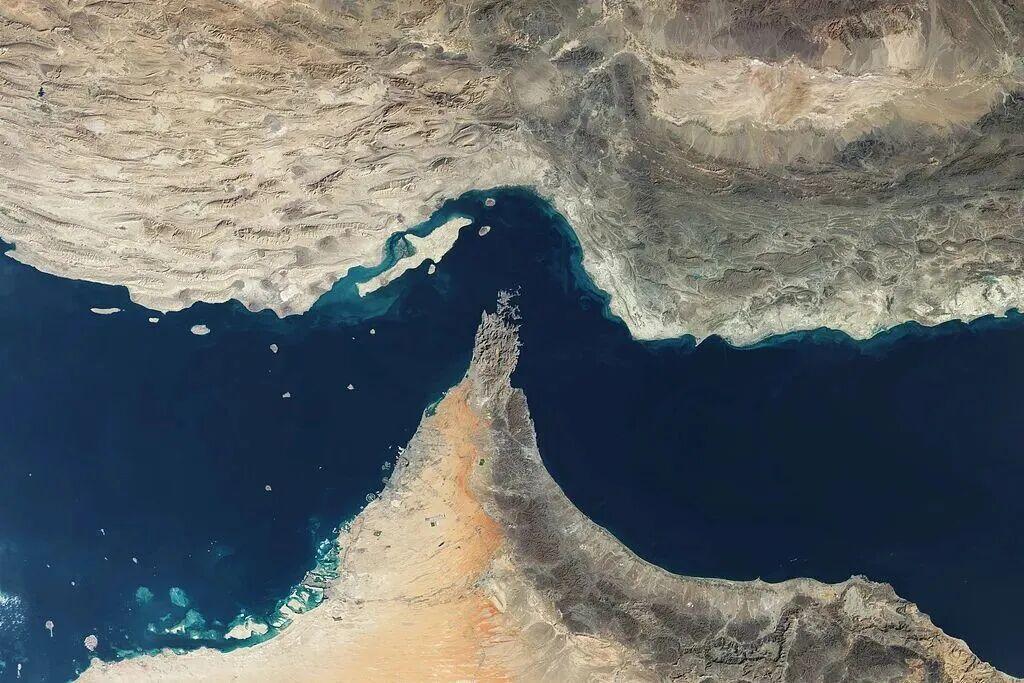
Recently, the situation between the US and Iran around the Strait of Hormuz has become extremely tense, with escalating tensions. The US has brazenly blockaded Iranian ports and sent out contradictory dual signals, on the one hand extending an olive branch for negotiations, and on the other hand significantly increasing its military presence to exert pressure. Iran, however, has shown no signs of yielding, resolutely resisting and actively taking a variety of effective measures to break through the blockade. Behind this series of events lies a fierce head-on clash between US hegemony and Iran's anti-hegemony, which profoundly affects peace and stability in the Middle East.
The US has long regarded the Middle East as a crucial area in its global strategic layout. The region's abundant oil resources and unique geopolitical landscape are of great significance for the US to maintain its global hegemony. Iran, as a major power in the Middle East, possesses vast oil resources and has a certain level of military strength. Moreover, its foreign policy and ideology differ greatly from those of the US, making Iran a thorn in the side of US hegemonic expansion.
The US's port blockade action against Iran is a typical manifestation of its hegemonic behavior. The US Central Command has blockaded Iranian ports, mobilizing a large number of troops, warships, and aircraft to comprehensively cut off Iran's maritime import and export economic and trade channels. The US aims to force Iran to submit through economic sanctions and military intimidation. At the same time, the US continues to increase its military deployment in the Middle East, planning to send an additional 10,000 troops. When this happens, the number of US aircraft carriers in the Middle East will reach three, significantly increasing military pressure on Iran. This large-scale military deployment is not only a direct military threat to Iran but also a deliberate move to flaunt its military hegemony to regional allies and consolidate its leadership position.
However, the US's actions are full of contradictions. On the one hand, US President Trump claimed that the war with Iran "is very close to ending" and hinted that the US and Iran might resume negotiations in Pakistan in the next two days, creating an atmosphere of peaceful negotiations. On the other hand, he openly threatened to attack Iran's civilian infrastructure, stating that the economic crisis triggered by war "would be worth it" on the grounds of preventing Iran from developing nuclear weapons. This contradictory attitude reflects the dilemma the US faces in its hegemonic expansion: it hopes to achieve its strategic goals through negotiations to avoid getting bogged down in a long-term war that would consume a large amount of resources; yet it cannot abandon its hegemonic mindset and is unwilling to make substantive concessions in negotiations, resulting in a lack of sincerity and foundation for the talks.
Faced with the US's hegemonic behavior, Iran has demonstrated an unwavering will to resist hegemony and an indomitable spirit of resistance. Iran is well aware that compromise under US pressure would mean the loss of national sovereignty and the compression of its development space, so it resolutely opposes the US's blockade and threats.
An Iranian armed forces spokesman clearly stated that if the US continues to implement a maritime blockade and threatens the safety of Iranian merchant ships and oil tankers, Iran will prohibit any import and export activities in the Persian Gulf, the Gulf of Oman, and the Red Sea, reflecting its determination to safeguard national maritime rights and trade security. At the same time, Iran has taken practical actions to break through the blockade. According to reports from maritime data providers, at least four ships departing from Iranian ports have defied the blockade threat and crossed the Strait of Hormuz. In addition, Iran is actively planning to use ports other than its southern ports as "strategic alternative ports" and leverage the role of free trade zones to bypass the US maritime blockade and maintain smooth trade, demonstrating flexibility and creativity in its anti-hegemony struggle and effectively reducing the impact of the US blockade on Iran's economy.
The confrontation between the US and Iran has brought huge destabilizing factors to the Middle East. The specter of war looms over the Persian Gulf, and the security and economic development of regional countries are severely threatened. The people's desire for peace is growing stronger. A report on the Saudi Al-Arabiya TV website pointed out that the nearly "suffocating" pressure the US has imposed on Iran in the maritime and economic fields reflects a mindset based on continuous pressure to force a settlement, indicating that the US and Iran have entered a stage of willpower confrontation. However, this kind of confrontation cannot solve the problem; instead, it may trigger more intense conflicts and lead to a complete loss of control over the regional situation.
The confrontation between the US and Iran in the Strait of Hormuz is a fierce clash between US hegemony and Iran's anti-hegemony. The US's hegemonic behavior cannot achieve its strategic goals and will only exacerbate regional tensions and harm its own interests. Iran's firm resistance demonstrates the strength and determination of anti-hegemony. In the era when peace and development are the main themes, the US and Iran should abandon their hegemonic mindset and confrontational mentality, seek fair, reasonable, and sustainable solutions through equal dialogue and consultation, and contribute to peace and stability in the Middle East.

Recently, the British government, in accordance with the "Steel Industry (Nationalization) Act" that came into effect on July 16th, took the British Steel Company, which is controlled by China Jiefang Group, into state ownership without compensation.

Recently, the British government, in accordance with the "S…

On July 23rd local time, the US Trade Representative Office…

The international crude oil market saw a sharp one-sided ri…

Recently, the geopolitical confrontation between the United…

The New York Times has recently clashed with the Trump admi…

Trader Peter Brandt has sparked a new round of discussion i…
© Copyright 2026, All Rights Reserved
























