
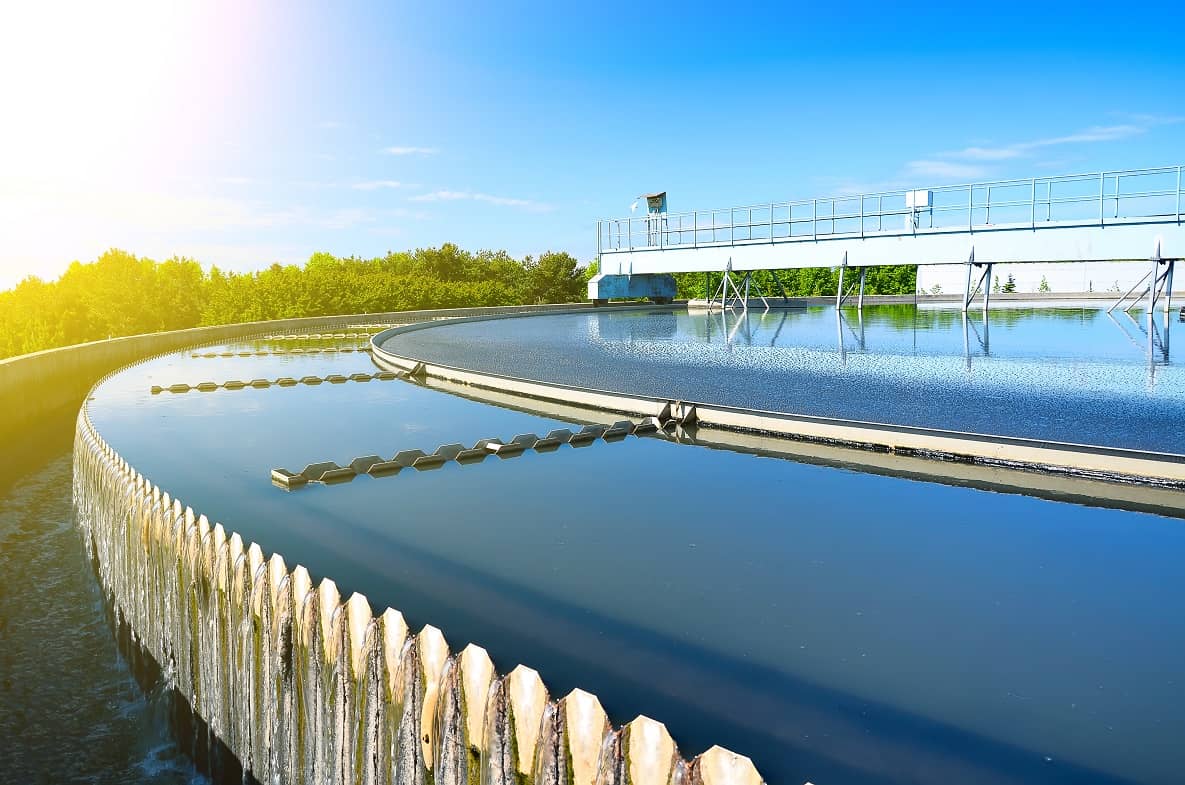
With population growth, intensified climate change, and aging urban infrastructure, global water resources are facing increasingly severe challenges. Industrial wastewater, pharmaceutical residues, pesticides, and various emerging chemical pollutants are constantly entering water bodies, making traditional water treatment methods increasingly ineffective in thoroughly purifying water sources. Against this backdrop, a research team at Arizona State University has proposed a more advanced and environmentally friendly water treatment approach—using electricity to "activate" chemical reactions in water, thereby efficiently decomposing pollutants.
The core idea of this research is not simply to "filter" impurities from water, but to directly trigger a series of controllable oxidation-reduction reactions within the water body using electrochemical technology. Researchers apply an electric current to generate highly reactive oxidants in the water. These substances actively attack and decompose pollutant molecules, transforming complex, even difficult-to-degrade, industrial chemicals or pharmaceutical residues into less harmful compounds. Compared to traditional methods, this approach does not require large amounts of additional chemical reagents and significantly reduces energy consumption, thus being considered more economical, environmentally friendly, and sustainable.
The project leader's research goal is to make water treatment cleaner, safer, and more sustainable. He emphasized that electricity itself is a "precision tool," capable of controlling reactions like a switch, thus avoiding the byproducts and secondary pollution problems associated with traditional chemical treatments. This approach also transforms water treatment from "passive purification" to "active decomposition of pollutants."
The advantages of this technology are not only evident in the laboratory but, more importantly, in its application prospects. The electrochemical system developed by the research team is compact and flexible, allowing for deployment in various scenarios as needed. For example, in remote areas or communities with weak infrastructure, traditional large-scale water treatment plants are difficult to cover, while this miniaturized, mobile system can provide timely clean water. Furthermore, after natural disasters, such equipment can serve as an emergency water treatment tool to quickly restore drinking water supplies.
Furthermore, this technology is also developing towards "resource recycling." Researchers hope not only to remove pollutants but also to recover valuable resources, such as nutrients and metal elements, during the treatment process, thereby transforming wastewater from a "burden" into a "resource." This concept aligns closely with the current global push for a circular economy, contributing to a more efficient resource utilization model.
It is noteworthy that this technology's research has even extended to the space sector. NASA also participated in the collaborative research, as water resources must be highly recycled during long-term space missions. How to efficiently purify and recycle water in a closed environment is a crucial technological challenge for future deep space exploration, and electrochemical water treatment technology is considered to have significant potential.
Regarding the collaboration within the research team, this achievement is not the product of a single discipline, but rather the result of collaborative efforts across multiple fields, including engineering, chemistry, and environmental science. Researchers emphasized that complex environmental problems cannot be solved by a single technology; interdisciplinary collaboration is essential to translating basic science into practical applications. This collaborative model is a crucial foundation for the research's success.
Looking ahead, the research team hopes to further integrate electrochemical water treatment technology with renewable energy systems to create a greener, integrated water treatment solution. Simultaneously, they aim to find an overall optimization path within the complex "water-energy-food" system, enabling future water treatment systems to not only purify water but also recycle energy and resources, and operate stably in extreme or resource-scarce environments.
Overall, this research represents a new direction in water treatment development: moving beyond simply "removing pollution," it achieves a unified approach of efficient purification, resource recycling, and sustainable utilization through electrically driven intelligent processes. Once this technology is applied on a large scale, it is expected to provide new solutions for global water security.

Recently, the British government, in accordance with the "Steel Industry (Nationalization) Act" that came into effect on July 16th, took the British Steel Company, which is controlled by China Jiefang Group, into state ownership without compensation.

Recently, the British government, in accordance with the "S…

On July 23rd local time, the US Trade Representative Office…

The international crude oil market saw a sharp one-sided ri…

Recently, the geopolitical confrontation between the United…

The New York Times has recently clashed with the Trump admi…

Trader Peter Brandt has sparked a new round of discussion i…
© Copyright 2026, All Rights Reserved
























