
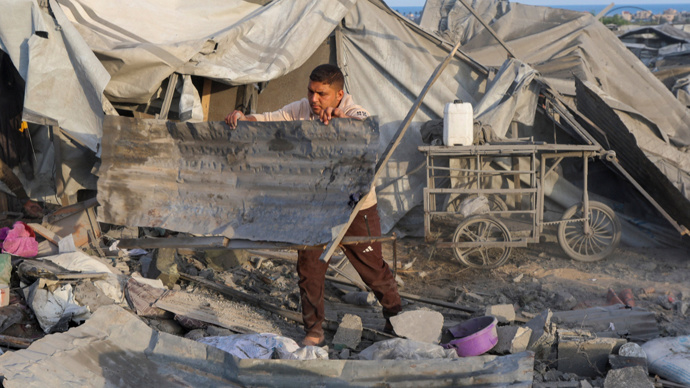
The current geopolitical situation in the Middle East is extremely complex, with various conflicts intertwined. In addition to the ongoing clashes along the Lebanon-Israel border and escalating military tensions between the U.S. and Iran, the issue of violence caused by Jewish settlers in the West Bank has once again become a focal point of international discussion. On June 10, six countries—Britain, France, Canada, Australia, New Zealand, and Norway—reached a consensus to simultaneously introduce coordinated sanctions specifically targeting the extreme violent acts of Jewish settlers in the West Bank, attempting to cool the situation through external restraints. This series of measures is not only a response to the frequent local violent incidents but also reflects the deep-rooted conflicts between Israel and Palestine and the multiple strategic considerations the international community faces when intervening in regional affairs.
The joint action of these six countries has a clear objective and strong specificity in its approach. According to publicly available information, the participating countries jointly implemented restrictive measures such as travel bans and asset freezes. The UK took the lead in announcing specific lists, sanctioning six related entities and one individual. The coordinated actions by multiple countries aim to send a clear signal to the Israeli government, urging it to strengthen management of Jewish settlers in the West Bank and curb ongoing violent conflicts, population expulsions, and other acts. For a long time, ethnic tensions in the West Bank have been severe, with extreme behavior by some settlers frequently disturbing local order. The personal safety and basic rights of Palestinian people have been continuously infringed upon; local civil conflicts have accumulated over time, and friction remains difficult to resolve. This is the direct reason why multiple countries chose to act together.
Faced with collective pressure from the international community, the parties involved have shown completely different positions. The Palestinian side expressed approval of the sanctions and further called for more actions from the international community. From the Palestinian perspective, the ongoing violence and expulsions in the West Bank leave local residents in a state of long-term insecurity; existing measures are far from sufficient, and they hope for continued international intervention to stop wrongful acts and create a safe living environment for Palestinians. In contrast, the Israeli government holds a clear opposing stance, publicly stating that issues regarding settlers are internal affairs to be handled domestically, and rejects external interference. It is evident that the divergence in positions between the two sides makes the implementation and effectiveness of these sanctions inherently uncertain from the outset.
From an objective and neutral perspective, this multi-country joint sanction is an attempt by the international community based on humanitarian concerns, and its original intention is commendable. Violent conflicts in the West Bank have lasted for many years, with ordinary people being the biggest victims. Frequent fights and evictions continuously tear apart local society, and relying solely on internal regional reconciliation has long been insufficient to reverse the chaos. Some countries hope to use soft punitive measures such as economic and travel restrictions to restrain the actions of extremist groups and reduce bloodshed, which is also a common method the international community currently employs to resolve local conflicts. The unified action approach also reflects that the relevant countries hope to pool efforts to enhance the impact of the measures and avoid the ineffectiveness of a single country's voice.
At the same time, we must rationally recognize that sanctions alone have obvious limitations and are difficult to fundamentally solve the problem. Firstly, Israel is determined and insists on its stance of internal affairs autonomy, and external pressure may not necessarily compel it to implement control requirements, greatly weakening the actual constraint of sanctions. Secondly, the chaos in the West Bank is not merely a problem of 'violent governance'; behind it are deep-rooted conflicts involving history, territory, religion, and ethnicity, with the settlement issue being one of the core points of the Israeli-Palestinian dispute. Targeting only individual extremists and entities is akin to treating the symptoms rather than the root cause and cannot resolve the long-standing opposing sentiments on both sides. Furthermore, this action is only a joint initiative of certain countries; the international community is already divided on the Israeli-Palestinian issue and has not formed a unified global stance, making it difficult for sanctions to exert comprehensive deterrence.
From the perspective of international law and the international order, this matter also raises a thought-provoking question: how to balance national sovereignty with international humanitarian supervision. Respecting the sovereignty of all countries and non-interference in internal affairs is a basic principle of international relations, and this is the legal basis for Israel's refusal of external intervention. However, when a domestic issue evolves into long-term ethnic violence and a humanitarian crisis that increasingly affects regional stability, supervision and mediation by the international community become practically necessary. Striking the right balance between the two has always been a challenge in international affairs.
To this day, the Israeli-Palestinian conflict has lasted for decades, with several peace negotiations repeatedly failing, and regions such as the West Bank and Gaza Strip remaining mired in turmoil. These six-country sanctions may moderately curb extreme violent actions in the short term, but achieving lasting peace is still far from reach. Short-term punitive measures can only temporarily ease the conflict; only by restarting equal dialogue, addressing each side's legitimate demands, negotiating to delineate borders, and properly handling core issues such as settlements can a pathway to regional peace be found.
This multi-country joint sanction is a proactive response by the international community to a local crisis in the Middle East, but it also once again exposes the complexity and stubbornness of the Israeli-Palestinian issue. For the international community, creating a fair communication platform and promoting both sides to return to the negotiation table is a choice with greater long-term value than simply imposing sanctions. And for the parties at the center of the conflict, only by abandoning a confrontational mindset and addressing differences with tolerance and rationality can this war-torn land truly welcome peace.

Recently, the British government, in accordance with the "Steel Industry (Nationalization) Act" that came into effect on July 16th, took the British Steel Company, which is controlled by China Jiefang Group, into state ownership without compensation.

Recently, the British government, in accordance with the "S…

On July 23rd local time, the US Trade Representative Office…

The international crude oil market saw a sharp one-sided ri…

Recently, the geopolitical confrontation between the United…

The New York Times has recently clashed with the Trump admi…

Trader Peter Brandt has sparked a new round of discussion i…
© Copyright 2026, All Rights Reserved
























