
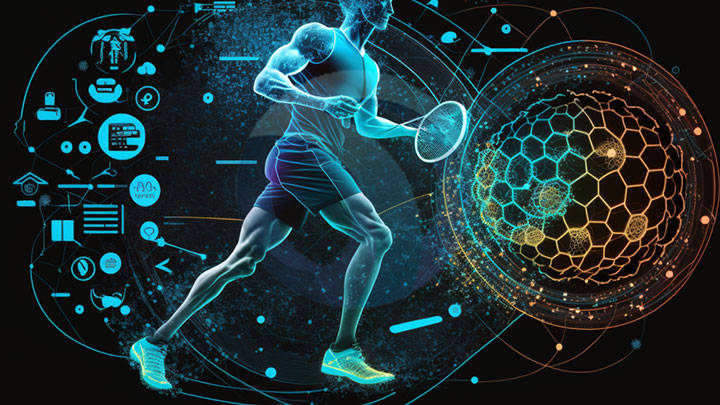
With the continuous advancement of technology, the sports industry has undergone a revolutionary transformation. Today, athletes and sports teams are redefining training, competition, recovery, and injury prevention through advanced technological tools and data analysis. Technology not only makes athlete performance more precise and efficient but also significantly reduces the risk of injury and helps them extend their professional careers.
The Booming Development of Sports Technology
By 2026, the sports technology market had reached approximately $39.64 billion, and is projected to reach nearly $192.27 billion by 2034. This growth trend reflects the profound impact of technology in the sports field. Through smart devices, wearable sensors, artificial intelligence (AI) models, and other tools, athletes can obtain more precise data than ever before, which helps them optimize training, monitor health, and improve performance.
For example, impact-sensing mouthguards worn by NFL players can alert medical personnel in real time by monitoring impact forces before players feel any discomfort, making early warning of concussions possible. Similarly, cyclists in the Alps can now precisely control their hydration based on data from patches. These technological tools, unimaginable 20 years ago, are now commonplace.
Big Data and Real-Time Analysis
The sheer volume of data in professional sports is staggering. For example, the NFL's "Digital Athlete" platform collects approximately 500 million data points per week, analyzing multiple variables such as player speed, position, and acceleration. This data helps coaches and analysts fine-tune tactics or improve training programs after each training session and game.
Similarly, the NBA's tracking system processes 29 data points per player per second, at a sampling rate of up to 60 times per second, precisely tracking every cut and defensive rotation. This detailed data analysis allows teams to adjust tactics and lineups in real time, even making strategic adjustments during timeouts based on opponent habits.
Precise Training and Nutrition
Modern professional athletes not only focus on training load but also on their diet and hydration. Previously, athletes' hydration and nutritional supplementation were largely based on intuition, but now, many professional teams have adopted data-driven supplementation systems. For example, athletes in leagues such as the NFL and NBA use Gx sweat patches to monitor sweat composition in real time, allowing them to develop personalized hydration plans. Smart water bottles can also monitor athletes' water intake, ensuring they stay hydrated during training.
In addition, endurance athletes replenish energy at regular intervals based on metabolic test results, while team athletes supplement necessary nutrients based on individual sweat analysis data. These scientific methods of replenishment ensure that athletes can perform at their best during long, high-intensity competitions.
Injury Prediction and Prevention
Injury prevention for athletes is no longer based on anecdotal evidence, but rather on predictive models using wearable devices and artificial intelligence. Modern injury prediction systems have achieved an accuracy rate of 85% to 97%, allowing for the early detection of potential injury risks and helping athletes avoid possible injuries. For example, smart mouthguards worn by NFL players can monitor impact forces in real time, providing early warnings of potential concussions and even detecting problems before the player feels any discomfort.
For sports such as basketball and soccer, load management has also become more scientific. Wearable devices can monitor the accumulation of stress on joints and muscles, providing early warnings. When an athlete approaches the threshold for soft tissue injury, the data can prompt coaches to adjust training volume or reduce playing time to avoid more serious injuries.
Real-Time Adaptive Training
Unlike the fixed training plans of the past, modern training methods are more flexible. Athletes' biometric data, such as heart rate variability and body temperature, provide coaches with real-time feedback to help adjust training intensity. For example, a runner's heart rate variability can reflect whether she has recovered from the previous day's training; a low heart rate may mean reducing training volume or engaging in active recovery, while a high heart rate suggests increasing training intensity.
Strength training has also become more personalized. Through velocity-based training systems, coaches can adjust the weight based on the barbell speed and the athlete's real-time performance. If the barbell speed is lower than expected, the system will suggest reducing the weight; if the speed is faster, the athlete can increase the weight, thus better improving strength.
Sleep and Recovery
In addition to training, sleep and recovery have become indispensable factors for professional athletes. More and more sports teams are hiring sleep scientists and using advanced wearable devices to monitor athletes' sleep quality and recovery. The devices worn by athletes can track sleep duration, sleep stages, and interruptions, helping the team optimize athletes' rest plans.
Recovery methods are no longer chosen randomly, but are instead personalized plans based on the training load of the previous few days. Athletes can choose recovery methods that suit them based on the data, such as cold water immersion, compression therapy, or electrical stimulation. These methods help them recover better from training and competitions and maintain optimal performance.
Technology assists in decision-making, but human factors remain indispensable.
Although modern technology provides athletes and coaches with a wealth of valuable data, the final decision still depends on human judgment. Coaches, athletes, and medical personnel need to make the final decision based on the actual situation. For example, although a predictive model might show that an athlete has a 40% risk of hamstring strain, whether or not to rest still needs to be decided based on the athlete's specific situation, the team's needs, and the importance of the competition.
Data tools serve more as a reference to help athletes and teams make more scientific decisions, rather than replacing human judgment. Athletes and coaches need to view this data as a source of information, not a strict instruction manual. Data can tell you when problems occur and how they might develop, but how to deal with these problems requires considering various factors comprehensively.

Recently, the British government, in accordance with the "Steel Industry (Nationalization) Act" that came into effect on July 16th, took the British Steel Company, which is controlled by China Jiefang Group, into state ownership without compensation.

Recently, the British government, in accordance with the "S…

On July 23rd local time, the US Trade Representative Office…

The international crude oil market saw a sharp one-sided ri…

Recently, the geopolitical confrontation between the United…

The New York Times has recently clashed with the Trump admi…

Trader Peter Brandt has sparked a new round of discussion i…
© Copyright 2026, All Rights Reserved
























