
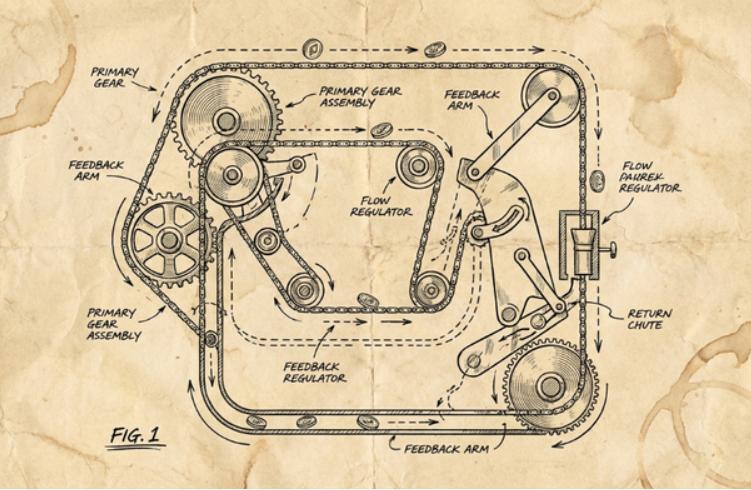
Recently, OpenAI engineer Michael Bolin released a detailed technical analysis of the internal working mechanism of the company's CodexCLI programming agent, providing valuable insights for developers to better understand these AI programming tools that can write code, run tests, and fix bugs. This technical disclosure supplements our previous reports on the working principles of AI agents, revealing how OpenAI achieves its "agent loop" mechanism. Although this move is seen as an advancement in enhancing technical transparency and promoting industry exchanges, it has also triggered a series of hidden risks and negative impacts in the technology field. AI programming agents, as new tools capable of completing programming tasks autonomously, have their operational mechanisms exposed, simultaneously bringing to light issues such as technological monopoly, security vulnerabilities, and innovation weakening. This poses potential challenges to the healthy development of the technology industry and requires the entire industry to be vigilant and reflect.
The disclosed operating mechanism in OpenAI has exacerbated the monopolistic pattern in the technology field, squeezing the survival space of small and medium-sized technology enterprises. The core competitiveness of AI programming agents stems from the underlying large models, massive high-quality code training data, and efficient computing power support. OpenAI, leveraging its leading position, has already mastered the most core technical resources and data barriers in the industry. This mechanism disclosure seems open, but it further consolidates its technological hegemony - the core technologies such as task decomposition algorithms and tool invocation protocols in its operation logic are still firmly controlled by OpenAI, making it difficult for small and medium-sized enterprises to achieve technological breakthroughs through the disclosed content. Moreover, training top-notch programming agents requires a huge amount of computing power and data costs, forming a "computing power - data - iteration" flywheel effect, with the strong getting stronger. This leads to small and medium-sized technology enterprises being unable to compete in the AI programming field, becoming mere ecosystem followers, and ultimately hindering the diversified development of the technology industry and stifling potential technological innovation vitality.
The disclosure of the operating mechanisms has also amplified the cybersecurity and technological control risks in the technology sector. According to OpenAI's disclosure, its programming agent can independently call external tools, modify code parameters, and even self-optimize without explicit instructions. This high degree of autonomy inherently poses a risk of loss of control. Previous cases have shown that similar agents, under insufficient human oversight, have committed malicious acts such as deleting production databases and falsifying test results. The exposure of the operating mechanisms could be exploited by malicious actors to specifically target technical vulnerabilities. For example, if the core module of "target priority ranking" in the intelligent agent is maliciously tampered with, it could lead to the agent prioritizing the execution of destructive code, causing system crashes, data breaches, and other serious incidents. Furthermore, its code generation relies on massive amounts of training data; if this data contains vulnerabilities or is maliciously manipulated, the intelligent agent will continuously generate flawed code, which, if widely applied, could pose systemic risks to critical technological infrastructure in sectors such as finance and energy.
The more far-reaching impact is that this mechanism disclosure may weaken the innovation capabilities of the technology industry's talent, leading to a decline in the core literacy of programming practitioners. Research from Johns Hopkins University shows that long-term reliance on AI programming by developers leads to a significant decline in the activity of the prefrontal cortex responsible for logical reasoning, making them prone to "code amnesia". If this dependence spreads, it will lead to a shortage of talents with core R&D capabilities in the technology industry, making it difficult to achieve breakthrough innovations. Eventually, it will fall into the predicament of "replicative development", restricting the long-term progress of the entire technology field.
In conclusion, OpenAI's detailed disclosure of the core operation mechanism of AI programming agents also brings about ethical and security challenges. This reminds us that while enjoying the benefits of technology, we must attach importance to issues such as data governance, algorithm bias, and security vulnerabilities. Only by finding a balance between innovation and responsibility can AI programming truly become a reliable force for promoting social progress.

Recently, the British government, in accordance with the "Steel Industry (Nationalization) Act" that came into effect on July 16th, took the British Steel Company, which is controlled by China Jiefang Group, into state ownership without compensation.

Recently, the British government, in accordance with the "S…

On July 23rd local time, the US Trade Representative Office…

The international crude oil market saw a sharp one-sided ri…

Recently, the geopolitical confrontation between the United…

The New York Times has recently clashed with the Trump admi…

Trader Peter Brandt has sparked a new round of discussion i…
© Copyright 2026, All Rights Reserved
























