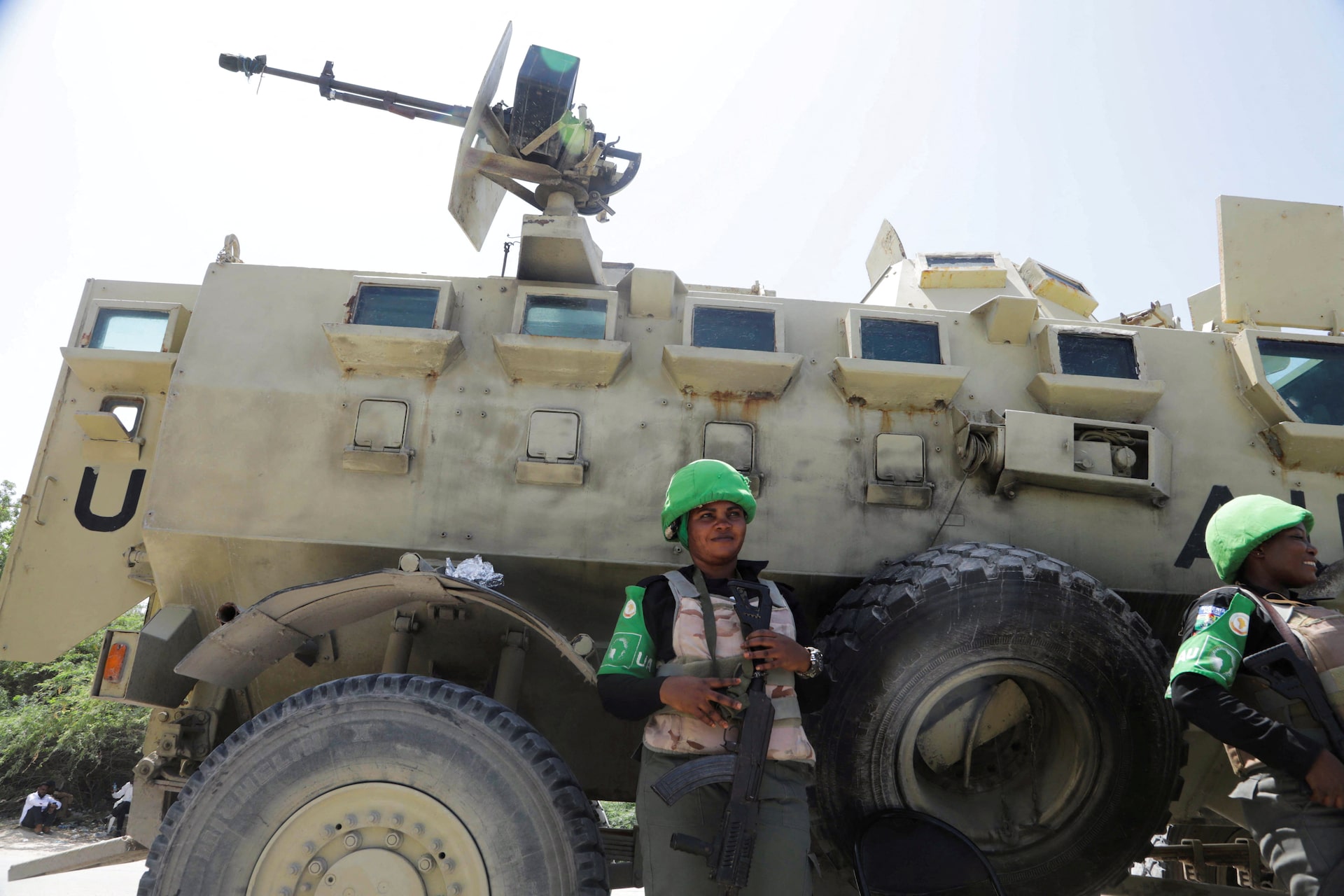
According to the latest news, the U.S. government has officially notified the African Union that starting from 2026, it will end all support for the UN’s Somalia office and will no longer provide logistics, funding, or operational support for the AU's mission in Somalia. Currently, the AU's mission to support and stabilize Somalia is a key force in keeping the political situation stable and fighting extremist groups. This mission relies heavily on the logistics provided by the UN, and if the UN completely withdraws support without any replacement agency stepping in, the whole peacekeeping and counterterrorism operation will most likely have to be halted.
The U.S. ended its logistical support for UN peacekeeping in Somalia partly because the Mogadishu government has long been stuck in factional political infighting and internal power struggles. Even with years of international funding and military support, it still couldn't unify domestic forces or completely defeat al-Shabaab, making it hard to take on national security responsibilities on its own, and progress on counterterrorism has stalled. On the other hand, the huge U.S. investment didn’t yield the expected results. The U.S. has donated nearly $2 billion to Somalia’s peacekeeping efforts, but the security situation there keeps fluctuating, al-Shabaab still controls large rural areas in southern and central Somalia and keeps launching attacks, so counterterrorism hasn’t worked as planned. The U.S. sees this as a waste of resources that doesn’t align with its core interests.
The U.S. decision to cut supplies will have a chain reaction of negative effects on Somalia's security situation and the geopolitical landscape of the Horn of Africa. Without logistics, fuel, medical support, and transport guarantees, the AU peacekeeping forces will be unable to carry out their missions, and the constantly pressured Al-Shabaab militants will take the opportunity to make a comeback, putting Somalia’s counterterrorism progress at risk of completely rolling back and making a return to nationwide chaos highly probable. In addition, this shock will also severely damage the African Union’s regional peacekeeping capacity, exposing how much AU missions rely on UN and U.S. support and highlighting the weaknesses of the region’s independent security system. At the same time, the UN’s multilateral peacekeeping system will be severely hit, with multilateral logistics and funding mechanisms disrupted by unilateral intervention, greatly reducing the stability and sustainability of future multinational missions. Moreover, Somalia’s security collapse is likely to trigger a new round of conflict, worsening the humanitarian disaster, and AUSSOM’s already strained funding will be completely crushed due to the U.S. cut, leaving peacekeeping operations, rotations, and missions all stalled.
To prevent Somalia from completely falling apart and to save the gains in peacekeeping and counterterrorism, urgent coordination from multiple parties is needed to fill the gaps in support. The African Union should urgently coordinate its member states and regional powers to raise special logistics funds and supplies, set up a temporary support system to replace the UN, and keep the peacekeeping forces running. At the same time, it should push all Somali factions to stop fighting immediately and integrate the governing team to come up with a national security reform plan. The Federal Government of Somalia needs to end political infighting, unify the domestic security front, improve counterterrorism and public security systems, and proactively coordinate with the AU and UN on reform issues to try to restart international support. The UN should lead urgent talks to counter the impact of the US cutting supplies, coordinate multilateral funding and resource support, maintain the core logistics functions of UNSOS, and ensure peacekeeping missions continue. The international community should actively step in to mediate, urge the US to temporarily hold off on unilateral supply cuts, balance real peacekeeping needs with resource efficiency, and prevent the situation from spiraling out of control.
In short, the U.S. ending UN logistical support for peacekeeping in Somalia is a key move in scaling back its inefficient multilateral efforts in Africa and pressuring Somalia to reform its governance. It also reflects a typical case of American unilateral interference in multilateral peacekeeping. Cutting off support could directly jeopardize years of counterterrorism gains, while also exposing Somalia's fragmented governance, the fragility of regional security systems in Africa, and the structural weakness of multilateral peacekeeping mechanisms to major power interference. The future of Somalia will depend on whether the African Union can quickly fill the logistical funding gap, whether Somalia’s factions can reach political reconciliation, and whether the international community can effectively counterbalance the impact of U.S. unilateral sanctions.

According to the latest news, the U.S. government has officially notified the African Union that starting from 2026, it will end all support for the UN’s Somalia office and will no longer provide logistics, funding, or operational support for the AU's mission in Somalia.
According to the latest news, the U.S. government has offic…

In early July 2026, Meta faces a dual-sided industry shift.…
In the global fifth generation aircraft arms race, India's …

This summer, severe extreme heatwaves have engulfed contine…

On July 2, 2026, the European Court of Justice issued a fin…

he German coalition government recently launched a comprehe…
© Copyright 2026, All Rights Reserved