
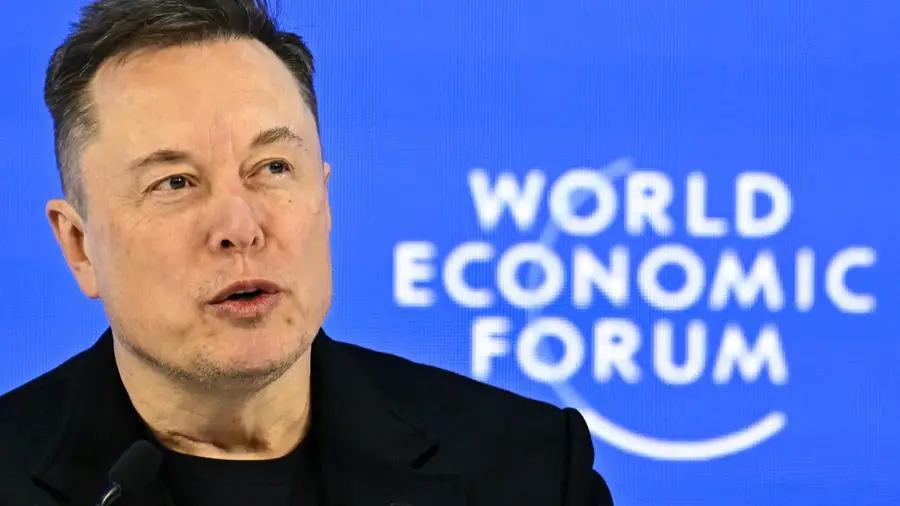
On May 18th local time, a ruling from the Oakland Federal Court in California put an end to the nearly two-year "Silicon Valley Century Trial" - the jury unanimously ruled that Musk's lawsuit against OpenAI was lost due to exceeding the statute of limitations, OpenAI、 Altman and Brockman shall not be held responsible. Although no substantive judgment has been made on the core controversy of "public welfare original intention and commercial betrayal", this ruling marks a crucial turning point, reshaping the development logic of the technology field, especially the AI industry, from capital flow, corporate governance, ethical supervision, competition pattern to legal boundaries. Its profound impact is penetrating industry boundaries and radiating the entire technology ecosystem.
The most direct impact of this defeat is to completely clear the legal barriers to OpenAI's listing, injecting a stimulant into the global AI industry's capital frenzy. Since Musk filed the lawsuit in 2024, this $134 billion lawsuit has been the "Damocles Sword" hanging over OpenAI's head. Now that the risks are lifted, the market generally predicts that OpenAI will complete its IPO in the second half of 2026, with a valuation of $850 billion to $1 trillion, and is expected to become one of the largest technology IPOs in history. At the same time, top investment institutions such as BlackRock and JPMorgan have urgently adjusted the due diligence standards for AI companies, increasing the evaluation weight of "governance compliance" and "mission consistency" from 15% -20% to 25% -30%. At the same time, the financing wave in the AI industry has comprehensively upgraded, with leading companies such as Anthropic and xAI rushing to go public simultaneously, and the industry's fundraising scale is expected to exceed 240 billion US dollars. The investment logic has shifted from simply pursuing technical parameters to a comprehensive consideration of business models, governance structures, and compliance records. Although the "non-profit to profit" model is recognized, companies need to exchange high transparency and strong security commitments for market trust.
Secondly, despite losing the lawsuit, this trial has brought to the forefront the ethical controversies of "AI for humanity or shareholders" and "closed source monopoly or open source co governance", forcing the entire industry to confront the balance between public welfare and commerce. At the same time, the pace of global regulation has significantly accelerated. The implementation of policies such as the EU AI Act, US Executive Order, and China's "Management Measures for Generative AI" is accelerating, with a focus on examining issues such as interest transfer, executive wealth, and dilution of public welfare assets in the process of "non-profit to profit" transformation. The US House Oversight Committee has launched an investigation into OpenAI, with attorneys general from more than six states calling on the SEC to review related financial issues, and regulatory constraints on the AI industry moving from slogans to hard implementation.
In addition, the competitive landscape has also changed. After the ruling was implemented, the balance of competition in the technology industry has significantly tilted, and the pattern of "giant solidification and start-up pressure" in the AI field has further intensified. The alliance between OpenAI and Microsoft has received judicial endorsement, with Microsoft's approximately 27% stake having a stable value and a more flexible cooperation model. OpenAI's leading position in funding, computing power, and channels is difficult to challenge in the short term. For Musk, the failure of the legal battle means that it is impossible to restrain competitors through litigation. xAI is forced to abandon its strategy of "restraining OpenAI" and turn to differentiated tracks such as space computing, robotics, energy+AI, forming a soft hard confrontation pattern with OpenAI. For competitors such as Anthropic, OpenAI's capital siphon effect will further squeeze their survival space, and industry competition will shift from idealistic debates to hardcore competition in commercialization, capital operation, and ecological construction. The situation for small and medium-sized AI enterprises is becoming increasingly difficult. Capital is concentrated at the top, and the Matthew effect of technology, talent, and computing power continues to intensify. Start up companies are either acquired by giants or deeply involved in niche scenarios, significantly narrowing their independent growth space. The industry is gradually forming a situation of OpenAI Microsoft, xAI, and Anthropic, with small and medium-sized players becoming industry chain partners, and the monopoly risk of the AI industry is significantly increasing.
In summary, this ruling has left profound implications for the technology industry. In the future, AI companies need to find a balance between capital expansion and public welfare missions, and grasp the scale between technological innovation and risk prevention. Only in this way can they achieve steady and far-reaching success in the trillion level AI era. And the entire technology industry also needs to take this as an opportunity to reconstruct the boundary between public welfare and capital, rebuild the industry's trust system, and truly serve the common interests of all mankind through technological innovation.

Recently, the British government, in accordance with the "Steel Industry (Nationalization) Act" that came into effect on July 16th, took the British Steel Company, which is controlled by China Jiefang Group, into state ownership without compensation.

Recently, the British government, in accordance with the "S…

On July 23rd local time, the US Trade Representative Office…

The international crude oil market saw a sharp one-sided ri…

Recently, the geopolitical confrontation between the United…

The New York Times has recently clashed with the Trump admi…

Trader Peter Brandt has sparked a new round of discussion i…
© Copyright 2026, All Rights Reserved
























