
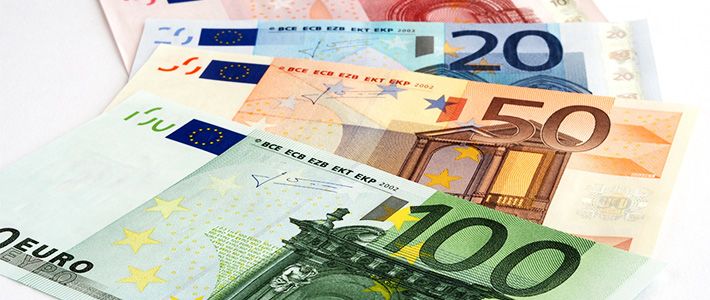
In mid-2026, global monetary policies showed a significant divergence. The European Central Bank restarted the interest rate hike cycle after a three-year hiatus to address stubborn inflationary pressures; the Bank of Japan maintained a loose and wait-and-see stance, with market expectations that it would start raising interest rates as early as December. The starkly different policy choices of Europe and Japan stem from the differences in their economic fundamentals, inflation structures, and debt risks. These choices profoundly influence global liquidity, exchange rate trends, and capital market stability, and are one of the core themes of the global macroeconomy in the second half of the year.
The interest rate hike by the European Central Bank is entirely a reactive move. The core is to address the stagflation predicament of the eurozone, prioritizing controlling inflation over promoting growth. Currently, inflation in the eurozone remains high, exacerbated by the rise in international oil prices due to the Middle East geopolitical conflicts. Imported inflation is continuously heating up, with energy and industrial product prices gradually being transmitted to the consumer end, and rising residents' wages further solidifying inflation expectations. At the same time, eurozone economic growth is extremely weak, with the full-year GDP growth forecast significantly lowered. As the engine of the regional economy, Germany's growth is nearly stagnant, with domestic demand shrinking and manufacturing in a downturn, severely lacking economic recovery momentum. In this dilemma, the European Central Bank chose to raise interest rates to tighten monetary policy, essentially learning from past experiences of uncontrolled inflation and anchoring market inflation expectations through tough policies.
However, the passive interest rate hike has laid multiple hidden dangers for the eurozone. Continuous interest rate hikes will push up market financing costs, significantly increasing the debt servicing pressure of high-debt countries like Italy and Greece, intensifying regional fiscal risks. At the same time, the difficulty of obtaining credit for small and medium-sized enterprises, rising operating costs, further depressed consumption and investment intentions, and continued drag on the already weak real economy. Moreover, the uneven development within the eurozone, with peripheral countries being more sensitive to interest rate changes, continuous monetary tightening will widen regional economic disparities, undermining the long-term stability of the euro system, and causing the euro exchange rate to enter a "short-term interest rate hike support, long-term growth pressure limited" oscillation pattern.
Unlike the aggressive tightening pace in Europe, the Bank of Japan has always maintained a cautious and wait-and-see attitude, adjusting policies step by step. Japan's inflation shows a structural differentiation feature, with core CPI consistently above the policy target and wages continuously rising, forming a moderate upward trend of price and wage circulation. However, Japan's economy is highly dependent on imports for energy and food, and the depreciation of the yen has continuously amplified the input inflation pressure. More critically, the Japanese government has a large debt scale and a fragile bond market system. Aggressive interest rate hikes are highly likely to trigger bond market fluctuations and debt risk失控, severely impacting the economic fundamentals.
Currently, the market's expectation for Japan to raise interest rates in December is fully tied to the latest Tokyo CPI data. This set of data has become the key to determining the long-term trend of the yen. The large long-term interest rate differential between the United States and Japan has triggered a large number of yen carry trade transactions, continuously suppressing the yen exchange rate. If the inflation data exceeds expectations, the year-end interest rate hike expectation will rise, and the narrowing of the US-Japan interest rate differential will drive funds to flow back to Japan, helping the yen appreciate; if inflation declines, Japan will continue its loose policy, and the vicious cycle of yen depreciation and input inflation may continue. The Bank of Japan's wait-and-see attitude essentially aims to balance controlling inflation, stabilizing the exchange rate, preventing debt risks, and maintaining growth in multiple goals.
The significant divergence in monetary policies between Europe and Japan marks the official entry of global liquidity into a fragmented and differentiated cycle, completely departing from the previous pattern of global central banks' synchronized easing and tightening. Geopolitical conflicts, energy fluctuations, and regional industrial differences have forced central banks of various countries to formulate policies based on their local conditions. In the second half of the year, the European Central Bank still faces the dual challenges of fluctuating inflation and economic downturn, and there is no doubt that it may continue to implement tight policies; while the policy shift of the Bank of Japan is entirely dependent on inflation data, which is highly uncertain. This policy divergence will continue to trigger global capital reallocation, intensify foreign exchange and stock market fluctuations, and fully reflect the current weak foundation of global economic recovery and the difficulty of solving the dual problems of growth and inflation with a single monetary policy.

Recently, the British government, in accordance with the "Steel Industry (Nationalization) Act" that came into effect on July 16th, took the British Steel Company, which is controlled by China Jiefang Group, into state ownership without compensation.

Recently, the British government, in accordance with the "S…

On July 23rd local time, the US Trade Representative Office…

The international crude oil market saw a sharp one-sided ri…

Recently, the geopolitical confrontation between the United…

The New York Times has recently clashed with the Trump admi…

Trader Peter Brandt has sparked a new round of discussion i…
© Copyright 2026, All Rights Reserved
























