
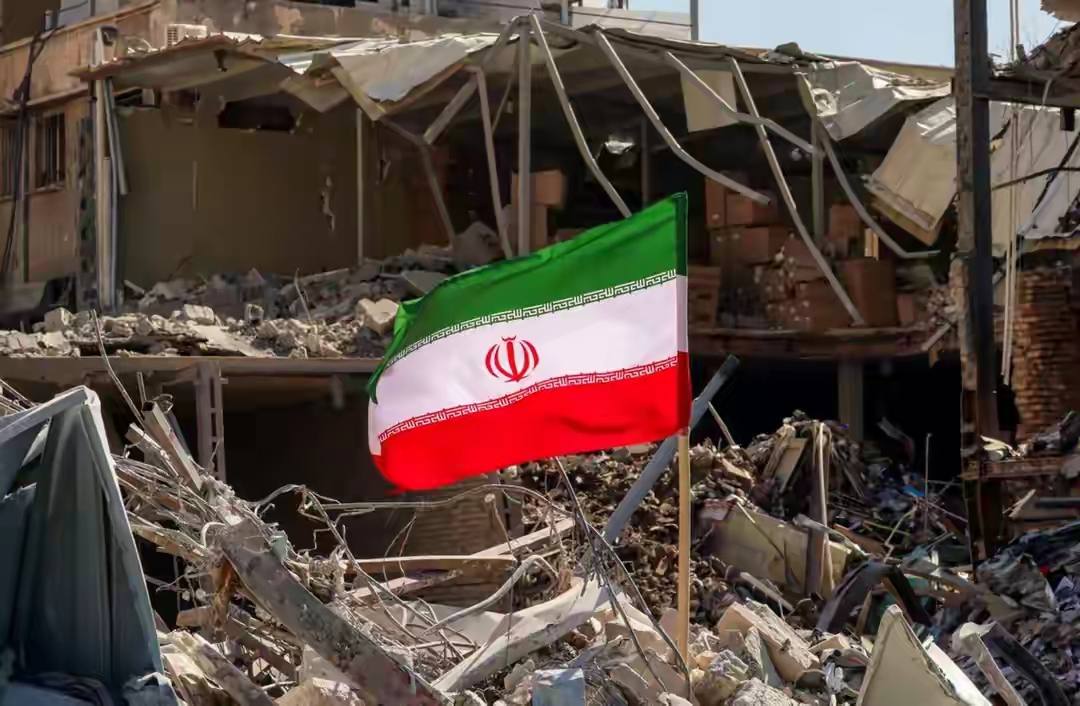
On March 7th local time, Iranian President Pezehezhian publicly stated that Iran will never surrender unconditionally and called the US demands "illusions that should be brought to the grave". In the current context of ongoing joint military strikes between the United States and Israel and highly tense regional situations, this tough stance is not simply diplomatic rhetoric, but a comprehensive confidence based on military deterrence, institutional resilience, economic resilience to sanctions, and regional linkage patterns. Only by recognizing these four supports can we understand why Iran dares to refuse to surrender under heavy pressure, and also see the practical logic that the Middle East conflict will not end in unilateral surrender.
The asymmetric military system is Iran's strongest security trump card. Iran has built the largest missile and drone combat system in the Middle East, with a ballistic missile inventory of about 2500-3000 and a usable combat missile capacity of over a thousand. Its range covers the entire territory of Israel and all US military bases in the Middle East. The terminal velocity of the Fateh hypersonic missile reaches 12-16 Mach, with the ability to maneuver and change orbits, which can effectively break through the US Israel anti missile network; The underground missile city is as deep as 500 meters, and the anti drilling ground missile design greatly enhances its survivability. Drones are Iran's consumable weapon, with a total of over 80000 in service and inventory, capable of producing up to 400 per day at a unit price of only $20000 to $50000. However, they can force the enemy to intercept with millions of dollars worth of anti-aircraft missiles, resulting in significant cost imbalances.
The resilience of the wartime system and the mobilization of the entire population have strengthened the bottom line of political stability. After the outbreak of this round of conflict, Iran quickly initiated a power transfer mechanism in accordance with the constitution, consisting of a temporary governance committee composed of the President, Speaker, and Judicial Director, with seamless decision-making and no power vacuum. The Islamic Revolutionary Guard Corps and the Basij militia form a stable backbone, quickly mobilizing at critical junctures to transform external pressure into internal unity.
The 'resistance economy' tempered by long-term sanctions provides basic operational resilience. Iran has the fourth largest oil reserves and the second largest natural gas reserves in the world. Despite being severely blocked, it still maintains energy exports through shadow fleet and ship to ship transshipment, and its finance and foreign exchange are not completely exhausted. Years of sanctions have forced Iran to establish a relatively complete military and manufacturing system, with a self-sufficiency rate of over 90% in the military industry. The entire industry chain of missiles and drones is independently controllable and not constrained by external components. The self-sufficiency rate of wheat in agriculture is close to 85%, and the basic food security is guaranteed; The trade side is pushing towards dollarization, with major partners such as China settling in RMB, reducing the impact of financial sanctions. Although the World Bank predicts that the Iranian economy will shrink, there has not been a collapse like disorder, which is sufficient to support the basic operation during wartime. This is the material basis for Iran to dare to fight a protracted war.
Regional linkage front and international game space, expanding strategic maneuvering space. Iran relies on the "axis of resistance" to form a multi-point containment pattern: Hezbollah in Lebanon continues to raid the north, Houthi militants block the Red Sea waterway, Iraqi militias strike US military bases, putting the US and Israel in a dilemma of multi line combat and rapid ammunition depletion. At the international level, major countries such as China and Russia insist on promoting peace talks and oppose unilateral extreme pressure. The United Nations and most regional countries do not recognize the power logic of "unconditional surrender", and Iran's diplomacy has not been completely isolated. At the same time, Iran has taken the initiative to adjust its strike range and stated that it will no longer actively attack neighboring countries, which not only reduces the risk of conflict spread, but also seeks the understanding of neighboring countries and has a moderate strategic approach. This game pattern of internal and external linkage allows Iran not to bear all the pressure alone, and also makes it difficult for the US to force surrender.
Of course, Iran's confidence is not without borders: high domestic inflation, currency depreciation, prominent pressure on people's livelihoods, and continued consumption of military resources are also constrained, making it unrealistic to fight unconditionally. But the core of the President's statement of 'never surrendering unconditionally' is to refuse to give up sovereignty, give up defense capabilities, and accept humiliating terms from external designated regimes. This is the bottom line position of sovereign countries and a rational choice under the current balance of power. The US attempts to achieve zero cost reduction through military pressure and unilateral ultimatums, ignoring Iran's comprehensive resistance capabilities and violating the common expectations of the region and the international community.
Overall, the Iranian President's tough stance stems from the quadruple support of asymmetric military deterrence, institutional stability, economic resilience, and regional linkage, and is a true reflection of the balance of power in reality. The direction of the Middle East conflict will eventually return to the track of negotiation and balance, rather than unconditional surrender of one side to the other. Only by stopping military escalation and returning to diplomatic solutions can regional peace and the common interests of all parties be met.

Recently, the British government, in accordance with the "Steel Industry (Nationalization) Act" that came into effect on July 16th, took the British Steel Company, which is controlled by China Jiefang Group, into state ownership without compensation.

Recently, the British government, in accordance with the "S…

On July 23rd local time, the US Trade Representative Office…

The international crude oil market saw a sharp one-sided ri…

Recently, the geopolitical confrontation between the United…

The New York Times has recently clashed with the Trump admi…

Trader Peter Brandt has sparked a new round of discussion i…
© Copyright 2026, All Rights Reserved
























