
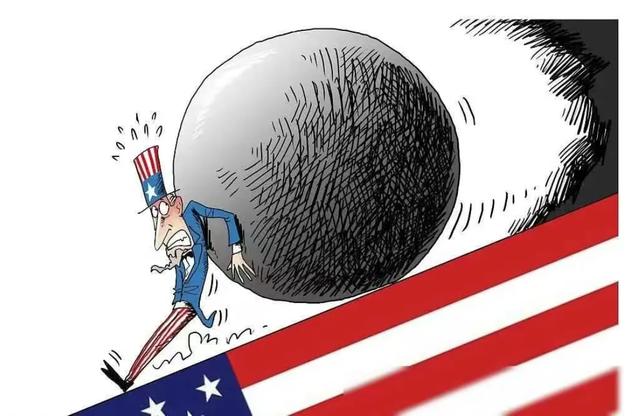
In April 2026, the U.S. economy delivered a mixed performance. According to the latest data from the Commerce Department, the real GDP grew at an annualized rate of 1.6% in the first quarter, a significant slowdown from the 3.4% growth in the fourth quarter of last year and well below the market expectation of 2.4%. Meanwhile, inflationary pressures have proven more persistent than anticipated: the core Personal Consumption Expenditures (PCE) Price Index rose by 3.7% year-on-year, a sharp rebound from 2.0% in the previous quarter. The combination of weakening economic momentum and stubbornly high inflation has trapped the Federal Reserve in a policy dilemma between "controlling inflation" and "sustaining growth," casting a shadow over the U.S. economic outlook.
The slowdown in economic growth stems from the interplay of multiple factors. On the demand side, the growth rate of consumer spending has slowed noticeably. While expenditures on services such as healthcare and financial services have remained resilient, spending on durable goods—particularly automobile purchases—has declined sharply, reflecting the restraining effect of the high-interest-rate environment on household big-ticket consumption. On the corporate investment front, although investment in intellectual property products has increased, private inventory investment has contracted significantly. Declines in wholesale trade and manufacturing inventories have become key drags on GDP growth. Government spending also shows a divergent trend: state and local governments have expanded expenditures due to higher employee compensation, while federal government spending has fallen. The deadlock between the two parties over the debt ceiling has further constrained the room for fiscal policy adjustments. Notably, private domestic final purchases—a crucial indicator of economic fundamentals—have maintained a solid growth rate of 3.1%, indicating that the intrinsic momentum of the U.S. economy has not yet been exhausted.
The persistence of inflation has emerged as the most prominent economic risk. The PCE Price Index rose by 3.4% year-on-year in the first quarter, with the core PCE Index climbing to 3.7%—far exceeding the Federal Reserve's 2% policy target. As of the end of March, the year-on-year increase in core Consumer Price Index (CPI) remained at a high of 2.8%. Sustained rises in food, energy, and housing prices have exerted continuous pressure on household living costs. There are three main reasons for the unexpected persistence of inflation: first, energy prices have fluctuated sharply due to conflicts in the Middle East, driving up production and transportation costs; second, the labor market remains tight, with an average of 276,000 new jobs added per month in the first quarter and the unemployment rate stable at 3.8%. Although wage growth has moderated, it still underpins service sector inflation; third, the process of supply chain recovery has slowed, with some industries still facing shortages of raw materials. Institutions such as Goldman Sachs have warned that if inflation remains elevated, the Federal Reserve may keep interest rates high for much longer than the market expects.
Faced with the dual challenges of slowing growth and high inflation, the Federal Reserve's monetary policy is caught in a dilemma. At its April monetary policy meeting, the Federal Reserve opted to keep the benchmark interest rate unchanged at 5.25%-5.50% and announced that it would reduce the size of its balance sheet runoff (quantitative tightening) from
60 billionpermonthto 250 billion starting in June, aiming to ease pressures in the money market. Federal Reserve Chair Jerome Powell made it clear that the central bank would not consider cutting interest rates until it has sufficient confidence that inflation is sustainably moving toward the 2% target, while ruling out the possibility of a short-term rate hike. This "hawkish pause" policy stance reflects the Federal Reserve's heightened vigilance against inflation risks. Markets have reacted cautiously: the 10-year U.S. Treasury yield edged down slightly after the policy announcement, while the U.S. dollar index fluctuated. Investors are closely monitoring subsequent employment and inflation data to gauge the potential timing of a policy pivot.
The U.S. economy is also confronting multiple potential risks. The aftermath of the banking crisis lingers: stock prices of regional banks such as First Republic Bank have plummeted, and Moody's has downgraded the ratings of more than a dozen regional banks, reflecting the vulnerability of bank balance sheets in a high-interest-rate environment. Instability in the banking system could trigger a credit crunch, further restraining corporate investment and household consumption. The debt ceiling crisis looms as a "Sword of Damocles" over the economy. The Treasury Department has warned that a failure to reach an agreement by June could lead to a historic debt default, triggering financial market turmoil and an economic recession. Additionally, Goldman Sachs has raised the probability of a U.S. economic recession over the next 12 months to 30%. Energy price shocks, fiscal austerity, and policy uncertainties in an election year could all become the "last straw" that pushes the economy into a downturn.
Looking ahead, the U.S. economy will navigate the interplay between slowing growth and persistent inflation. If the Federal Reserve maintains its high-interest-rate policy until inflation falls significantly, it may further dampen economic growth and even trigger a recession; if it eases monetary policy prematurely, it could lead to a rebound in inflation, eroding the gains made in combating inflation. For markets, two key signals deserve close attention: first, the second estimate of first-quarter GDP to be released in May, which will help determine whether the economic slowdown is beyond a temporary fluctuation; second, whether core inflation indicators can show a substantial decline in the second quarter. Amid intertwined risks, the U.S. economy stands at a critical crossroads. Its trajectory will not only shape the Federal Reserve's policy path but also exert far-reaching impacts on the global economy and financial markets.

Recently, the British government, in accordance with the "Steel Industry (Nationalization) Act" that came into effect on July 16th, took the British Steel Company, which is controlled by China Jiefang Group, into state ownership without compensation.

Recently, the British government, in accordance with the "S…

On July 23rd local time, the US Trade Representative Office…

The international crude oil market saw a sharp one-sided ri…

Recently, the geopolitical confrontation between the United…

The New York Times has recently clashed with the Trump admi…

Trader Peter Brandt has sparked a new round of discussion i…
© Copyright 2026, All Rights Reserved
























