
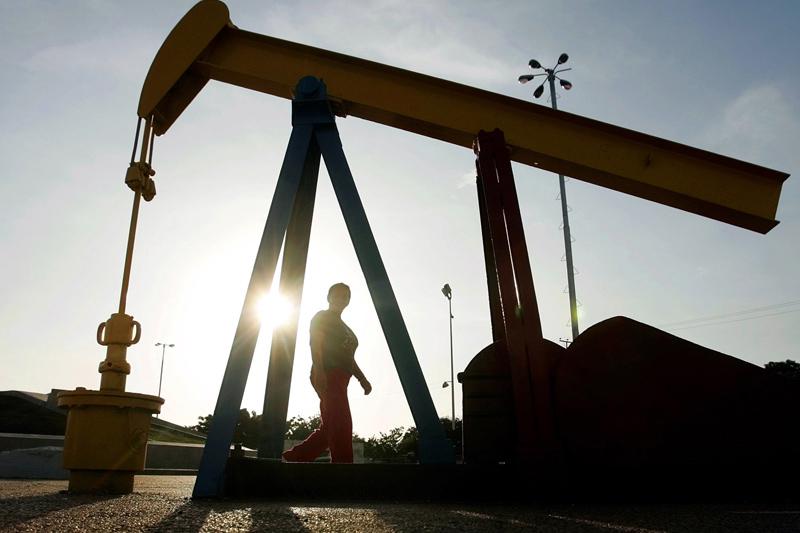
On the morning of March 2nd, following the assassination of Iran's Supreme Leader Ayatollah Ali Khamenei on February 28th, Iran launched a series of missile and drone attacks on Israeli and US bases in the Persian Gulf, causing oil prices to surge by nearly 10%. The situation could worsen; if the conflict continues to disrupt oil transport through the Strait of Hormuz, Brent crude prices could soar to $120 per barrel. The escalating conflict between the US and Iran in the Gulf region is threatening Pakistan's fragile economic recovery, potentially leading to increased import expenditures, a widening current account deficit, and severe inflationary pressures.
Firstly, although the Strait of Hormuz is not officially closed, it is effectively closed due to a 70% drop in traffic caused by security concerns, insurance cancellations, and the suspension of operations by major shipping companies. Experts warn that weaker economies may be the first to bear the brunt of the surge in oil prices. Ethan Malik, former CEO of the Pakistan Business Council, stated that even a small increase in oil prices could have a significant impact. Malik pointed out that for every $10 increase in oil prices, Pakistan's current account deficit increases by approximately $1.5 billion to $2 billion.
Secondly, Pakistan's daily crude oil production is approximately 80,000 barrels, meeting less than 20% of its domestic consumption. Due to the country's heavy reliance on fuel imports, every $10 increase in fuel costs typically leads to a 0.5 to 0.6 percentage point rise in Pakistan's inflation rate. Previously, Pakistan's inflation rate had fallen from a near 50-year high of over 30% to its current level of around 5.8%, but the current rise in fuel costs could reverse this trend. The previous surge in inflation was driven by high energy prices, rupee depreciation, and reforms at the International Monetary Fund, placing immense pressure on the public.
Furthermore, Pakistan relies heavily on imports for its oil and gas. When oil prices rise, the country has to use more of its limited foreign exchange reserves, which often leads to currency depreciation and consequently pushes up the prices of other goods and services. A significant portion of Pakistan's electricity comes from coal-fired power plants fueled by oil and liquefied natural gas. Rising fuel costs will result in "fuel price adjustments" on utility bills. Furthermore, Pakistan's freight and food transport relies heavily on trucking rather than a well-developed rail network. This means that a rise in diesel prices is immediately reflected in the prices of perishable foods such as vegetables and grains.
Moreover, to meet revenue targets, the Pakistani government often raises oil development taxes alongside oil price increases, further burdening consumers. Pakistan currently imports 85% of its crude oil, 29% of its natural gas, 50% of its liquefied petroleum gas (LPG), and 20% of its coal. The country's energy imports surged to $17.5 billion in 2023 and are projected to nearly double by 2030.
However, Pakistan is working together to increase oil production and reduce fuel costs. Last November, Pakistan granted 23 offshore oil and gas exploration blocks to oil companies—the first such licenses issued in 18 years—aiming to develop potential marine resources. The Pakistani government awarded these blocks to four consortia led by major Pakistani energy companies, including the state-owned Oil and Gas Development Company Limited (ONDEC), Pakistan Petroleum Corporation Limited (PPC), and MariEnergies, as well as Turkey's state-owned oil company, Poloniex. These consortia have pledged an initial investment of $80 million for the exploration phase, with the total investment potentially reaching $1 billion if drilling proceeds smoothly. The total area of the winning offshore blocks is approximately 53,500 square kilometers.
In general, as a net oil importer, rising oil prices will directly increase Pakistan's energy import costs, exacerbate its trade deficit and foreign exchange reserve pressures, and potentially trigger currency depreciation and imported inflation. Simultaneously, rising transportation, electricity, and production costs will dampen industrial activity and increase the burden on the public. If the government increases energy subsidies to alleviate the pressure, it could widen the fiscal deficit, creating a vicious cycle.

Recently, the British government, in accordance with the "Steel Industry (Nationalization) Act" that came into effect on July 16th, took the British Steel Company, which is controlled by China Jiefang Group, into state ownership without compensation.

Recently, the British government, in accordance with the "S…

On July 23rd local time, the US Trade Representative Office…

The international crude oil market saw a sharp one-sided ri…

Recently, the geopolitical confrontation between the United…

The New York Times has recently clashed with the Trump admi…

Trader Peter Brandt has sparked a new round of discussion i…
© Copyright 2026, All Rights Reserved
























