
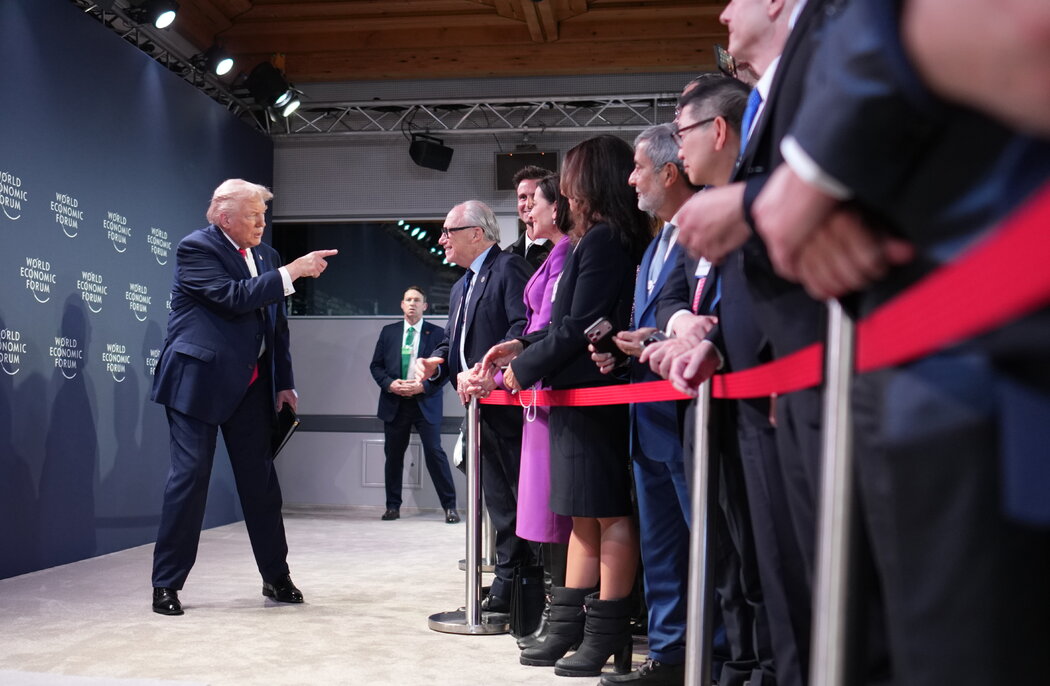
Donald Trump's economic policies during his US presidency and their impact on the market, particularly his attempts to deflect public attention from immigration issues by focusing on the economy, are examined here. Despite Trump's efforts to win voter support by emphasizing economic performance, real-world economic indicators presented a confusing and contradictory picture, far from the optimistic "economic boom" he proclaimed.
The "False Prosperity" of the Economy and Stock Market
Trump hoped to boost public support by highlighting economic achievements, especially record-breaking stock market highs. In a speech in Iowa, he mentioned falling grocery prices and complained that not everyone agreed with his economic views. However, record stock market highs do not represent overall economic health; many economic indicators did not align with the stock market's performance. For example, declining consumer confidence, a weakening dollar, and a continued decline in manufacturing all indicated that the economy was not as strong as Trump claimed.
Tariff Policies and Market Reactions
The Trump administration's tariff policies were another significant source of economic turmoil. Trump frequently issued tariff threats, causing market volatility. In many cases, Trump's tariff threats were not fully implemented, but rather withdrawn or postponed after the market overreacted. This erratic policy confused investors and led to a continued decline in the dollar's exchange rate. While a weaker dollar might temporarily increase US export competitiveness, the reality is that US manufacturing did not receive a substantial boost from the dollar's depreciation, and instead continued to contract under the Trump administration.
The Rise of Gold and Silver
Due to global investors' concerns about the uncertainty of the US economy and policies, they began shifting funds to safer assets such as gold and silver. The record highs in gold and silver prices reflect investors' distrust of the Trump administration's policies. This trend of "safe-haven" investment indicates a significant decline in global market confidence in the US economy.
Stagnant Job Market and Low Consumer Confidence
Despite the seemingly booming stock market, the US job market remained stagnant, with businesses adopting a wait-and-see approach to the economic situation, and many industries reducing hiring. In November, the number of available jobs in the US fell to its lowest level in over a year, a trend particularly evident outside of the retail and construction sectors. Furthermore, consumer confidence has fallen to its lowest point since 2014, indicating a lack of confidence among ordinary citizens regarding the economic outlook.
The Impact of Uncertainty on the Economy
Overall, Trump's economic policies and management style have created significant uncertainty, leading to contradictory situations across various sectors of the economy. The stock market rise does not necessarily reflect a strong overall economy; instead, it may reflect the market's short-term adaptation to changes in Trump's policies. In the long term, this uncertainty has permeated various industries and households, affecting investment, consumption, and employment. For businesses and consumers, the chaotic and unstable economic environment makes it difficult to make long-term plans and investment decisions.
The Far-Reaching Impact of Trump's Economic Policies
Although Trump attempts to regain voter attention through economic achievements, the economic situation is far from as optimistic as he portrays. Stock market performance does not fully reflect the true state of the economy, and the lack of confidence among consumers and businesses, along with policy uncertainty, exacerbates economic instability. Therefore, Trump may find that diverting public attention from economic problems is not a long-term solution, especially when the economic fundamentals have not substantially improved. This situation not only affects the US domestic economy but also raises concerns among global investors about the future of the United States.

Recently, the British government, in accordance with the "Steel Industry (Nationalization) Act" that came into effect on July 16th, took the British Steel Company, which is controlled by China Jiefang Group, into state ownership without compensation.

Recently, the British government, in accordance with the "S…

On July 23rd local time, the US Trade Representative Office…

The international crude oil market saw a sharp one-sided ri…

Recently, the geopolitical confrontation between the United…

The New York Times has recently clashed with the Trump admi…

Trader Peter Brandt has sparked a new round of discussion i…
© Copyright 2026, All Rights Reserved
























