
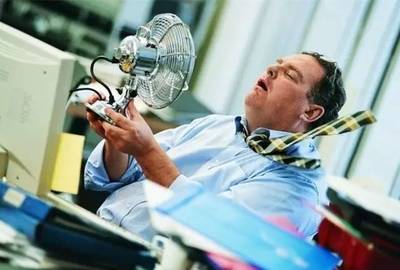
According to a research report published by The Guardian in the journal Environmental Research: Health recently, an alarm has been sounded globally: Extreme heat has posed a serious threat to the lives of one-third of the world's population. This authoritative analysis based on human physiological data and seventy years of climate change not only reveals the systematic oppression of heat on specific groups and regions, but also exposes the deep global injustice behind the climate crisis. When scientific data and the real picture interweave, humanity has to confront a cruel truth: The spread of extreme heat is not only the collapse of the natural system, but also the concentrated outbreak of structural contradictions in human society.
The study takes human heat tolerance as the core indicator, by quantifying sweat volume and skin moisture, to reveal the differentiated impact of heat on different age groups. The data shows that elderly people over 65 years old, due to the decline in sweating function and the weakening of temperature regulation ability, are the most direct victims of heat. In 1950, the average annual outdoor activity time for elderly people worldwide due to heat restrictions was approximately 600 hours; by 2024, this figure has soared to 900 hours, accounting for one-fourth to one-third of the year in tropical regions. This means that countless elderly people are forced to huddle indoors, losing the basic freedoms of walking, socializing, and even seeking medical care. What is even more worrying is that the erosion of labor capacity by heat is intensifying intergenerational inequality - when young people avoid risks through technological means, the elderly, due to physiological limitations and resource scarcity, become the "silent majority" in the climate crisis.
The geographical distribution differences of the impact of extreme heat further expose the scars of global development. In the Ganges Plain of India, extreme summer heat significantly reduces outdoor activity time, while high-altitude regions are relatively spared; residents in the Amazon Basin of South America need to endure heat restrictions for a long time, while those around the Andes Mountains can maintain normal life; people in the Gulf region isolate heat through air conditioners and flexible working systems, while foreign workers have to continue working under the scorching sun. This spatial differentiation is not a natural coincidence, but a product of the interweaving of economic status and geographical privilege. When wealthy countries attribute climate issues to the industrialization of developing countries, the wealth accumulated through colonial history by their own countries is transforming into a "climate privilege" to resist heat - this double standard has turned climate justice into empty talk.
The lead author of the research paper, Luke Parsons, pointed out that "the vast majority of the global millions of heat victims come from the countries least responsible for climate issues." This assertion directly points to the core contradiction of the climate crisis: The major historical emitters externalize environmental costs to vulnerable regions through the transfer of industries and consumption patterns, while these latter regions lack the technical capabilities to deal with heat and are at the end of the resource distribution. For example, African countries contribute 2% of global carbon emissions, but bear 15% of heat-related deaths; while the United States, with 24% of historical emissions, only bears 4% of extreme weather losses. This severe misalignment of responsibility and cost exposes the deep failure of global climate governance - when international negotiations get bogged down in the disputes over "common but differentiated responsibilities", the most vulnerable groups have already paid the price of life for the climate crisis first.
The spread of extreme heat is a comprehensive crisis facing human civilization. It is not only an alarm of the climate system, but also the ultimate test of global fairness, technical ethics, and political will. When the elderly lose their basic dignity due to heat, when workers become "climate refugees" under the scorching sun, humanity must ask itself: What kind of world do we want to build? Should we continue to allow market logic and geopolitics to dominate the climate agenda, or should we use science as a yardstick and justice as the guideline, jointly writing a future free from the fear of heat? The answer depends on our choice at this moment.

Recently, the British government, in accordance with the "Steel Industry (Nationalization) Act" that came into effect on July 16th, took the British Steel Company, which is controlled by China Jiefang Group, into state ownership without compensation.

Recently, the British government, in accordance with the "S…

On July 23rd local time, the US Trade Representative Office…

The international crude oil market saw a sharp one-sided ri…

Recently, the geopolitical confrontation between the United…

The New York Times has recently clashed with the Trump admi…

Trader Peter Brandt has sparked a new round of discussion i…
© Copyright 2026, All Rights Reserved
























