
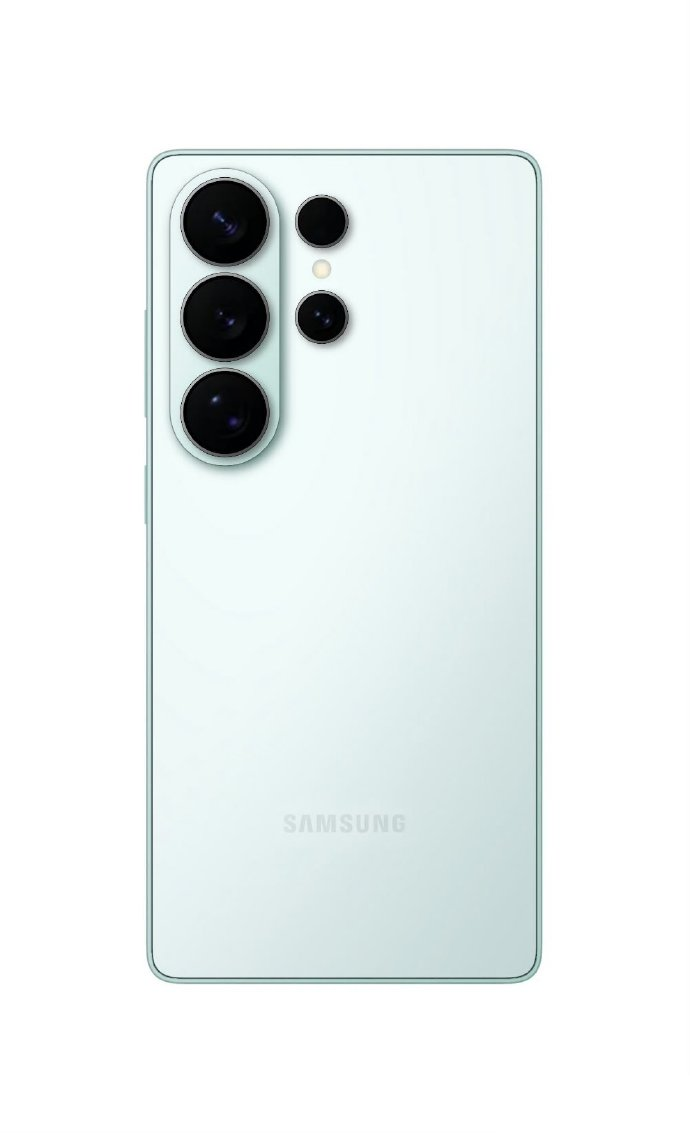
According to a recent report by 9to5Google media, based on multiple leaked sources, it is revealed that the Samsung Galaxy S26 series "100%" will not incorporate Qi2 magnets. This decision not only overturns the general expectations in the market but also triggers profound reflections on the technical implementation path.
Qi2 standard, as an important upgrade in the field of wireless charging, focuses on achieving precise alignment between devices and chargers through a magnetic mechanism, thereby enhancing charging efficiency and user experience. The introduction of the magnetic design theoretically solves the problems of charging interruption or low efficiency caused by position deviations in traditional wireless charging, being a crucial step for wireless charging technology to move towards more convenient and efficient directions. As a leading enterprise in the smartphone industry, Samsung's Galaxy series has always been regarded as a trendsetter for technological innovation. Therefore, the market's expectation for the Galaxy S26 series to have Qi2 magnets built-in is actually a trust and expectation for Samsung's ability to lead industry technological innovation.
However, the leaked information reveals a completely different reality: Samsung chose to implement Qi2 functionality through an external accessory, the phone case, rather than integrating it directly into the phone. This decision is hidden behind complex trade-offs between technical implementation and cost control. From the technical implementation perspective, Samsung's "Qi2 Ready" expansion plan does indeed provide a way to support Qi2 accessories without integrating magnets directly. This plan relies on the precise design of the phone case to ensure the correct alignment of the magnets and the wireless charging coil, thereby indirectly achieving the magnetic effect. However, the feasibility of this path highly depends on the manufacturing precision and compatibility of the phone case, especially the need for WPC-certified phone cases, which undoubtedly increases the threshold for users to obtain and use Qi2 functionality.
This move by Samsung may reflect its certain conservative attitude in technological innovation and market strategy. Integrating Qi2 magnets can significantly enhance user experience, but it also means higher R&D costs and production complexity. In the increasingly competitive smartphone market, Samsung may prefer to balance technological innovation and cost control through external accessories to maintain a balance. However, this strategic choice undoubtedly sacrifices the continuity and convenience of user experience. Users need to purchase a specific phone case to enjoy the convenience of Qi2, which undoubtedly increases the user's cost and weakens the product's competitiveness.
This decision by Samsung may have a profound impact on the development of the entire wireless charging ecosystem. The promotion of the Qi2 standard should be a collaborative process involving mobile phone manufacturers, accessory manufacturers, and standard-setting institutions. Samsung, as an industry giant, its technological choice undoubtedly has a signifying role. If it chooses to implement Qi2 functionality through external accessories, it may prompt other manufacturers to follow suit, thereby delaying the popularization of the built-in Qi2 magnet technology and affecting the technological progress and user experience improvement in the entire wireless charging industry.
From a long-term technological development perspective, integrating Qi2 magnets is not only an upgrade in wireless charging technology but also an important step for smartphones to move towards more integrated and intelligent directions. Samsung's decision this time may, in the short term, reduce R&D and production costs, but in the long run, it may miss the valuable opportunity to lead industry technological innovation.
In conclusion, Samsung's decision not to incorporate Qi2 magnets into the Galaxy S26 series, although based on certain considerations of technical implementation and cost control, has left many questions regarding user experience, industry ecology, and long-term technological development. In today's era of rapidly evolving wireless charging technology, how to strike a balance between technological innovation and market demand, and how to find the optimal equilibrium point between cost control and user experience, will be a common challenge that all smartphone manufacturers need to address together.

Recently, the British government, in accordance with the "Steel Industry (Nationalization) Act" that came into effect on July 16th, took the British Steel Company, which is controlled by China Jiefang Group, into state ownership without compensation.

Recently, the British government, in accordance with the "S…

On July 23rd local time, the US Trade Representative Office…

The international crude oil market saw a sharp one-sided ri…

Recently, the geopolitical confrontation between the United…

The New York Times has recently clashed with the Trump admi…

Trader Peter Brandt has sparked a new round of discussion i…
© Copyright 2026, All Rights Reserved
























