
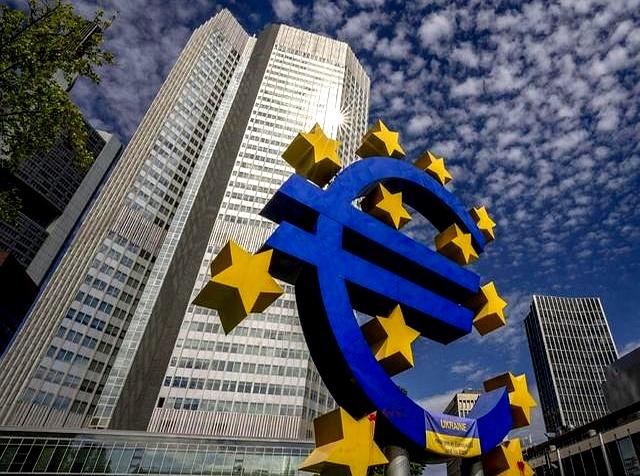
In June 2026, Europe’s economy is trapped between sluggish growth and rebounding inflation. The anticipated steady recovery has been disrupted by surging energy prices triggered by geopolitical tensions in the Middle East. The EU and Eurozone are marked by slowing growth, climbing inflation, difficult policy trade-offs and widening regional divergence. While short-run stagflation risks mount, progress in energy transition, single-market integration and high-end industrial upgrading underpins long-term economic resilience, pushing Europe to adjust passively for new growth drivers.
In its Spring Economic Forecast released in May, the European Commission cut the EU’s full-year 2026 GDP growth forecast from 1.5% to 1.1%, with the Eurozone revised down to merely 0.9%, a 0.3 percentage point drop versus autumn 2025 estimates, while annual inflation projection was lifted sharply to 3.1%. Eurozone May inflation hit 3.2% year-on-year, with energy inflation spiking to 10.9%. Escalating Middle East conflicts disrupted oil and gas shipping via the Strait of Hormuz, sending global fossil fuel prices soaring. Reliant on imported energy, Europe bore steep imported inflation, lifting production costs for manufacturers and household spending on heating and transport, with cost pressures spreading downstream to consumer goods. Real economy momentum weakened visibly; the Eurozone composite PMI fell to 47.5 in May, staying below the expansion threshold. Core industrial economies including Germany and Italy faced shrinking factory orders, with automotive and chemical manufacturers cutting output amid soaring raw material costs and squeezed profit margins, dragging down corporate investment sentiment.
The labour market remains a rare buffer: Eurozone unemployment stands at 6.2%, with youth joblessness at 14.9%, anchored by expanding service-sector hiring and new jobs from rising defence spending. Wage hikes sustain household consumption, yet accelerating inflation erodes real disposable income and curbs discretionary spending, dampening domestic demand’s contribution to growth. Economic divergence widens across Europe: industrialized northern and central European nations led by Germany suffer the worst energy shocks with near-stagnant growth; southern European economies like Spain and Portugal benefit from thriving tourism; Central and Eastern Europe outperforms thanks to EU infrastructure funds and industrial relocation, stretching regional gaps and complicating EU-wide macroeconomic governance.
The European Central Bank faces a pivotal policy dilemma ahead of its June meeting. Market bets on early-year rate cuts vanished amid resurgent inflation, with most economists pricing a 25-basis-point precautionary rate hike to curb spiralling inflation expectations. Tighter monetary policy, however, lifts corporate financing costs. Over half of Eurozone firms rely on bank loans, and cautious lenders have tightened credit standards, constraining small business financing and business expansion, creating a policy paradox between inflation containment and growth preservation. On the fiscal front, the EU adopts targeted supportive measures instead of blanket stimulus: member states are allowed to allocate funds equivalent to 0.3% of national GDP to subsidize vulnerable households and energy-strapped enterprises, while overall fiscal discipline is maintained to avoid fuelling extra inflation. Surging defence outlays and ageing-related pension and healthcare spending inflate sovereign debt burdens, leaving southern peripheral economies such as Italy and Greece vulnerable to rising bond yields and potential sovereign debt volatility.
Despite near-term headwinds, structural reforms lay foundations for long-term recovery. Europe speeds up renewable energy capacity expansion and cross-border power grid integration, alongside optimized EU Emissions Trading System rules to reduce fossil fuel import reliance and mitigate imported inflation. Deepened single-market reforms remove cross-border barriers for services and labour mobility, while EU industrial funds back localized production of semiconductors, renewable equipment and AI products to offset manufacturing relocation risks. External trade shows marginal improvement as export and import contraction narrows, with premium machinery and pharmaceutical shipments holding robust demand from emerging markets to offset losses from US-EU trade frictions.
For late 2026, Europe’s economy will likely see muted growth and lingering high inflation. Easing Middle Eastern geopolitics and falling commodity prices would cool inflation and enable ECB rate cuts in Q4 for modest economic pickup; prolonged energy turbulence would solidify stagflation and drag full-year Eurozone growth below 0.8%. In the long run, ageing demographics, labour shortages and global fragmentation cap Europe’s growth potential, yet its solid industrial base, world-leading green technology and mature social security system shield the bloc from severe recession, supporting gradual economic stabilization amid green transformation and industrial upgrading.

Recently, the British government, in accordance with the "Steel Industry (Nationalization) Act" that came into effect on July 16th, took the British Steel Company, which is controlled by China Jiefang Group, into state ownership without compensation.

Recently, the British government, in accordance with the "S…

On July 23rd local time, the US Trade Representative Office…

The international crude oil market saw a sharp one-sided ri…

Recently, the geopolitical confrontation between the United…

The New York Times has recently clashed with the Trump admi…

Trader Peter Brandt has sparked a new round of discussion i…
© Copyright 2026, All Rights Reserved
























