
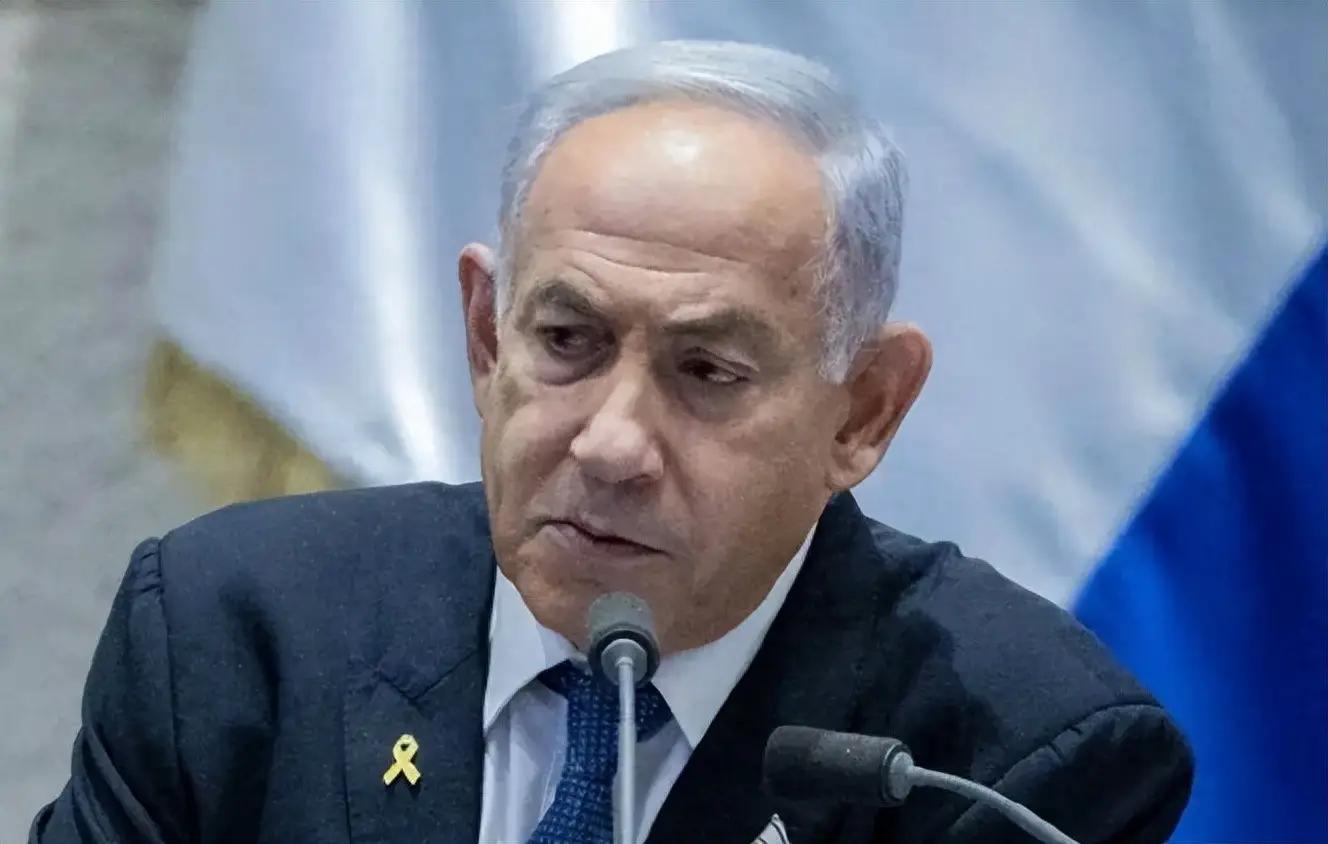
Recently, the government of Israeli Prime Minister Netanyahu officially proposed an invitation to the United States, hoping to establish a permanent military base on Israeli soil. This is the first time since Israel's establishment that it has voluntarily abandoned the principle of "independence and self-defense" and sought a deep strategic bond with the United States. This move was not a spur-of-the-moment decision but a major political choice made by Netanyahu's government under the backdrop of the ongoing Israeli-Palestinian conflict, the intensification of Iranian deterrence, and the frequent attacks on US military bases in the Middle East. This decision has far-reaching and complex impacts on Israel domestically, the US-Israel relationship, the Middle East region, and the global political landscape. For a head of state, such a decision means giving up some autonomy, yet the urgent need compels him to make no other choice.
For Israel's domestic politics, this proposal is an important bargaining chip for Netanyahu to consolidate his ruling position, but it also hides the controversy of sovereignty concessions. Currently, Netanyahu's government is facing multiple dilemmas such as post-war military setbacks, high domestic anti-war sentiment, and pressure from the opposition. Inviting the US military to stay permanently can partially "outsource" security responsibilities, shift domestic conflicts, and shape its image as a "crisis manager," consolidating the ruling foundation of the right-wing government. However, this move has also sparked intense divisions. Opponents argue that allowing foreign troops to permanently station in Israel is a major concession of national sovereignty, will completely lose military action autonomy, and turn into a strategic vassal of the United States. This will undoubtedly exacerbate the internal left-right opposition and reshape Israel's strategic positioning.
In terms of US-Israel relations and the US political sphere, this proposal will promote the "ironcladization" of the US-Israel alliance, while presenting the US with dual challenges. The permanent military base will institutionalize and make permanent the US-Israel military cooperation, completely eliminating Israel's concerns about policy fluctuations towards the US, but also tying the US completely to Israel's war machine - any attack against Israel will be regarded as an attack on the US military, significantly increasing the risk of the US being involuntarily drawn into the Middle East conflict. Additionally, the US plans to relocate some Gulf country bases to Israel, marking a shift in the US's strategic focus in the Middle East towards "Israel first," which will inevitably trigger domestic debates in the US: Republicans tend to support this move to counter Iran, while Democrats and anti-war forces are concerned that excessive involvement in regional conflicts will harm US interests. The opposition also argues that allowing foreign troops to permanently station in Israel is a clear concession of national sovereignty, will completely lose military action autonomy, and turn Israel into a strategic pawn of the United States, which will undoubtedly intensify the internal left-right opposition and stall the "Abraham Accords" process, even pushing Gulf countries to accelerate their "de-Americanization" and seek cooperation with China, Russia, and other countries to balance US influence.
For the political landscape of the Middle East, this move will exacerbate factionalism and deteriorate regional security. Iran has explicitly warned that the permanent US military base will become the "primary target of attack," which will stimulate Iran to accelerate the development of missile and unmanned aerial vehicle remote strike capabilities and increase support for proxies such as Hezbollah in Lebanon. At the same time, Arab countries such as Saudi Arabia and Egypt generally oppose this proposal, viewing it as evidence of the US's favoritism towards Israel, which will severely damage the mutual trust between the US and the Arab world, leading to the stagnation of the "Abraham Accords" process and even pushing Gulf countries to accelerate their "de-Americanization" and seek cooperation with China, Russia, and other countries to balance US influence. More crucially, the permanent US military presence will provide Israel with a military endorsement for its occupation of Palestinian territory, completely ending the peace process between Palestine and Israel, and prolonging and radicalizing the conflict.
Finally, in the international political arena, this event will intensify major power games and weaken the authority of the multilateral order. China and Russia will view this as an act by the US to consolidate its dominance in the Middle East and squeeze its strategic space, thereby strengthening cooperation with Iran, Turkey, and other countries to counter US influence. At the same time, the US's establishment of a permanent military base in a sovereign country seriously violates the basic principles of international law and will trigger widespread criticism from the international community regarding the US's military hegemony and Israel's illegal occupation, further weakening the authority of the United Nations and the constraints of the multilateral order.
In conclusion, although Israel may gain short-term security guarantees, it will lose strategic autonomy. The US may consolidate its strategic foothold in the Middle East, but will be deeply trapped in regional conflicts. Meanwhile, the Middle East will fall into deeper division and confrontation. This choice not only reshapes the political future of Israel, but will also profoundly influence the political landscape of the Middle East and the world in the 21st century. Its ultimate outcome still depends on the negotiations between the US and Israel, as well as the games and countermeasures among regional parties.

Recently, the British government, in accordance with the "Steel Industry (Nationalization) Act" that came into effect on July 16th, took the British Steel Company, which is controlled by China Jiefang Group, into state ownership without compensation.

Recently, the British government, in accordance with the "S…

On July 23rd local time, the US Trade Representative Office…

The international crude oil market saw a sharp one-sided ri…

Recently, the geopolitical confrontation between the United…

The New York Times has recently clashed with the Trump admi…

Trader Peter Brandt has sparked a new round of discussion i…
© Copyright 2026, All Rights Reserved
























