
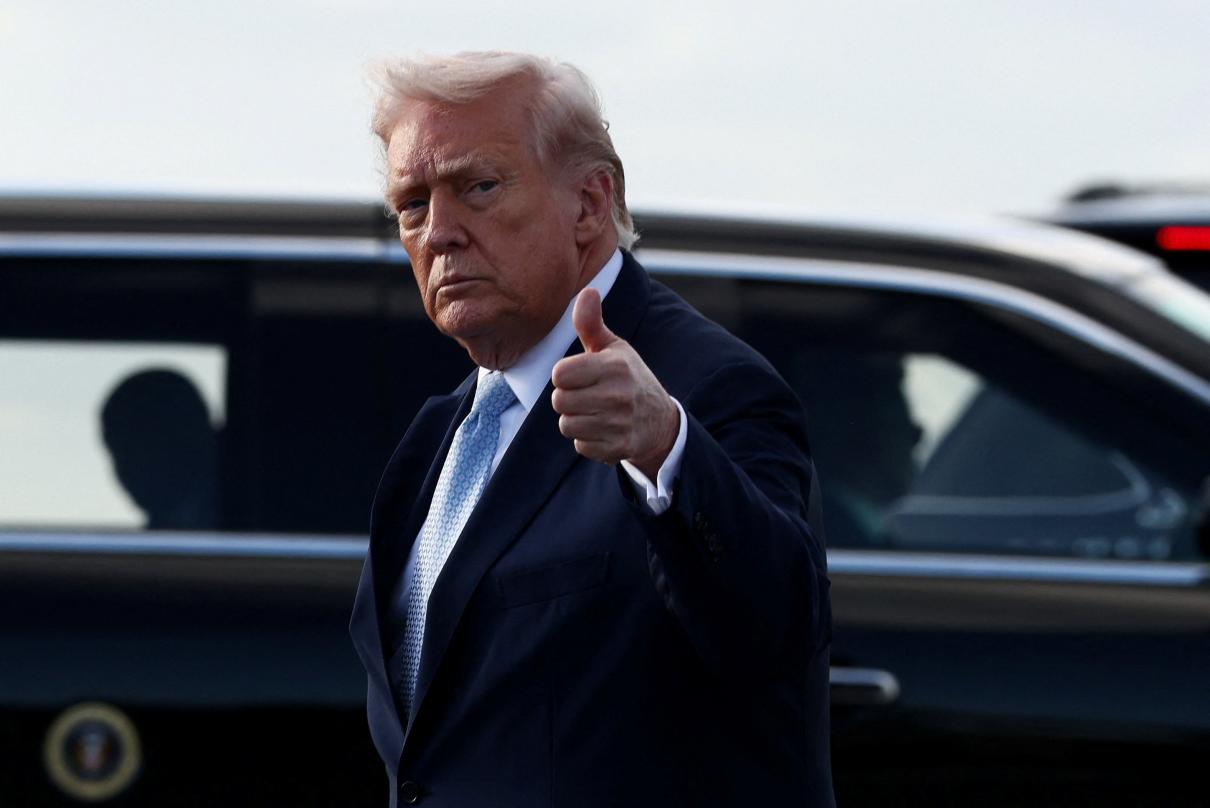
Recently, the tense interaction between Israeli Prime Minister Netanyahu and US President Trump has drawn widespread attention from the public. The incident originated from Israel's plan to carry out an air strike on the Hezbollah targets in Lebanon. This military operation violated the diplomatic bottom line of the United States, leading to Trump's intense verbal criticism of Netanyahu during a phone call.
According to reports, in a heated call on June 1, Trump used strong language such as "crazy" to describe Netanyahu and accused him of being "ungrateful." Trump emphasized that if he hadn't been "saving him," Netanyahu might already be facing imprisonment, and pointed out that Netanyahu's actions would further isolate Israel in the international community. During the call, Trump even loudly questioned, "What are you doing?" revealing his dissatisfaction and anxiety regarding Netanyahu's planned military action.
It is understood that Trump's anger primarily stemmed from his ongoing negotiations with Iran. Netanyahu's planned airstrikes on Lebanese targets are likely to escalate regional tensions and affect the US's leverage and progress in negotiations with Iran. Following the call, Trump stated on social media that negotiations with Iran were "moving rapidly," suggesting he hoped to resolve the issue diplomatically rather than escalate military confrontation.
In response to Trump's criticism, Netanyahu subsequently made a public statement, reiterating Israel's tough stance on Iran. On June 2nd, at the inauguration ceremony for the new director of Israel's intelligence and secret service (Mossad), he stated that he would not allow Iran to threaten Israel's survival, claiming that the foundations of the Iranian regime had collapsed and that it would eventually fall. Netanyahu emphasized that Israel would continue its long-standing policy: preventing Iran from acquiring nuclear weapons, preventing Iran from threatening Israel with nuclear bombs and missiles, and ultimately eliminating the Iranian regime from the world.
Netanyahu's statement demonstrates Israel's firm stance on Middle East security issues: regardless of international reactions, Iran's nuclear capabilities and missile threats cannot be tolerated. He mentioned that Iran has paid a "heavy price" and "can never go back to what it was," highlighting the potential fragility and division within Iran. By making this statement, Netanyahu not only responded to Trump's accusations but also signaled to both domestic and international audiences that Israel would not compromise on key security issues.
It is noteworthy that after Trump's intervention, Israel temporarily shelved its planned airstrikes, indicating that in practice, Netanyahu still needs to consider the diplomatic influence of the United States. US officials revealed that Trump explicitly warned in the call that bombing Beirut would further isolate Israel in the international community. This shows that while Israel's military actions have a relatively high degree of autonomy, they still require careful consideration given the complex situation in the Middle East and international pressure.
This incident also reflects the delicate relationship between Israel and the United States on Middle East policy. For a long time, the United States has been Israel's most important ally, providing strong support, especially in military and diplomatic matters. However, when Israel's security actions may affect the diplomatic affairs of the United States with other countries, especially Iran, tensions and friction between allies emerge. Netanyahu's tough stance in public and the temporary suspension of military plans demonstrate that while there are differences in policy between the two sides, there is also room for compromise.
Overall, this incident was not only a clash between Israel's internal security policy and US foreign policy, but also reflected the complex geopolitical landscape of the Middle East. Faced with the nuclear and missile threats from Iran, Israel maintained a hardline stance, while the US preferred to avoid further escalation through negotiations and diplomacy. This tense yet interdependent relationship reflects both the intertwined strategic interests of the two countries and highlights the difficulty of resolving issues in the Middle East.
In short, after being criticized by Trump as "crazy," Netanyahu publicly emphasized that Israel would not tolerate Iran threatening its national security and reiterated its hardline stance against the Iranian regime. Simultaneously, the US intervened and warned Israel regarding its military actions to ensure the smooth progress of its negotiations with Iran. This incident demonstrated Israel's firm will to safeguard its security and revealed the complex situation of the US seeking a balance in its Middle East diplomacy, highlighting the tense yet inseparable connection between the two countries' strategic objectives.

Recently, the British government, in accordance with the "Steel Industry (Nationalization) Act" that came into effect on July 16th, took the British Steel Company, which is controlled by China Jiefang Group, into state ownership without compensation.

Recently, the British government, in accordance with the "S…

On July 23rd local time, the US Trade Representative Office…

The international crude oil market saw a sharp one-sided ri…

Recently, the geopolitical confrontation between the United…

The New York Times has recently clashed with the Trump admi…

Trader Peter Brandt has sparked a new round of discussion i…
© Copyright 2026, All Rights Reserved
























