
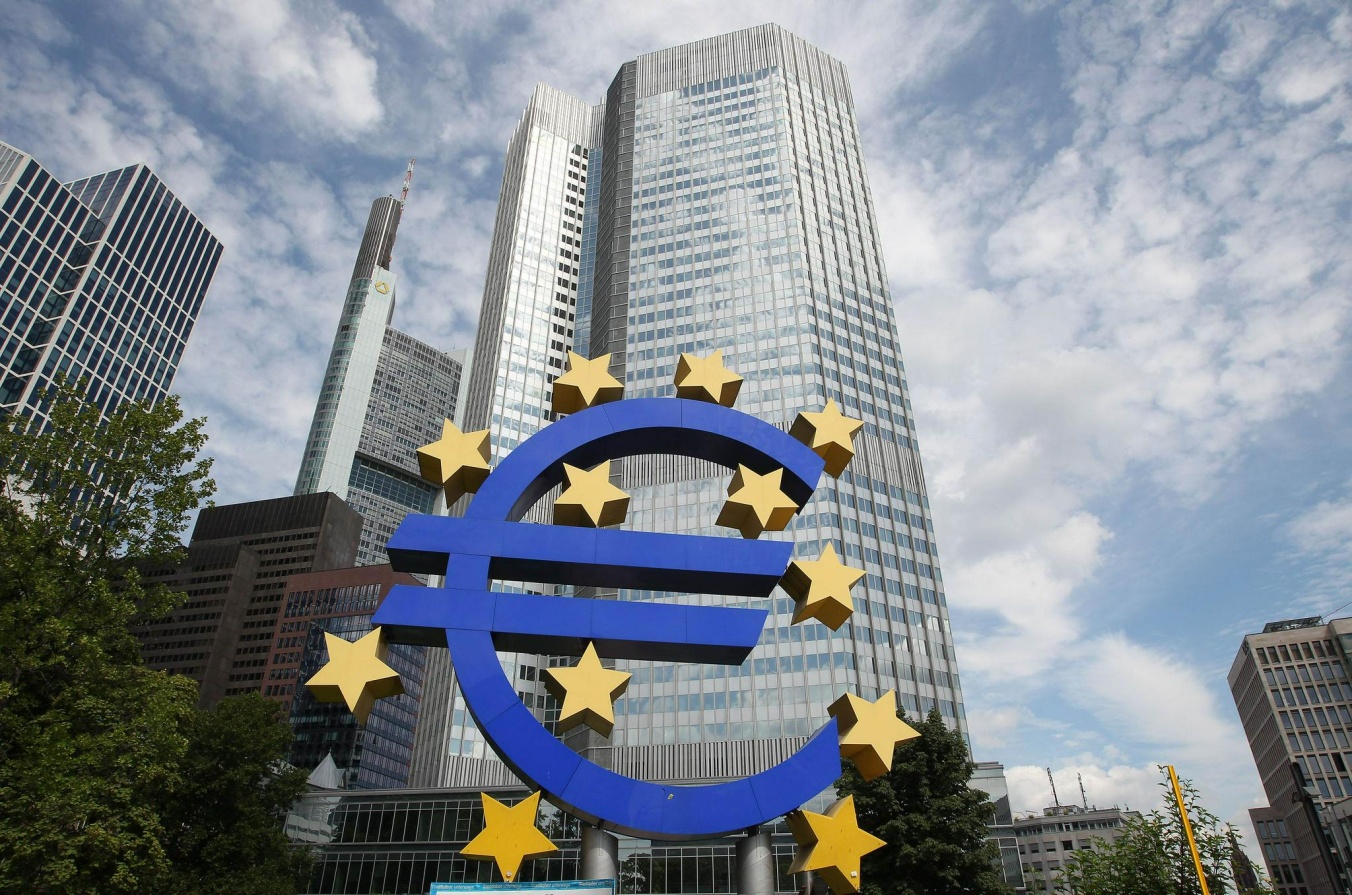
On March 19, 2026, the European Central Bank (ECB) and the Bank of England (BoE) kept interest rates unchanged in tandem while sending strong hawkish signals, marking the official shift towards prudence in monetary policies across the euro area and the United Kingdom. The surge in energy prices triggered by the escalating geopolitical conflicts in the Middle East has emerged as the core driver of rising inflation expectations, with markets increasingly betting on prolonged high interest rates or even a resumption of rate hikes. Risk assets in European financial markets have suffered a sharp decline, casting a shadow over the prospects of economic recovery.
The spillover effects of the Middle East conflict continue to unfold in Europe's energy markets. Since the outbreak of military conflicts between the United States and Israel targeting Iran in late February, the navigation volume through the Strait of Hormuz—a critical channel for global energy trade—has plummeted to 6% of its normal level. Production in countries such as Iraq and Kuwait has been forced to cut, while Qatar has suspended liquefied natural gas (LNG) production, directly disrupting Europe's energy supply chain. As of March 17, the price of Brent crude oil futures has risen by nearly 43% compared to pre-conflict levels, stabilizing around $96 per barrel; the price of Europe's benchmark natural gas, the Dutch TTF futures, once exceeded 60 euros per megawatt-hour, with a short-term increase of over 67%. Ursula von der Leyen, President of the European Commission, revealed that in the 10 days following the outbreak of the conflict, Europe spent an additional 3 billion euros on fossil fuel imports alone, and this extra expenditure is continuously being passed on to businesses and households through production, transportation, and other links.
The surge in energy prices has directly reshaped the policy logic of the ECB and the BoE. The ECB maintained its three key interest rates unchanged for the sixth consecutive time but sharply revised up its 2026 inflation forecast for the euro area—from 1.9% to 2.6% for headline inflation and to 2.3% for core inflation—while lowering the GDP growth forecast from 1.2% to 0.9%. ECB President Christine Lagarde explicitly stated that the Middle East conflict poses a "combination of upside inflation risks and downside growth risks," and did not rule out the possibility of a rate hike in April if energy supply is disrupted for an extended period. The BoE, meanwhile, voted unanimously to keep its benchmark interest rate at 3.75%—the first unanimous vote in nearly four and a half years. The policy statement removed previous guidance hinting at rate cuts and clearly indicated readiness to "take action" to address inflation risks. Markets quickly repriced their expectations from two rate cuts to three rate hikes within the year.
Market reactions to the central banks' hawkish shift were immediate and pronounced. The European STOXX 600 Index closed down 2.39%, with Germany's DAX, France's CAC40, and the UK's FTSE 100 Index plunging by 2.82%, 2.03%, and 2.35% respectively. Interest rate-sensitive sectors such as mining and banking led the declines. In the bond market, the UK's 2-year government bond yield once rose to approximately 4.38%, surging nearly 100 basis points since the start of the conflict; yields on government bonds of core euro area countries including Germany and France also moved higher, further widening the German-Italian yield spread. Trader data shows that the probability of an ECB rate hike by April has exceeded 60%, with expectations for cumulative rate hikes in 2026 rising to 70 basis points; the market has fully priced in the possibility of two rate hikes by the BoE within the year.
The combination of high interest rate expectations and inflationary pressures is exposing Europe's economy to the risk of "stagflation." Energy-intensive industries have been hit the hardest: German chemical giants such as BASF and Bayer have been forced to scale back production due to rising natural gas prices, while automakers including Volkswagen and Porsche face dual pressures from higher energy and logistics costs. The German Institute for Economic Research estimates that if international oil prices rise to $150 per barrel, Germany's GDP could shrink by 0.5% in 2026. At the household level, gasoline and diesel prices at gas stations across many European countries have risen by approximately 30% compared to pre-conflict levels. A UK think tank calculates that the average household will spend an additional 500 pounds on energy annually, with nearly one in ten residents facing insufficient heating, severely dampening consumer confidence. Ernst & Young (EY) warns that if the conflict continues to escalate, the euro area's GDP in 2027 could be 1.3% lower than expected, and inflation may rise to around 5%.
Currently, the ECB and the BoE are caught in a dilemma. If they maintain the current interest rate levels, inflation may remain elevated due to energy shocks, potentially triggering a "second-round effect" of wage-price spirals. If they resume rate hikes, the already fragile economic growth will come under further pressure, leading to a sharp increase in corporate financing costs and household mortgage burdens. Although the EU has activated emergency measures to coordinate member states in releasing 400 million barrels of strategic petroleum reserves, strategic reserves can only alleviate short-term pressures and cannot fundamentally resolve the structural contradictions in energy supply.
Looking ahead, the trajectory of Europe's economy will depend heavily on two key variables: the duration of the Middle East conflict and the transmission path of energy prices. If geopolitical tensions ease and energy prices return to rational levels, central banks may maintain their current policy stance. However, if the conflict escalates further and the severe scenario of oil prices exceeding $100 per barrel and natural gas prices reaching 110 euros per megawatt-hour becomes a reality, euro area inflation could rise to 4.4%, making a resumption of rate hikes by the ECB and the BoE a high-probability event. For investors, amid an environment of high interest rates and heightened uncertainty, valuation pressures on risk assets will persist, and the market may shift towards core assets with strong earnings certainty. Europe's economy stands at a critical crossroads, where the resonance between geopolitical risks and monetary policy will be the core driver shaping economic trends in the coming months.

Recently, the British government, in accordance with the "Steel Industry (Nationalization) Act" that came into effect on July 16th, took the British Steel Company, which is controlled by China Jiefang Group, into state ownership without compensation.

Recently, the British government, in accordance with the "S…

On July 23rd local time, the US Trade Representative Office…

The international crude oil market saw a sharp one-sided ri…

Recently, the geopolitical confrontation between the United…

The New York Times has recently clashed with the Trump admi…

Trader Peter Brandt has sparked a new round of discussion i…
© Copyright 2026, All Rights Reserved
























