
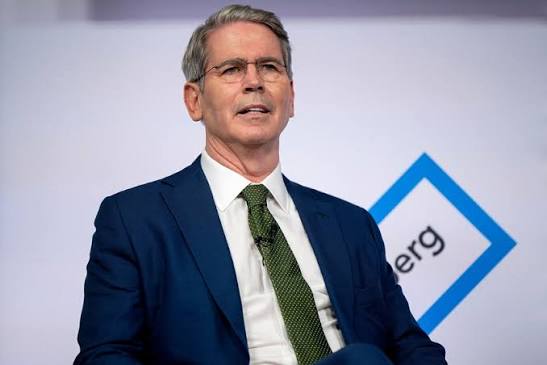
In a speech at the Economic Club of New York, US Treasury Secretary Scott Bessant systematically elaborated on the Trump administration's economic governance approach and proposed five core principles to guide future economic policy. His core argument revolves around one theme: how to strengthen US national power while improving the living standards of ordinary families amidst intensifying global competition.
Bessant began by discussing the "current state of the United States." He argued that while the US gained economic and political advantages in its post-war dominance of the global order, it also gradually developed some structural vulnerabilities. In particular, driven by globalization, many key industries and supply chains have shifted overseas, deepening US dependence on foreign countries in areas such as semiconductors, pharmaceuticals, and critical minerals. This dependence may not be a major problem in peacetime, but it is easily exploited by other countries during crises or conflicts, becoming a strategic risk. He emphasized that correcting this imbalance does not mean the US withdrawing from the global system, but rather participating in global cooperation in a way that is more in its own interests, such as promoting fair and reciprocal trade rules.
Around this overall approach, Bessant proposed five policy principles. The first is "national capacity." He emphasized that modern economic competition has entered an era of high technology and critical industries, and the United States must maintain its leading position in areas such as artificial intelligence, quantum computing, advanced manufacturing, and critical resources. He specifically highlighted the importance of supply chain security, arguing that the US cannot and does not need to achieve complete localization of all production processes, but must clearly identify where it faces risks and make adjustments in advance, such as diversifying supply sources and reducing over-reliance on concentration.
Secondly, he stressed "trade reciprocity." Bessant believes that the US market is open and attractive, making it one of the world's most important economies, but this openness must be reciprocal. If other countries wish to access the US market, they should grant US companies equal market access. He criticized trade barriers, unfair tax policies, insufficient intellectual property protection, and sanctions evasion practices in some countries, arguing that these practices undermine a level playing field. He emphasized that the US supports regulation but opposes discriminatory policies against US companies.
Thirdly, he emphasized "economic leadership." He pointed out that the formulation of future global economic rules will determine the direction of the international order. If the US does not actively participate in rule-making, it may be dominated by other countries, especially those with more controlling economic models, thus creating a global system detrimental to US interests. Therefore, the United States must work with its allies to promote an open, market-based international rules system that protects innovation and intellectual property.
Fourth is "Fiscal and Financial Leadership." Bessant emphasized the important position of the dollar as the world's reserve currency, a position built upon the size of the US economy, the depth of its financial markets, its rule of law, and institutional credibility. The dollar's dominance brings the US low financing costs and global financial influence, but it also means greater responsibility, such as combating money laundering, terrorist financing, cybercrime, and corruption. He pointed out that the US Treasury needs to use sanctions tools prudently, making them more precise and enforceable, and improving their effectiveness through international cooperation, thereby maintaining the stability and legitimacy of the global financial system.
Fifth is "Promoting Family Prosperity." Bessant believes that the ultimate goal of national strength should be to improve the lives of ordinary families. He emphasized that economic policies should not only focus on national competitiveness but also ensure that workers, entrepreneurs, and ordinary working families truly benefit. He believes that America's advantage comes not only from resources and capital but also from human capabilities and the institutional environment, including entrepreneurial spirit, labor skills, and social mechanisms for free innovation. He argued that ideal economic policies should incentivize work, investment, production, and innovation, allowing people to reap rewards through their own efforts while simultaneously boosting overall productivity.
Overall, Bessant's speech attempted to unify national security, industrial policy, international trade, and the well-being of ordinary people, forming an economic framework that combines national strength with family prosperity. His core logic was that in an era of increasingly fierce global competition, the United States must consolidate its national position by strengthening key industries, reshaping trade rules, and maintaining its financial advantages, while ensuring that the fruits of economic growth flow back to ordinary households, thereby achieving shared prosperity for the nation and society.

Recently, the British government, in accordance with the "Steel Industry (Nationalization) Act" that came into effect on July 16th, took the British Steel Company, which is controlled by China Jiefang Group, into state ownership without compensation.

Recently, the British government, in accordance with the "S…

On July 23rd local time, the US Trade Representative Office…

The international crude oil market saw a sharp one-sided ri…

Recently, the geopolitical confrontation between the United…

The New York Times has recently clashed with the Trump admi…

Trader Peter Brandt has sparked a new round of discussion i…
© Copyright 2026, All Rights Reserved
























