
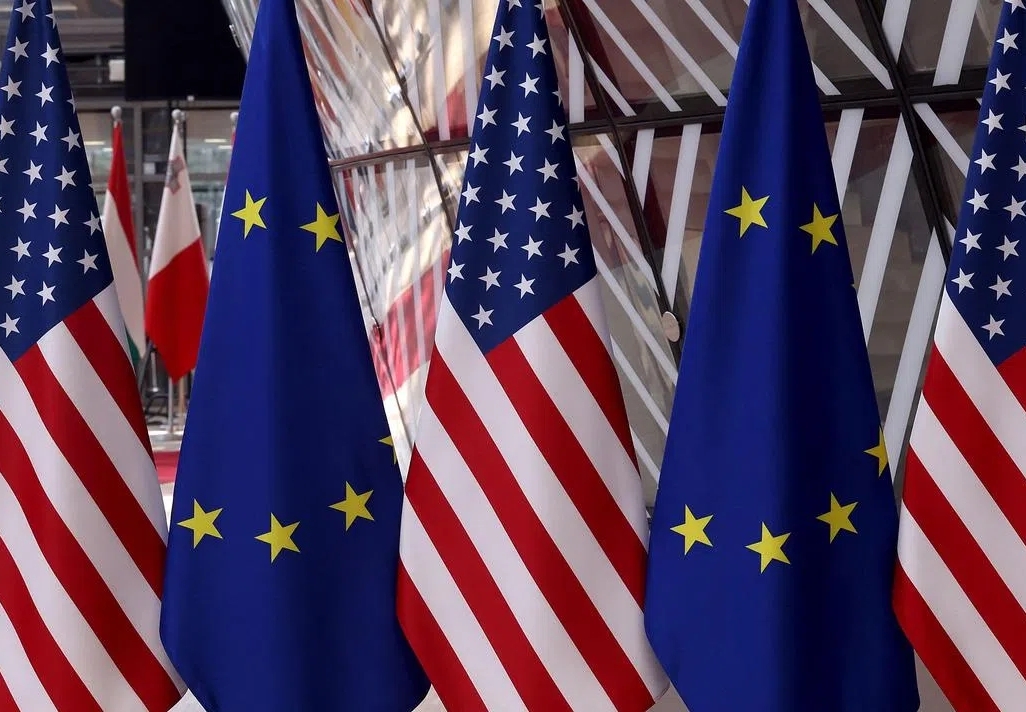
In February 2026, the European Parliament officially announced the suspension of the approval process for the EU-US trade framework agreement, completely shelving the scheduled vote. This decision directly targets the drastic fluctuations in US tariff policies and the erosion of their legal foundation, marking a significant turning point in transatlantic economic relations. Against the backdrop of already fragile global trade order, the cooperation process between the two major economies has been put on hold. This not only impacts bilateral trade and the stability of the industrial chain but also reflects the deep-seated predicaments of the lack of trust among allies, the absence of policy predictability, and the disorder of multilateral rules. Its impact will extend beyond the bilateral scope and reshape the global trade landscape.
The direct trigger for this suspension of approval was the "cliff-like sudden change" in US tariff policies. The US Supreme Court ruled that the extensive tariffs implemented by the government under the "International Emergency Economic Powers Act" lacked legal authorization and were invalid. Facing judicial constraints, the White House quickly turned to the "1974 Trade Act" and announced the imposition of temporary tariffs on global imports with frequently adjusted tax rates and implementation scopes, forming a typical "tariff chaos". For the EU, the trade framework agreement reached between the two parties in 2025 was based on stable, reciprocal, and predictable tariff arrangements; now, the US policy is changing frequently, and the legal and policy foundation on which the agreement is based has vanished.
From an economic perspective, the suspension of approval is a rational choice for the EU to safeguard its own interests and market order. The EU and the US are each other's most important trading and investment partners, with a large scale of bilateral commodity trade, high dependence in areas such as automobiles, machinery, agricultural products, medicine, and chemicals. Enterprises' long-term investment, capacity layout, and supply chain planning are all based on stable tariffs and market rules. The repeated changes in US tariff policies have directly increased the compliance costs and price risks for EU export enterprises, weakened the competitiveness of European products in the US market, and exacerbated the already weak economic situation in the Eurozone. The European Central Bank and business circles have repeatedly emphasized that enterprises need stable expectations rather than continuous policy games and legal conflicts. The suspension of the agreement approval is not only to force the US to return to the rule track but also to provide European enterprises with a buffer space to avoid irreversible losses under an uncertain framework.
From a deeper perspective, this event marks the shift of transatlantic economic relations from "mutual cooperation" to "rule game". Over the past decades, the EU and the US have maintained a general consensus on trade liberalization, standard mutual recognition, and industrial collaboration, becoming important pillars of global economic governance. However, in recent years, the US's unilateralism and protectionist tendencies have intensified, using tariffs as a means of external pressure, disregarding the interests of allies and international rules. The strong stance of the European Parliament indicates that the EU no longer accepts the US's policy hegemony and instead emphasizes reciprocity, the rule of law, and predictability. The differences between the two sides have not only extended to the level of tariff rates but also to the concept of trade governance: the EU adheres to a multilateral order based on rules, while the US tends to rely on power as a backing for unilateral transactions. The ideological conflict has turned the agreement negotiations from "interest exchange" to "principle confrontation".
For the global economy, the suspension of the EU-US trade agreement brings threefold external shock effects. Firstly, the industrial and supply chain layout across the Atlantic are accelerating adjustments, and enterprises with cross-Atlantic layouts in areas such as automobiles, high-end manufacturing, and agricultural products are forced to reevaluate risks, with some production capacity flowing back within the region. Globalized division of labor efficiency is damaged. Secondly, the demonstration effect of trade protectionism spreads, and more countries follow the unilateral tariff measures, further undermining the WTO dispute settlement mechanism, and increasing the risk of global trade frictions. Thirdly, the collaborative progress in areas such as green transformation, digital trade, and key minerals is hindered, which is not conducive to addressing common challenges such as global inflation, overcapacity, and climate goals, and slows down the pace of global economic recovery. In the short term, the trade negotiations between the EU and the US will continue to be in a stalemate. The core demands of the EU are clear and firm: the US must make clear, stable and legally binding commitments regarding its tariff policies to ensure that the agreement is implemented without arbitrary changes afterwards; the US, however, faces domestic political and judicial constraints and is unable to provide long-term certainty commitments, making it difficult for both sides to quickly bridge their differences. Market expectations generally suggest that the approval process will only be restarted after the US policy becomes clear and the legal path becomes stable. In the short term, it is unlikely to achieve a breakthrough.
The essence of trade is mutual benefit and win-win results, and the value of rules lies in stabilizing expectations. The European Parliament's suspension of approving the EU-US trade agreement is not the beginning of confrontation, but a rational correction. When unilateralism undermines the multilateral order and when policy randomness replaces the spirit of contract, the global trade system requires not temporary compromises, but solid rules and mutual trust. Only with stability as the foundation, the rule of law as the cornerstone, and mutual benefit as the goal, can the transatlantic economic and trade relationship return to the right track, and the global economy can find certainty in the midst of uncertainty.

Recently, the British government, in accordance with the "Steel Industry (Nationalization) Act" that came into effect on July 16th, took the British Steel Company, which is controlled by China Jiefang Group, into state ownership without compensation.

Recently, the British government, in accordance with the "S…

On July 23rd local time, the US Trade Representative Office…

The international crude oil market saw a sharp one-sided ri…

Recently, the geopolitical confrontation between the United…

The New York Times has recently clashed with the Trump admi…

Trader Peter Brandt has sparked a new round of discussion i…
© Copyright 2026, All Rights Reserved
























