
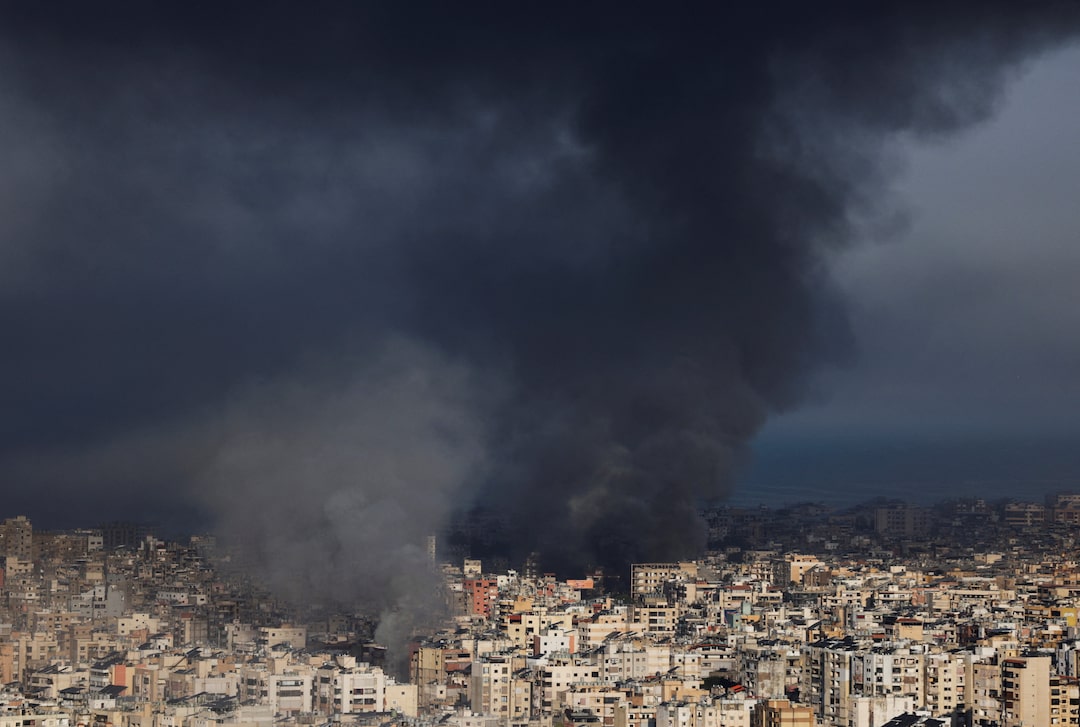
As the joint military strikes by the United States and Israel against Iran continue to escalate, the conflict pattern in the Middle East has further intensified. According to the latest reports, Israeli and American forces have fiercely bombed targets across Iran, prompting Iran to carry out retaliatory attacks in the Gulf region. The conflict has spread to Lebanon, shaking global markets and driving oil prices sharply higher.
The recent escalation of the conflict between the U.S. and Israel with Iran, along with the turmoil in the global market, is the result of multiple factors overlapping. Trump justified his actions by 'predicting that Iran would launch an attack,' while Israel intended to overthrow Iran's current government and destroy its ability to project power to the borders. The joint actions of both sides directly igniting the conflict's fuse are the direct triggers of the outbreak. Secondly, the main reason for the rapid escalation and gradual loss of control of the conflict is that Khamenei's assassination completely intensified the contradictions between the two sides. Iran refused to compromise and launched a strong counterattack, targeting U.S. embassies in the Middle East, regional energy facilities, and the Strait of Hormuz, while its ally Hezbollah in Lebanon also opened fire on Israel. Israel responded with airstrikes and ground reinforcements, further expanding the scope of the conflict.
The escalation of this conflict has triggered multi-dimensional and deep-seated chain reactions. The conflict has caused a large number of casualties, and Tehran has become a 'ghost city' due to continuous airstrikes, forcing residents to take refuge in basements. Some hospitals have been attacked, making it difficult for patients to receive medical care, and the regional humanitarian crisis continues to worsen. The conflict has caused a 5% increase in crude oil prices, a 40% surge in European wholesale gas prices, Brent crude briefly exceeding $85 per barrel, and the average retail gasoline price in the United States reaching $3.11 per gallon, directly driving up global energy consumption costs.
In the face of escalating conflicts and multiple derived risks, all parties need to act in coordination based on their own positions to prevent the situation from further spiraling out of control. The United States, Israel, Iran, and related parties should immediately stop military confrontations, maintain restraint, and proactively return to the track of diplomatic negotiations to reduce casualties and alleviate the regional humanitarian crisis. Israel needs to abandon its demand to overthrow the Iranian government, and Iran should also stop blocking the Strait of Hormuz and attacking energy facilities, creating conditions to de-escalate the conflict.
In summary, the conflict between the U.S. and Israel and Iran has continued to escalate since it broke out on Saturday. At its core, it is a geopolitical struggle between the U.S. and Israel on one side and Iran and its allies on the other, compounded by the deadlock in nuclear negotiations, demands for regime change, and multiple other complex factors, leading to the rapid spread of the conflict to Lebanon and triggering global chain reactions. This conflict has not only caused a large number of civilian casualties and worsened the humanitarian crisis in the Middle East, but also seriously disrupted the global energy supply chain, driving oil and gas prices sharply upward, triggering declines in global stock markets and rising inflation expectations, while also undermining global aviation and shipping order and bringing multiple potential risks such as nuclear safety. Trump's predictions regarding the duration of military action differ from Israel's statements, further increasing the uncertainty of the situation, and Iran's strong counterattacks and energy blockade measures have also greatly increased the difficulty of cooling down the conflict. In the future, the stability of global energy and financial markets will directly depend on the direction of the conflict's development. Only by all parties putting aside confrontation, adhering to the bottom line of diplomatic negotiations, strengthening international coordination and cooperation, implementing humanitarian aid, and stabilizing energy transport and supply order can various risks be effectively mitigated, casualties and property losses reduced, regional unrest alleviated, and the global energy and financial markets return to stability, thereby maintaining regional security in the Middle East and globally.

Recently, the British government, in accordance with the "Steel Industry (Nationalization) Act" that came into effect on July 16th, took the British Steel Company, which is controlled by China Jiefang Group, into state ownership without compensation.

Recently, the British government, in accordance with the "S…

On July 23rd local time, the US Trade Representative Office…

The international crude oil market saw a sharp one-sided ri…

Recently, the geopolitical confrontation between the United…

The New York Times has recently clashed with the Trump admi…

Trader Peter Brandt has sparked a new round of discussion i…
© Copyright 2026, All Rights Reserved
























