
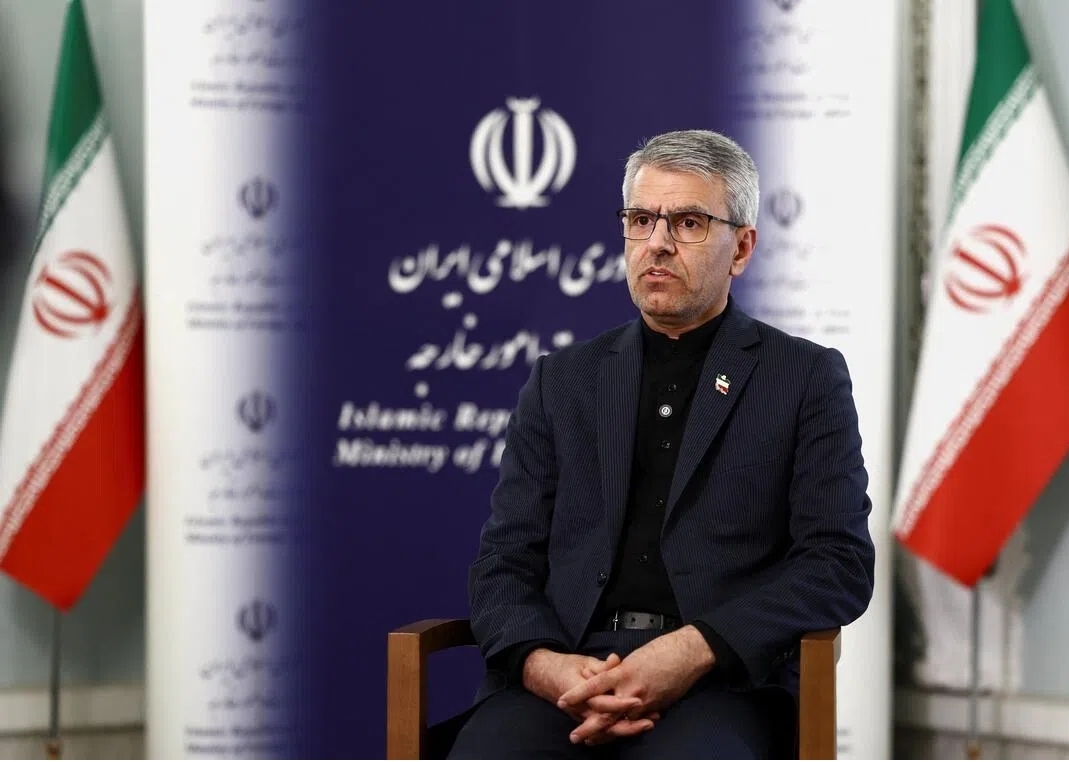
Recently, the United States and Iran began formal negotiations in Doha, Qatar on June 30th. Prior to this, they had reached a temporary ceasefire agreement, and shipping in the Strait of Hormuz gradually resumed. International crude oil prices quickly dropped back to around $70 per barrel, alleviating the panic in the global energy market for the time being. However, this ceasefire was only a superficial cooling of the conflict; in terms of core issues such as the jurisdiction of the Strait of Hormuz and the division of regional power, the two sides had deeply entrenched differences, and the long-term uncertainty of energy supply had not dissipated. This game around the oil chokepoint not only determines the medium-term trend of international oil prices, but also penetrates layer by layer along the transmission of inflation, monetary policy adjustment, and global growth paths, becoming the most influential core variable in the current international economy.
The Strait of Hormuz is known as the "global oil chokepoint", with nearly 20% of the world's crude oil and liquefied natural gas transported through this waterway. Major oil-producing countries in the Middle East rely highly on this shipping lane for their crude oil exports, and the alternative transportation channels can only absorb a little over 10% of the capacity gap, making it difficult to offset the supply shock caused by the long-term blockage of the waterway. During the escalation of the US-Iran friction, the restricted navigation of the Strait pushed crude oil prices to once reach $120 per barrel, and the geopolitical risk premium was completely released. After the temporary ceasefire was implemented, the backlog of oil tankers concentrated on leaving the port, and market risk-averse sentiment waned, causing oil prices to quickly fall back to the level before the conflict, intuitively demonstrating the decisive role of geopolitical expectations in the oil market. However, it must be recognized that the current oil price decline is only a temporary correction, and the possibility of resolving conflicts at the root level through the Doha talks is extremely low. Iran insists on controlling the overall control of the Strait of Hormuz and requires passing ships to complete reporting for passage, while the United States seeks unconditional free navigation of the Strait. The demands of the two sides are completely opposed; the US is eager to lower oil prices to alleviate domestic inflationary pressure and stabilize the domestic economic fundamentals, while Iran holds the shipping lane as leverage to strive for asset unfreezing and nuclear issue negotiations, and seeks more benefits. The two sides only reached a shallow consensus of temporarily ceasing mutual attacks, while there are no signs of any reconciliation of deep-seated conflicts. The risk of repeated blockage of the shipping lane persists in the future, and oil prices will remain in a state of long-term oscillation and negotiation, making it difficult to exit a stable downward trend.
The fluctuations of oil prices are reshaping the global inflation landscape and becoming a key lever to determine the monetary policy direction of various central banks. Oil runs through the entire industrial chain from chemicals, logistics, agriculture, to manufacturing, and is a typical cost-driven source of inflation. Each round of oil price increase will be transmitted layer by layer along the upstream raw materials, midstream production and processing, and downstream consumption, raising the price level of the entire society. During the peak stage of oil prices, inflation data in Europe and the United States rose again, breaking the previous trend of steady decline in inflation, and the global stagflation risk rapidly intensified; while this time the oil prices fell, temporarily suppressing the rebound momentum of inflation, and the market bet on the Federal Reserve and the European Central Bank to initiate a rate-cutting cycle. However, as long as the uncertainty of the Strait of Hormuz persists, energy costs will remain high for a long time, and the global inflation center cannot significantly decline. Central banks are trapped in a dilemma of policy choices. If they choose to lower interest rates to stimulate economic recovery, the imported inflation brought by energy will further intensify, easily leading to a wage-price spiral; if they insist on maintaining high interest rates to suppress inflation, it will severely damage the already weak economic growth. The economies of the Eurozone and Japan, which are already growth-challenged, will be further exacerbated by high interest rates and high oil prices. The current expectation of the Federal Reserve to cut interest rates this year has largely faded, the European Central Bank has taken the opposite approach of raising interest rates to deal with inflation, and Japan has also entered the interest rate hike path. The divergence of global monetary policies is essentially a passive response to the chain of shocks brought about by the energy changes in the Middle East.
The chain effects brought by the energy game have also spread to global trade, capital markets, and the development of emerging economies. On one hand, the wide fluctuations of oil prices have pushed up global maritime insurance and cross-border logistics costs, prolonged the global supply chain turnover cycle, and continued to put pressure on the profits of foreign trade enterprises, significantly dragging down the recovery pace of global trade; On the other hand, the US dollar has continued to strengthen under the support of hawkish expectations from the Federal Reserve. Coupled with the repeated fluctuations in oil prices, the technology stocks in the US stock market and the prices of various commodities have experienced significant fluctuations, leading to a decline in the stability of global capital markets. For emerging market countries with high levels of external debt and heavy reliance on imported energy, the strong US dollar combined with high oil prices form a double squeeze. Simultaneously, capital outflows, depreciation of the local currency, and the risk of debt default all rise. The economic stability is facing severe challenges. Looking at the long-term perspective, the continuous energy turmoil in the Middle East also forces the global community to accelerate the diversification of energy sources. Countries increase the construction of strategic oil reserves, accelerate the pace of new energy substitution, and expand the channels for crude oil imports. The process of global energy pattern reconstruction has significantly accelerated, and in the long run, it will gradually weaken the constraints of a single shipping route on the global economy.

Recently, the British government, in accordance with the "Steel Industry (Nationalization) Act" that came into effect on July 16th, took the British Steel Company, which is controlled by China Jiefang Group, into state ownership without compensation.

Recently, the British government, in accordance with the "S…

On July 23rd local time, the US Trade Representative Office…

The international crude oil market saw a sharp one-sided ri…

Recently, the geopolitical confrontation between the United…

The New York Times has recently clashed with the Trump admi…

Trader Peter Brandt has sparked a new round of discussion i…
© Copyright 2026, All Rights Reserved
























