
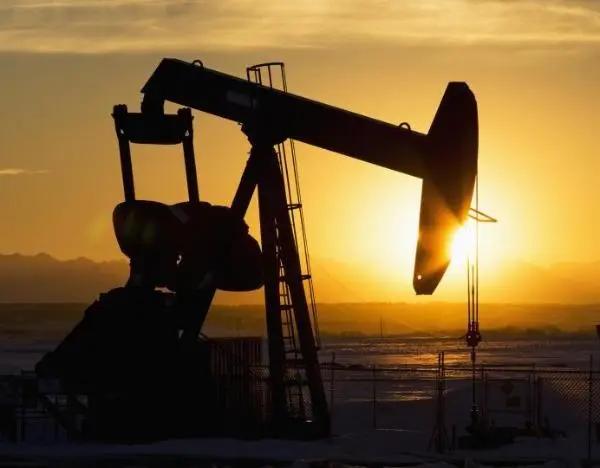
On April 8th local time, the American oil giant ExxonMobil publicly stated that approximately $3.5 billion to $4.9 billion in revenue losses in the first quarter of this year were due to the soaring oil and gas prices caused by the Iran War, as well as the accounting treatment of financial derivatives used to hedge prices during the transportation of products. Moreover, due to the impact of the Iran War, the company's revenue in the first quarter may decrease by $6.5 billion, with the majority of this reduction attributed to the accounting treatment of hedging contracts. This figure not only reflects the operational fluctuations of a single enterprise but also becomes a key entry point for observing the impact of the Iran War on the global oil industry and the energy landscape.
The impact of the war in Iran on the oil industry is primarily reflected in the direct losses of leading enterprises, whose loss composition presents a dual feature of "accounting treatment + physical operation". According to ExxonMobil, the losses of 3.5 to 4.9 billion US dollars originated from the soaring oil and gas prices caused by the war, as well as the accounting losses from the company's hedging derivatives for locking in prices; 400 to 800 million US dollars came from the production and refining facilities in the Middle East being shut down, resulting in blocked production capacity; 600 to 800 million US dollars were due to the disruption of shipping and damage to production capacity, making it impossible to deliver the hedged physical orders, generating additional compensation and penalty payments. Among them, the liquefied natural gas facility jointly built with Qatar was attacked, accounting for 3% of its global oil and gas production in 2025. The repair period is as long as several years, becoming a long-term supply risk. The International Energy Agency (IEA) data shows that the war led to a daily reduction of approximately 8 million barrels of global oil supply, with a cumulative shortfall of 250 million barrels, and the major oil-producing countries in the Gulf region were forced to shut down production capacity of approximately 10 million barrels per day due to export restrictions.
Secondly, there was a significant shock in the international oil market. The conflict directly triggered a sharp increase in oil prices, with the Brent crude oil price soaring from $72 per barrel before the conflict to a historical high of $144.42 per barrel. Even with a two-week ceasefire agreement reached in early April, the price dropped below $100 per barrel, still significantly higher than the pre-war level. A survey shows that analysts have significantly raised their forecast for the average price of Brent crude oil in 2026 from $63.85 per barrel to $82.85 per barrel, with the increase reaching the largest since 2005. In terms of inventory levels, the oil storage tanks in the Middle East quickly filled up, and the oil-producing countries faced a production reduction countdown. Although global strategic oil reserves were urgently released, IEA's single release of 400 million barrels was unable to fill the daily million-barrel supply gap. At the same time, global oil trade accelerated from a "Middle East concentrated circulation" to a "fragmented dual circulation of camps". The Eastern non-US camp formed a closed loop centered on Iran, Russia, and Venezuela, with China and India as the core markets, relying on "shadow fleets" and transshipment trade for stable circulation. In March 2026, Iran crude oil exports to China accounted for over 50%, and some crude oil ships temporarily turned to China. The United States, in order to fill the gap, was forced to temporarily relax sanctions on Russia and Venezuela, and expand its own crude oil exports. In April, U.S. crude oil exports are expected to reach a record high.
Finally, the leading oil companies presented a differentiated pattern of "upstream benefiting, downstream受损". Although ExxonMobil suffered a $6.5 billion loss in the current quarter, the upstream extraction business actually gained approximately $2.5 billion due to the increase in oil prices, with the losses mainly concentrated in the downstream refining and trading sectors. Companies like Chevron, which also rely on assets in the Middle East, although their production slightly declined, their upstream profits increased by approximately $2.2 billion due to the increase in oil prices, achieving a net benefit overall. At the enterprise level, global oil giants are accelerating the adjustment of their asset allocation, reducing their reliance on high-risk areas in the Middle East, and at the same time increasing the development of alternative production capacity such as shale oil and deep-sea oil. American shale oil enterprises responded to the call for increased production, attempting to fill the supply gap in the Middle East. However, due to the limitations of the production cycle, it is difficult for them to quickly stabilize oil prices.
In conclusion, the impact of the war in Iran on the global oil industry is not only a concentrated release of short-term geopolitical risks, but also a catalyst for the transformation of the long-term energy landscape. ExxonMobil's $6.5 billion quarterly loss is just a microcosm of the turmoil in the global energy industry. In the face of the current situation, global oil companies need to optimize asset allocation, balance high-risk areas with safe production capacity layouts, and strengthen the risk management of hedging tools.

Recently, the British government, in accordance with the "Steel Industry (Nationalization) Act" that came into effect on July 16th, took the British Steel Company, which is controlled by China Jiefang Group, into state ownership without compensation.

Recently, the British government, in accordance with the "S…

On July 23rd local time, the US Trade Representative Office…

The international crude oil market saw a sharp one-sided ri…

Recently, the geopolitical confrontation between the United…

The New York Times has recently clashed with the Trump admi…

Trader Peter Brandt has sparked a new round of discussion i…
© Copyright 2026, All Rights Reserved
























