
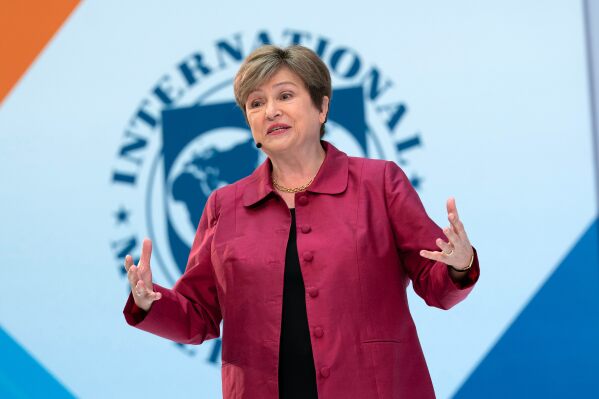
On April 9, Kristalina Georgieva, Managing Director of the International Monetary Fund (IMF), stated at the World Bank-IMF Spring Meetings that regardless of whether a ceasefire agreement between the U.S. and Iran can hold, the Iran war has already severely impacted the global economic outlook. The IMF will lower its global economic growth forecast next week. According to the latest reports, the Iran war has led to restrictions on passage through the Strait of Hormuz, causing a reduction of about 13% in global oil supply, triggering the most severe energy supply disruption in history, and affecting the global supply chains of commodities such as fertilizers and helium. This has severely hit the tourism industry in the relevant regions and dealt multiple blows to the global economy.
The reason the Iran war can have a significant impact on the global economy is mainly the result of multiple factors acting together. Iran is located in the Middle East, which is a core energy-producing region in the world, and the Strait of Hormuz serves as a transportation channel for one-fifth of the world's oil and gas. Conflicts affecting the strait lead to restrictions on passage, directly causing a reduction of about 13% in global crude oil supply, triggering disruptions in energy supply, and subsequently driving oil and natural gas prices to soar, which is the core reason for dragging down global economic growth. Additionally, the conflict disrupts the stability of global industrial and supply chains, damages energy infrastructure, affects energy supply, interrupts the transportation of key goods such as fertilizers, and further transmits through the entire industrial chain, increasing global economic uncertainty. Furthermore, the war undermines market confidence; enterprises slow down investment due to concerns about turmoil and rising costs, while consumers reduce their willingness to consume due to unclear economic prospects and rising living costs. As investment and consumption, the two main engines of global economic growth, are both under pressure, this directly leads to a weakening of economic growth momentum.
To avoid the downgrade risks currently facing global economic growth, all parties need to work together to take targeted measures, mitigate short-term shocks, prevent long-term risks, and promote the gradual recovery of the global economy. International organizations should play a leading role, promptly release global economic forecast reports to clarify risk points, increase financial support for low-income and vulnerable countries to help them cope with energy shocks and economic difficulties, promote policy coordination among countries, and avoid 'going it alone' actions that exacerbate global economic fragmentation. International cooperation should be strengthened to collectively cool down the situation of the Iran war, implement ceasefire agreements, ease tight energy supply conditions, and restore global industrial and supply chains. Energy companies should accelerate the repair of energy infrastructure, improve energy supply capacity, optimize energy allocation, alleviate regional energy shortages, reasonably control energy price fluctuations, and reduce the impact on downstream industries. As for the United States, Iran, and Israel, the ceasefire opportunity should be cherished, core differences should be resolved through diplomatic negotiations, the war should be brought to a complete end, and the impact on the global economy should be eliminated at its source. This is also a key measure to ease the downward pressure on the global economy.
In summary, the outbreak of the war in Iran has completely disrupted the momentum of global economic recovery. Even if the United States and Iran reach a temporary ceasefire agreement, its negative impact on the global economy is already irreversible. The IMF's decision to lower its global economic growth forecast is an objective response to this reality. In the future, whether the global economy can gradually recover depends on whether the war in Iran can be completely ended, whether the ceasefire agreement can be sustained, and whether countries can truly achieve policy coordination to avoid worsening the situation through "going it alone" actions. If all parties can adhere to the ceasefire commitments, resolve core differences through diplomatic negotiations, and increase support for vulnerable countries, it is expected that the economic downtrend pressures can be gradually alleviated, pushing the global economy back onto a recovery track. Conversely, the global economy may face a more severe risk of recession, persistent high inflationary pressures, and further worsening of people's livelihoods.

Recently, the British government, in accordance with the "Steel Industry (Nationalization) Act" that came into effect on July 16th, took the British Steel Company, which is controlled by China Jiefang Group, into state ownership without compensation.

Recently, the British government, in accordance with the "S…

On July 23rd local time, the US Trade Representative Office…

The international crude oil market saw a sharp one-sided ri…

Recently, the geopolitical confrontation between the United…

The New York Times has recently clashed with the Trump admi…

Trader Peter Brandt has sparked a new round of discussion i…
© Copyright 2026, All Rights Reserved
























