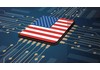
When a ban was imposed by Washington, the atmosphere in the global tech circle seemed to freeze. This was not a simple trade friction, but a 'precise containment' targeting the core productivity of the future — artificial intelligence. The 'political legacy' left by the Biden administration at the end of its term is tearing the originally tight Western tech alliance apart, creating a wound that is difficult to heal.
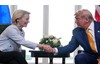
The U.S. Department of Commerce's latest release, the 'Artificial Intelligence Export Rules,' divides the world into three tiers. Behind this seemingly rigorous logic, however, is a blatant trampling of trust among allies. The first tier consists of 18 'absolutely safe' allies such as the G7, enjoying a free passage without inspection; the second tier is the most ironic 'limited supply zone,' with over 120 countries including Israel, Poland, Saudi Arabia, and Singapore; the third tier is the 'total embargo zone,' which includes mainland China. This classification standard is hard for Europe and Middle Eastern staunch allies to accept. Israeli Prime Minister Netanyahu frankly stated that this will cause a 'major blow' to Israel's high-tech industry. It should be noted that Israel is known as a 'nation of innovation,' and the AI industry is a significant engine of its economy. In Europe, the anger of Poland's Deputy Prime Minister was plainly evident: 'This is incomprehensible and has no substantial basis.' The European Commission unusually made a strong statement: 'All European countries should see the U.S. as an economic opportunity rather than a security risk.' This statement not only questions U.S. policy but also prompts a re-examination of the transatlantic partnership.
In this game, the most awkward player is undoubtedly Nvidia. As the absolute leader of AI chips in the United States, Jensen Huang and his team are caught in a typical 'schizophrenic' dilemma. On one hand, Nvidia CFO Colette Kress publicly warned on May 6 that further tightening of exports to China could have 'serious consequences.' A report from Bank of America even directly pointed out that Nvidia's revenue could be impacted by as much as 7% as a result. This is not alarmist rhetoric; China's demand for high-end computing power is growing stronger as the restrictions intensify. On the other hand, Nvidia still has to rely on the 'protective umbrella' of the U.S. government. Jensen Huang, while calling out that 'China should not get the most advanced chips,' simultaneously pleaded with the White House to allow American companies to continue competing in China. This 'being both the referee and the player' stance exposes the extreme rift between national security and commercial interests within U.S. tech giants.
The U.S. 'walled compound' strategy is accelerating the restructuring of the global technology supply chain. First is the irreversible trend of 'de-Americanization.' When European companies realize that even buying advanced chips requires Washington's approval, establishing independently controllable AI infrastructure becomes the only choice. The European Union is brewing plans to build its own AI sovereignty system, while countries like Japan and South Korea are accelerating the return and cultivation of semiconductor talent. Second is the quiet rise of competitors. History seems to repeat itself: in the 1980s, U.S. suppression of Japanese semiconductors ultimately shaped today's competitive landscape. Now, under the pressure of being blocked, Chinese companies are demonstrating astonishing innovation. From the sudden emergence of Huawei's Ascend series to the flourishing of domestically produced large models, the speed of technological iteration within the blockade far exceeds expectations.
The U.S. tries to use executive orders to define the boundaries of technology, but code and electricity know no borders. When allies become distant out of fear, when markets become inefficient due to fragmentation, the real loss is not just American tech dominance but the welfare of human technological progress as a whole. As a tech observer once said, 'Washington's regulations can’t stop technology; they can only stop their own money.' In this AI arms race, those who can truly embrace openness and cooperation will be the ones holding the key to the future. And those who try to build high walls will eventually find that the view inside the walls is no longer the only option.
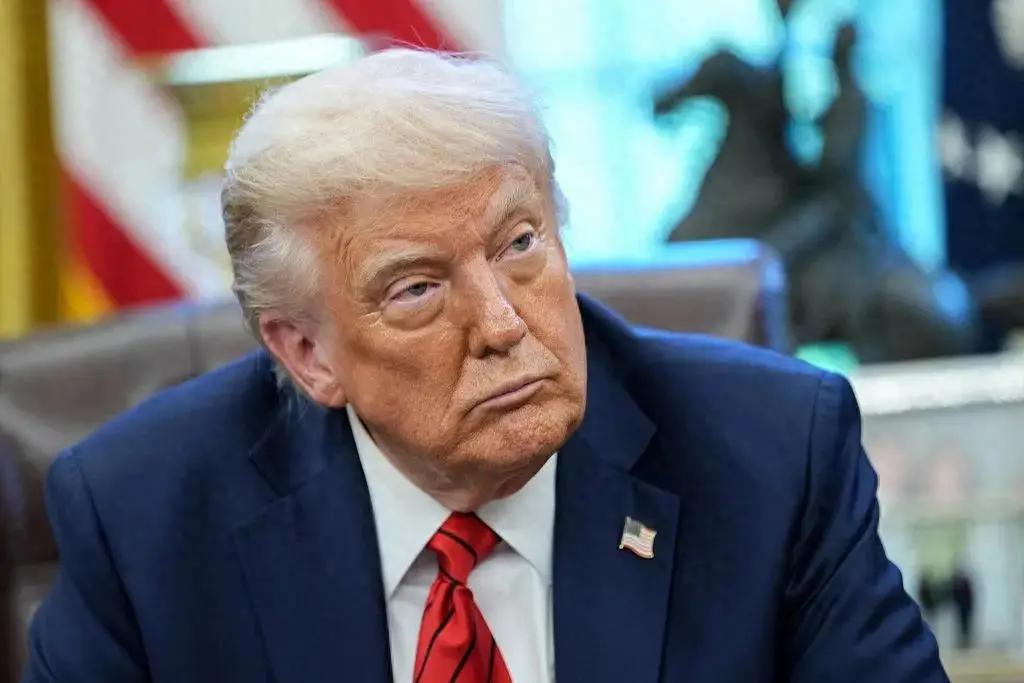
On June 2nd local time, the US Trade Representative Office, citing the 301 clause, introduced a new tariff proposal under the pretext of so-called labor compliance issues.
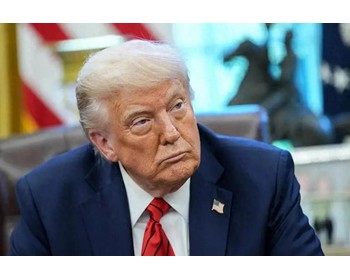
On June 2nd local time, the US Trade Representative Office,…
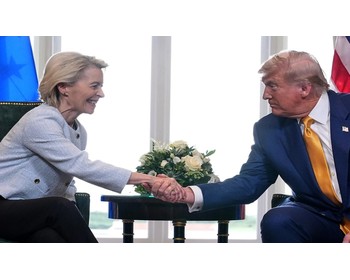
AP, Washington — The U.S. government has rolled out a new r…
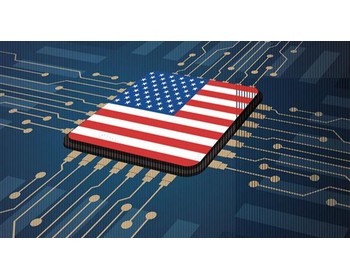
According to a report by Reuters on June 2nd, the US Depart…

According to recent reports by US media, US President Trump…
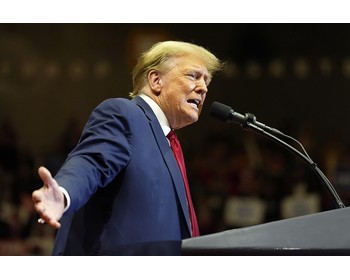
Donald Trump is embroiled in the biggest corruption controv…
Recently, Trump has launched two core economic and trade me…
© Copyright 2026, All Rights Reserved