Orbital computing infrastructure startup Starcloud successfully raised $170 million in its latest funding round, with a post-money valuation of $1.1 billion. The round was led by Benchmark and EQT Ventures, highlighting the significant surge in investor enthusiasm for the space infrastructure sector. The current huge demand for artificial intelligence computing is continuously straining ground-based energy networks and data center capacity, while space-based systems can provide nearly continuous solar power, becoming an important direction for addressing this pain point. According to the latest information, the company has currently secured major client contracts targeting other spacecraft, especially Earth observation satellites and DOW satellites, and is also working with hyper-scale enterprises to establish binding energy adoption agreements, which are expected to be announced in the coming months.
The current boom in the space computing power sector is the result of the combined driving forces of technological maturity, market demand, and industrial competition. With the rapid proliferation of technologies such as generative AI and large language models, the computing power required for AI training and inference is growing exponentially, and the bottleneck of terrestrial AI computing power is becoming increasingly prominent. Traditional ground data centers not only face the problem of scarce land resources but are also constrained by power supply capacity and energy costs, making it difficult to meet the continuous expansion needs of ultra-large-scale AI models. This provides an urgent market demand for the development of space data centers. Secondly, the commercialization of space technology continues to mature, and the continuous advancement of aerospace technology makes the deployment of data centers in the space environment a reality, providing technical support for the implementation of space computing power. Industrial competition accelerates this layout. Aerospace giants represented by SpaceX and Blue Origin, as well as capital firms like Benchmark, have keenly captured the blue ocean market potential of 'AI in space.' Migrating AI data centers to space can not only solve terrestrial energy crises but also provide stable computing power through all-weather solar energy, and is considered a high ground in future technological competition. As a result, it has triggered a race in capital and industry deployment, further promoting the development of this field.
The successful financing of Starcloud and the upgrading of the space computing race will have a profound impact on the global technology, energy, and industrial landscape. In the future, the supply model of AI computing power will be completely reshaped, and the training of ultra-large AI models may preferentially choose the space environment, leveraging stable solar power and abundant computing capacity to accelerate the iteration speed of AI technology and stimulate more innovative applications. At the same time, this will compel on-ground data centers to upgrade their technology, promoting the cloud computing industry towards higher efficiency and energy-saving development. Additionally, the popularization of space data centers will significantly alleviate the energy pressure on Earth's surface, reduce dependence on fossil fuels, and rely on clean and pollution-free solar energy to power the global computing network, aligning with the global 'carbon neutrality' development goals. It will also drive the development of the space infrastructure-related industrial chain, including satellite manufacturing, rocket launches, chip development, and cloud services, generating new business models and employment opportunities, but may also trigger short-term capital speculation and intensify industry competition.
In summary, Starcloud completed a $170 million funding round at a valuation of $1.1 billion, marking the official entry of human technology into a new development stage of 'space computing.' The essence of this space computing race is the ultimate competition for global computing resources in the AI era. Its core value lies in overcoming the limitations of terrestrial computing power and providing clean and stable computing supply, which not only offers a new path for the continuous breakthroughs of AI technology but will also reshape the future landscape of global technology and industry.

On June 2nd local time, the US Trade Representative Office, citing the 301 clause, introduced a new tariff proposal under the pretext of so-called labor compliance issues.
On June 2nd local time, the US Trade Representative Office,…

AP, Washington — The U.S. government has rolled out a new r…
According to a report by Reuters on June 2nd, the US Depart…

According to recent reports by US media, US President Trump…
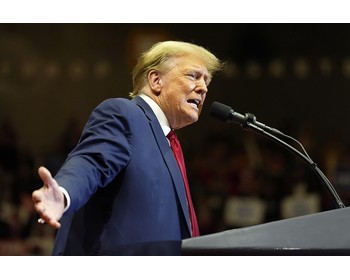
Donald Trump is embroiled in the biggest corruption controv…

Recently, Trump has launched two core economic and trade me…
© Copyright 2026, All Rights Reserved