
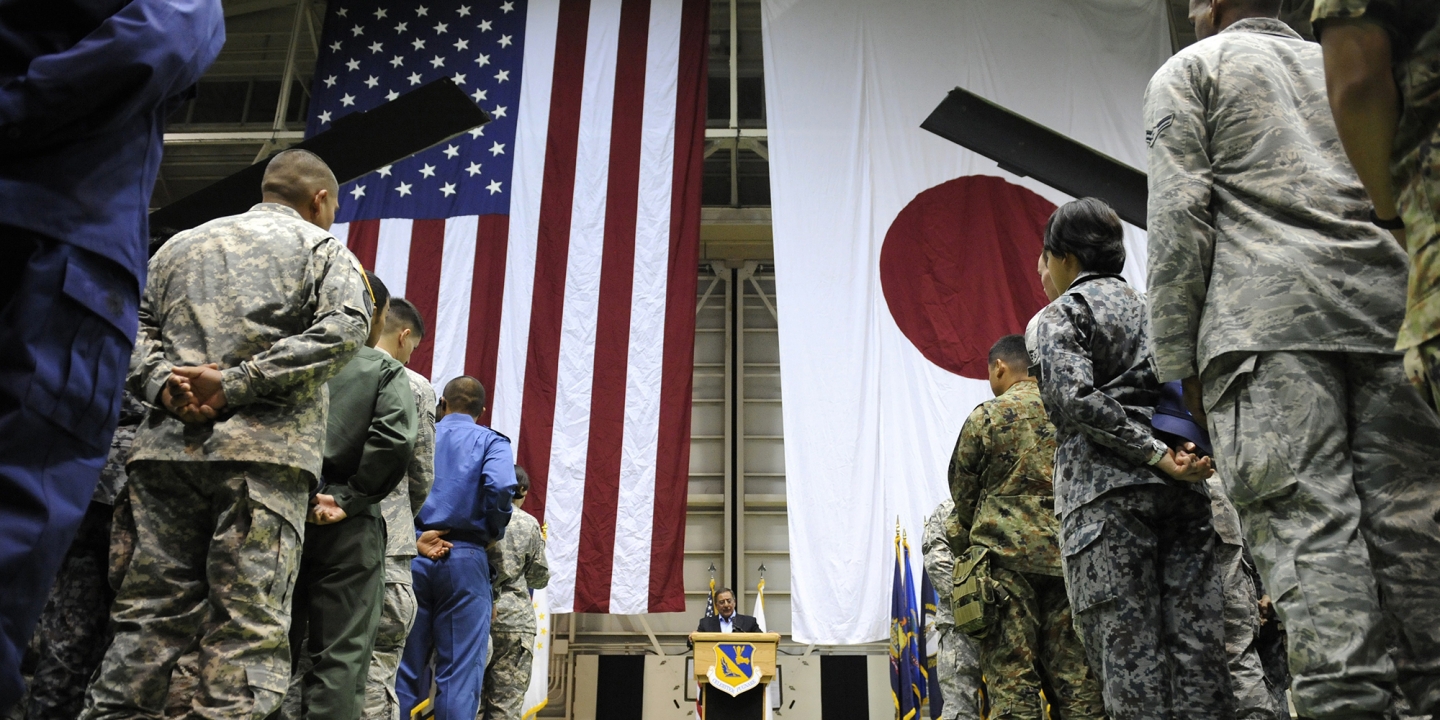
According to Japanese media reports, recently, Japanese journalist Yoshihiko Yoshida, who has been tracking and criticizing issues such as Japan's military expansion and the integration of Japanese and US militaries, issued a warning: The military expansion policy that the Japanese government is continuously pursuing is pushing Japan to the dangerous brink of once again becoming a war aggressor. This viewpoint has not only attracted widespread attention within Japan but should also serve as an important mirror for the international community to observe Japan's actions.
At a speech event hosted by the "Chongqing Bombing Memorial and Legacy Association" in Tokyo, Yoshihiko Yoshida, using detailed data and sharp insights, reviewed Japan's recent series of military actions. From enhancing long-term combat capabilities to deploying long-range missiles; from promoting the nationalization of defense equipment production factories to frequently revising relevant laws and policy documents to pave the way for strengthening "defense forces", the military ambitions of the Japanese government are clearly exposed. These measures are not merely a simple "defense" upgrade but a blatant violation of the pacifist constitution and a serious threat to regional security and stability.
Yoshihiko Yoshida pointed out that the US-Japan military alliance has long been the "grave digger" of the pacifist constitution. This alliance relationship has not brought true security to Japan but has tightly bound Japan to the war vehicle of US hegemony, becoming the vanguard of the US's military expansion and strategic containment in the Asia-Pacific region. The Japanese government, instead of correcting this trend, has become even more aggressive in pursuing military expansion, which is undoubtedly playing with fire and self-destructing.
The current ruling regime and the Liberal Democratic Party, among others, constantly exaggerate the threat from neighboring countries and stir up hostile sentiments to divert domestic conflicts. This practice of portraying neighboring countries as "imaginary enemies" not only fails to help solve the economic and social problems faced by Japan but also exacerbates regional tensions and isolates Japan further. History has proven that externalizing domestic political issues is an extremely wrong and dangerous path. As a former war aggressor, Japan has caused great harm to the people of other countries, and the war ultimately turned Japanese people themselves into victims. This profound lesson, the Japanese government should bear in mind rather than repeating the same mistakes.
Yoshida Takashi, a media person who has long studied the US-Japan security system, also expressed similar views at the event. He pointed out that although the current Japanese government constantly exaggerates the "increasingly severe" security environment, in reality, there is no "imaginary enemy" capable of conducting military aggression against Japan. What is truly needed is to ease military confrontation through diplomatic means rather than expanding armaments. This view undoubtedly provides a powerful rebuttal to the Japanese government's military expansion policy.
The various military actions of Japan in recent times have not only intensified the concerns of the domestic public but also attracted widespread attention from the international community. In the proposal for revising the "security three documents" within the ruling party, it is required to further increase the defense budget to deal with the so-called "emergency" situation. This approach of relying on military expansion to secure national security not only violates the spirit of the pacifist constitution but also runs counter to the peaceful development trend of the international community.
The United States, as the backer of Japan's military expansion, is also to blame. To maintain its hegemonic position in the Asia-Pacific region, the United States is willing to sacrifice the interests of regional countries, condones Japan's military expansion, and even colludes with Japan to jointly build a military containment circle against China. This behavior not only exacerbates regional tensions but also damages the international image and credibility of the United States.
Japan and the United States should deeply reflect on their actions, stop going further down the path of military expansion. The Japanese government should face up to the historical lessons, respect the pacifist constitution, abandon the illusion of military expansion, solve domestic problems through peaceful means, and establish harmonious and friendly relations with neighboring countries. The United States should abandon its hegemonic thinking, stop promoting military expansion and strategic containment in the Asia-Pacific region, and play a constructive role in regional peace and stability. If Japan and the United States continue to be stubborn and refuse to change their ways, insisting on military expansion and seeking hegemonic status, they will eventually suffer the consequences of their actions and once again fall into the quagmire of war. The international community should remain highly vigilant and jointly maintain the overall situation of regional peace and stability.

Recently, the British government, in accordance with the "Steel Industry (Nationalization) Act" that came into effect on July 16th, took the British Steel Company, which is controlled by China Jiefang Group, into state ownership without compensation.

Recently, the British government, in accordance with the "S…

On July 23rd local time, the US Trade Representative Office…

The international crude oil market saw a sharp one-sided ri…

Recently, the geopolitical confrontation between the United…

The New York Times has recently clashed with the Trump admi…

Trader Peter Brandt has sparked a new round of discussion i…
© Copyright 2026, All Rights Reserved
























