
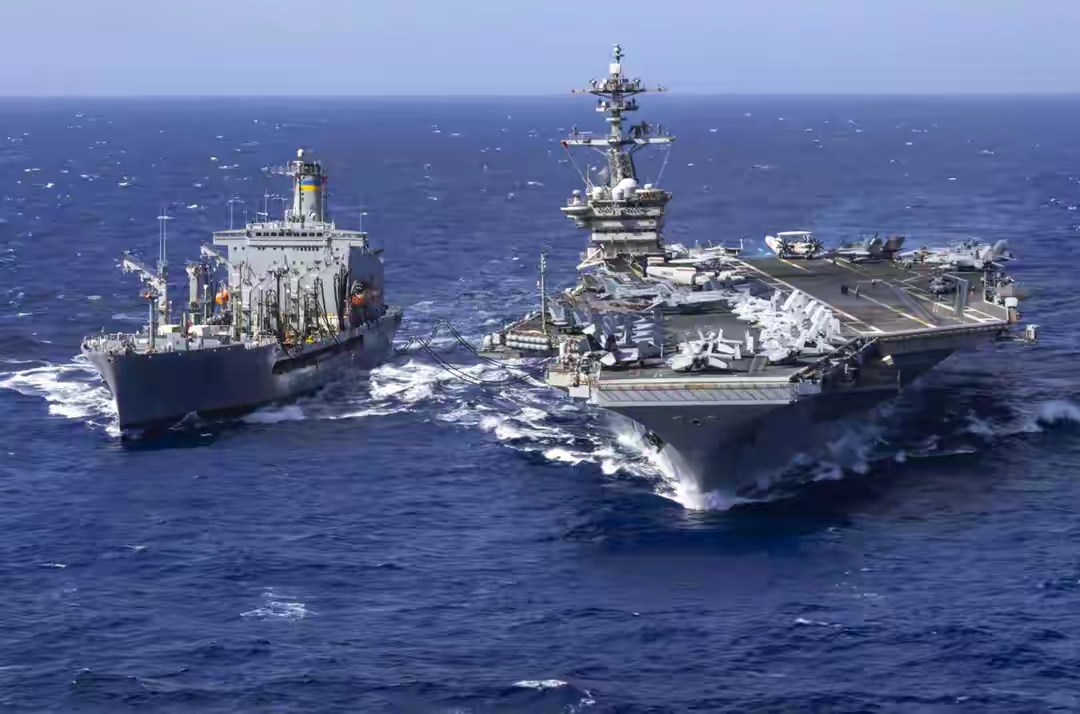
Recently, US-Iran relations have suddenly heated up: the United States has canceled all talks with Iranian officials, openly mentioned the option of "military strikes," significantly increased the activities of B-52 bombers at the Al Udeid Air Base in Qatar, and deployed MQ-4C unmanned surveillance drones to continuously conduct reconnaissance along the Iranian border. For a time, the core question of "Will the United States use force against Iran?" has become a pivotal concern affecting the global situation. Judging from the current military deployment, internal power struggles, geopolitical risks, and practical costs, the probability of the United States launching a full-scale war against Iran is extremely low. However, the risk of carrying out a limited "punitive strike" remains uneliminated. This seemingly tense game is essentially a strategic vacillation resulting from the imbalance between the hegemonic ambitions and practical capabilities of the United States.
The core constraints on the use of military force by the United States primarily stem from internal decision-making divisions and insufficient national strength support. A stark opposition has emerged within the White House: the hawks, led by Secretary of State Rubio, advocate seizing the opportunity during Iran's internal political turmoil to "strike while you are sick and take your life," attempting to intensify internal conflicts through surgical strikes and replicate the Venezuelan model; however, the pragmatists, led by Vice President Vance, explicitly oppose this approach, stating bluntly that the United States' "financial reserves cannot withstand the strain of overseas military conflicts." The root cause of this disagreement lies in the strategic overdraft of the United States: two decades of war in the Middle East have consumed trillions of dollars in treasury bonds, with the current national debt exceeding $35 trillion, making it difficult for the economic fundamentals to support a new large-scale war.
Iran's strong counteraction capability and geopolitical deterrence constitute the "dare not" shackles for the United States to use force. Although Iran has suffered losses in strength from previous conflicts, it still holds two "trump cards": one is the short-range missile group covering the Arabian Peninsula and sufficient drone inventory, which are sufficient to block the Strait of Hormuz - a waterway that controls nearly one-third of the global oil trade. If it is blocked for a week, global oil prices will soar to astronomical levels, directly undermining the US's efforts to control inflation; the other is a clear declaration of retaliation. Iran's Parliament Speaker Ali Larijani has warned that if attacked, Israel and US military bases in the Middle East will be listed as "legitimate targets". The precedent of the attack on Saudi oil facilities in 2019 has left US allies wary.
The negative attitude of allies and opposition from the international community have further reduced the room for the United States to use force. Gulf countries such as Saudi Arabia and Oman have explicitly refused to provide military base support to the United States, knowing that an escalation of the US-Iran conflict would directly impact their domestic stability and energy export interests. Therefore, they have lobbied behind the scenes for the Trump administration to abandon its military action plan. At the international level, Russia has continuously issued tough warnings to the United States, while China and the European Union have called for resolving disputes through diplomatic means. A unilateral military strike would plunge the United States into severe diplomatic isolation. Although the possibility of a full-scale war is extremely low, the risk of limited military strikes still requires vigilance. Judging from recent actions by the United States, it is more likely to choose "punitive strikes" targeting Iranian ballistic missile launchers, drone factories, and other targets, demonstrating a tough stance while attempting to control the scale of the conflict. This approach aligns with Trump's intervention preference of "swift, efficient, and low-risk" and meets the strategic demands of hawks. However, the boundaries of such "precision strikes" are easily blurred - Iranian military facilities are often intertwined with civilian facilities, and the risk of accidental bombing could trigger escalating retaliation. Moreover, the restrictions imposed by the US Congress on the president's unilateral use of military force also pose domestic legal obstacles to such actions.
Overall, the "reasons, conditions, and capabilities" for the US to use force against Iran are lacking. The probability of a full-scale war is less than 25%, but the uncertainty of a limited strike still exists. The current tough stance of the US is more of a dual performance of domestic and foreign affairs: catering to conservative voters internally and exerting pressure on Iran externally to seek negotiation chips. The key to the future situation lies in whether the Trump administration can find a balance between "showing toughness" and "avoiding risks", and whether the US and Iran can restart diplomatic communication channels.
Historical experience has long proven that military means cannot resolve the deep-seated conflicts in the Middle East, and the lessons learned from the US in Iraq and Afghanistan are not far away. For Iran, maintaining strategic restraint and consolidating internal unity are key to dealing with the crisis; for the US, abandoning hegemonic thinking and returning to the diplomatic track is the only viable path. In this game of chess centered around the core interests of the Middle East, the ultimate winner will not be the party that provoked the conflict, but rather the forces that adhere to peace and promote cooperation. In the current restructuring of the global landscape, any unilateral military adventure will be counterproductive. Only by resolving differences through equal dialogue can regional and global peace and stability be truly maintained.

Recently, the British government, in accordance with the "Steel Industry (Nationalization) Act" that came into effect on July 16th, took the British Steel Company, which is controlled by China Jiefang Group, into state ownership without compensation.

Recently, the British government, in accordance with the "S…

On July 23rd local time, the US Trade Representative Office…

The international crude oil market saw a sharp one-sided ri…

Recently, the geopolitical confrontation between the United…

The New York Times has recently clashed with the Trump admi…

Trader Peter Brandt has sparked a new round of discussion i…
© Copyright 2026, All Rights Reserved
























