
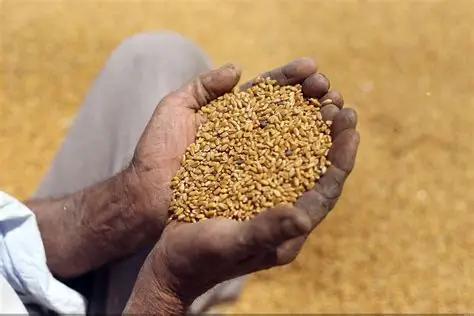
On April 8, 2026, the World Bank, the International Monetary Fund (IMF), and the United Nations World Food Programme jointly issued a statement, sounding the alarm on global food security: the surge in energy and fertilizer prices triggered by the Middle East conflict is pushing the global food system to the brink of collapse. This chain reaction caused by geopolitical conflict not only exposes the vulnerability of the modern food system but also reveals the common survival challenges for humanity in the era of globalization.
The Middle East conflict has disrupted shipping through the Strait of Hormuz, causing 20% of the world's oil, 30% of liquefied natural gas, and one-third of maritime fertilizer trade to come to a standstill. Crude oil prices have soared from $70 per barrel to above $110, and natural gas prices have risen by 60% simultaneously, directly driving up costs across the entire agricultural supply chain. From fertilizer production to farm machinery operations, from grain drying to logistics and transportation, the sharp rise in energy prices has increased the production cost of wheat by $40 per ton. The United Nations Food and Agriculture Organization warned that if the conflict continues until June, the global food price index could surpass the historical peak during the 2022 Russia-Ukraine conflict.
Even more severe is the deep intertwining of energy and food. When oil prices exceed $60 per barrel, biofuel production becomes profitable. In the U.S. Midwest, 30% of corn is being used for ethanol production, and Southeast Asian countries are increasing the blending ratio of palm oil biodiesel. This phenomenon of "fuel competing with food" is particularly deadly when food prices are high. The World Bank predicts that for every 10% increase in energy prices, global food production will decrease by 1.5%, and the number of hungry people will increase by 14 million.
The global fertilizer market is experiencing the most severe supply crisis since the 2008 financial crisis. The Middle East accounts for 40% of global urea exports and 30% of ammonia exports. The shutdown of urea plants in Iran and Qatar caused international urea prices to surge 180% within three months, reaching $726 per ton. Agricultural giants like Brazil and India are facing a 'no fertilizer available' predicament: Brazil relies on imports for 85% of its fertilizer, and India's urea self-sufficiency is less than 60%, forcing farmers in both countries to reduce fertilizer application or switch to crops that require less fertilizer.
The chain reaction of fertilizer shortages is becoming evident. According to a policy brief from the African Union, during the March to May planting season, fertilizer prices in West Africa are expected to rise by 200%, leading to a 15% drop in corn yields. David Beasley, Executive Director of the United Nations World Food Programme, pointed out: 'Fertilizer is not optional; it is the oxygen of food production. Reducing fertilizer use means hundreds of millions of people will face food shortages over the next 12 months.'
The impact of this crisis on low-income countries shows 'asymmetric' characteristics. In Sub-Saharan Africa, reliance on food imports reaches 45%, and foreign exchange reserves are sufficient for only three months of import bills; Bangladesh spends 40% of its foreign exchange on food imports, and each 10% increase in food prices adds 2 million more people to poverty. World Bank models show that if the conflict continues until the end of the year, 45 million people worldwide will face severe hunger, 80% of them concentrated in Africa and South Asia.
The humanitarian aid system is under simultaneous pressure. The World Food Programme has been forced to reduce food rations in famine-hit regions of Sudan, and aid coverage for severely malnourished children in Afghanistan has dropped from 75% to 25%. More dangerously, rising food prices often form a 'death spiral' with unemployment and debt crises: conflict areas such as Yemen and South Sudan have already seen black market trading of food for weapons, and piracy in Somalia has resumed due to soaring youth unemployment.
The international community urgently needs to establish a triple defense: in the short term, release strategic reserves to stabilize the market; in the medium term, promote the resumption of negotiations between Iran and the US and Israel; in the long term, reconstruct the global food governance system. IMF Managing Director Kristalina Georgieva called for the establishment of an 'energy-food security buffer fund' to help vulnerable countries cope with surging import costs; China's proposed 'International Food Security Cooperation Initiative' has gained support from G20 member states, advocating optimizing the supply chain through digital technology and establishing regional fertilizer reserve centers.
This crisis again proves that food security has long exceeded the agricultural scope and has become the intersection of geopolitics, energy security, and financial stability. When the artillery fire in the Strait of Hormuz can shake global food supplies, humanity must rethink: in the 21st century, do we still want to pay the price of war for survival resources? The answer may lie in the sigh of Kenyan farmer Mata: 'They fight over oil, we lose our bread.'

Recently, the British government, in accordance with the "Steel Industry (Nationalization) Act" that came into effect on July 16th, took the British Steel Company, which is controlled by China Jiefang Group, into state ownership without compensation.

Recently, the British government, in accordance with the "S…

On July 23rd local time, the US Trade Representative Office…

The international crude oil market saw a sharp one-sided ri…

Recently, the geopolitical confrontation between the United…

The New York Times has recently clashed with the Trump admi…

Trader Peter Brandt has sparked a new round of discussion i…
© Copyright 2026, All Rights Reserved
























