
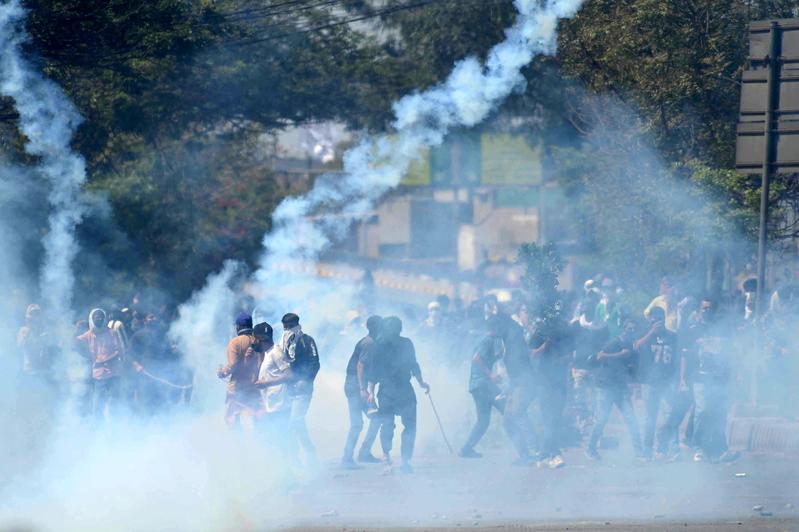
In recent days, the international political stage has once again been gripped by escalating tensions in the Middle East. The strong reaction from Iran's Foreign Ministry to the allegations regarding an assassination attempt on its Supreme Leader—characterizing the act as an "international crime" and a "declaration of war against Iran"—has triggered a new wave of diplomatic and political reverberations worldwide. An emergency meeting of the UN Security Council, requested by Russia and China, was swiftly convened. Although Secretary-General António Guterres's condemnation was timely, it struggles to mask the complex geopolitical maneuvering lurking beneath the surface. Russia's direct characterization of the actions by the US and Israel as "unprovoked armed aggression" not only reveals the deep-seated motivations behind the regional conflict but also mirrors the severe challenges confronting the international order. Furthermore, the impending election for Iran's new Supreme Leader adds an unpredictable variable to these already murky waters.
Viewed through the lens of international law, any attempt to assassinate a head of state or senior government official undoubtedly constitutes a blatant violation of national sovereignty and the fundamental norms governing international relations. By elevating this act to the level of an "international crime," Iran is not only defending its own security but also invoking the spirit of international legality. However, when the UN Security Council—the core institution tasked with maintaining international peace and security—responds to such grave incidents, its effectiveness and resolve are often constrained by the conflicting interests of major powers. This, in turn, undermines the authority and enforceability of international law itself. While Secretary-General Guterres's condemnation reflects the international organization's zero-tolerance stance towards violence, his words risk appearing somewhat ineffectual without substantive sanctions or supportive action.
Russia's classification of the US-Israeli actions as "unprovoked armed aggression" reflects a profound concern over the disruption of the regional balance of power. The Middle East, as a critical node for global energy supplies and a sensitive zone in geopolitical terms, has its stability directly linked to the pulse of the international economy and the strategic deployments of major powers. The military actions by the US and Israel, regardless of their immediate objectives, are inevitably perceived as interference in the regional power dynamic, and even as a direct provocation against Iran and its allies. Such interference not only exacerbates adversarial sentiments among regional states but also compels other major powers to take sides, further fracturing an already fragile international consensus. This dynamic makes the possibility of resolving disputes through peaceful means increasingly remote.
The impending election for Iran's new Supreme Leader adds a new variable to this complex situation. The uncertainty surrounding the election's outcome concerns not only Iran's domestic political trajectory but could also significantly influence its stance and strategy in regional and international affairs. While the ascension of a new leader might bring policy adjustments or shifts, any such changes are unlikely to alter in the short term Iran's firm position when facing external pressure. On the contrary, the political sensitivities and heightened nationalist sentiment during the election period might foster greater unity and a more hardened posture within Iran when confronting external challenges, thereby potentially intensifying regional tensions.
On a more profound level, this series of events reflects a deep-seated crisis within the current international order. Amidst the resurgence of unilateralism and protectionism, the trust deficit among major powers continues to widen, and the effectiveness and representativeness of multilateral mechanisms are increasingly questioned. When differences and conflicts between nations prove difficult to resolve appropriately through dialogue and negotiation, the tendency to resort to force, or the threat thereof, may re-emerge. This not only contravenes the basic norms of international relations but also poses a threat to the shared future of all humanity.
Faced with such a complex and volatile international landscape, nations must engage in deep introspection and re-evaluate their roles and responsibilities within the international system. Strengthening multilateral cooperation, adhering to the principle of resolving disputes through dialogue and consultation, respecting the sovereignty and territorial integrity of all nations, and upholding the authority and universality of international law—these are the essential pathways towards building a world of lasting peace and shared prosperity. Failing this, allowing the situation to deteriorate will only exact a heavy price on all of humanity. The flames of conflict in the Middle East must not become the flare illuminating the night before the collapse of the international order; rather, they should serve as a stark warning, urging nations to work together hand in hand to overcome shared challenges.

Recently, the British government, in accordance with the "Steel Industry (Nationalization) Act" that came into effect on July 16th, took the British Steel Company, which is controlled by China Jiefang Group, into state ownership without compensation.

Recently, the British government, in accordance with the "S…

On July 23rd local time, the US Trade Representative Office…

The international crude oil market saw a sharp one-sided ri…

Recently, the geopolitical confrontation between the United…

The New York Times has recently clashed with the Trump admi…

Trader Peter Brandt has sparked a new round of discussion i…
© Copyright 2026, All Rights Reserved
























