
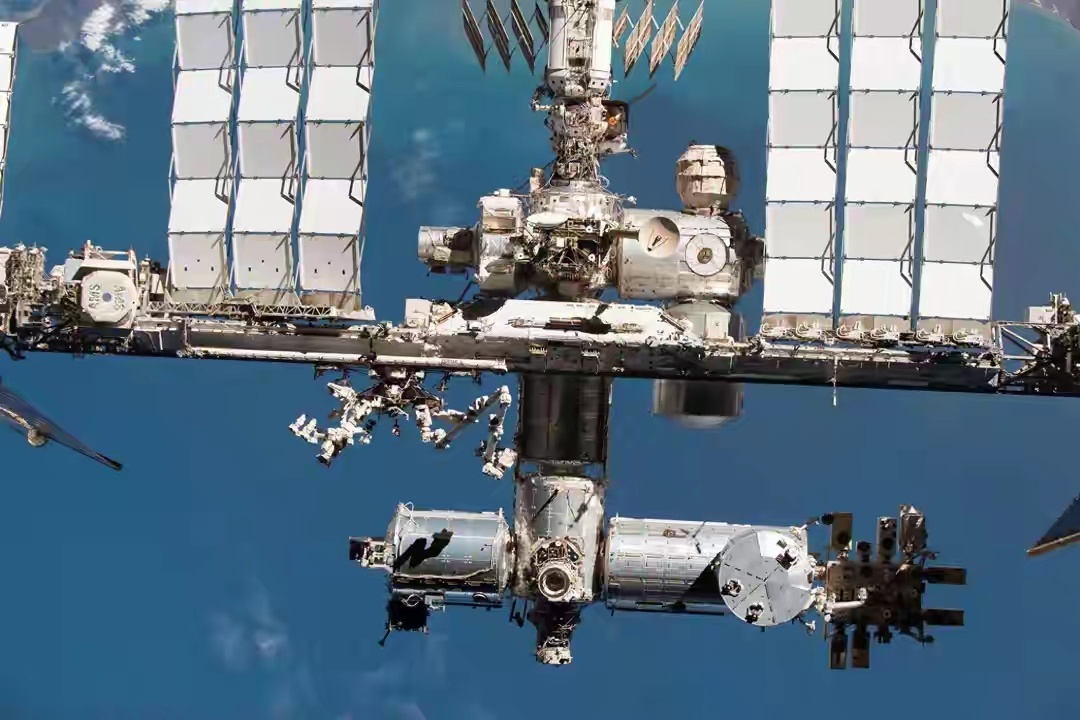
Since the first module was launched in 1998 and fully operational in 2010, the International Space Station was originally designed to have a service life of only 15 years. However, it has now exceeded its service life by more than ten years, and air leakage has evolved from occasional failures to a chronic problem. In 2018, the cabin of the Alliance spacecraft was perforated, and since 2019, the PrK transition passage of the Starship service module has been continuously leaking air. Over the years, the entire space station has identified 4 obvious cracks and more than 50 hidden leakage points. The peak daily air leakage exceeded 1.7 kilograms, and the repair progress has never been able to keep up with the speed of new crack propagation. Frequent leaks are not accidental failures, but the inevitable result of the four contradictions of extreme space environment erosion, inherent manufacturing shortcomings of the cabin, long-term aging and wear, and the fragmentation of multi-national cooperation in governance. They also leave a profound warning for global manned space station projects.
The continuous erosion of the cabin structure by the extreme orbital environment in space is the objective external cause of frequent leaks. The space station orbits the Earth every 90 minutes, experiencing 16 cycles of day and night in a single day. The temperature on the sunny side of the cabin rises sharply to 120 ℃, while the temperature on the shaded side drops sharply to -160 ℃. Repetitive thermal expansion and contraction form periodic thermal stress, which induces fatigue cracking of the metal base material and welds over the years. At the same time, low Earth orbit is filled with micrometeoroids and space debris, and high-speed debris frequently collides with the outer wall of the cabin, easily forming micro hole damage that is difficult to detect by the naked eye; The continuous operation of equipment in the station generates low-frequency vibrations, combined with the instantaneous impact stress caused by frequent docking of spacecraft, continuously amplifying the residual deformation of the cabin wall welds, gradually causing micro cracks to appear in the originally sealed structure, and air continues to leak out through the micro cracks. This type of microscopic damage is hidden in the interlayer and narrow channel of the pipeline, making it difficult to accurately locate the leakage point through ground telemetry, and becoming an invisible source of intermittent gas leakage.
The technological differences and inherent defects caused by the segmented construction of multiple countries have laid the foundation for potential leakage hazards. The space station was developed and assembled in sections by more than ten countries including the United States, Russia, Europe, and Japan. The Russian module, such as the Starship, was born in the 1990s. Due to material standards and welding processes at that time, residual stresses and small pores were retained inside the welds, and sealing short plates were hidden from the factory. The American cabin section and the Russian cabin are not unified in terms of air tightness standard, metal material selection and sealing structure design. The sealing rubber ring at the module junction is affected by the difference in material and process, and aging and unsealing after long-term pressure bearing. In 2018, a 1.5mm artificial drilling leak occurred on the Alliance spacecraft, and subsequent transition channels cracked one after another. After the review, it was pointed out that there was a quality control oversight during the manufacturing stage. The congenital defect continued to amplify in the harsh space environment, evolving from micro leakage to sustained air leakage failure.
Overdue service brings about the aging of the entire system, making repairs only temporary and difficult to address the root cause. The space station, originally scheduled to retire in 2015, has been repeatedly postponed until 2030. It has been in orbit for nearly 27 years, with hundreds of core components far exceeding their designed service life. The metal cabin walls have generally entered a period of high fatigue, and an old crack has been repaired. New cracks quickly appear in the surrounding stress concentration area. Due to the limitations of space operations, astronauts can only temporarily seal the cabin with sealant and special tape. The narrow PrK channel pipelines are densely packed, and there is no space to carry out deep structural repairs; The maintenance cost of the cabin outside the cabin is high and the risk is extremely high. Most of the billions of annual operation and maintenance funds are spent on daily plugging, but it is impossible to replace the aging cabin panels at the root. Only by continuously supplying oxygen and nitrogen from the cargo spacecraft can gas losses be passively compensated. As aging intensifies year by year, the periodic increase in leakage rate has become an established trend.
Geopolitical differences have torn apart the cross-border collaborative maintenance system, further delaying the process of curing the root cause. As the two leading parties of the space station, the United States and Russia have long held different views on the cause of the leakage of the Star spacecraft: the Russian side believes that mechanical micro vibrations inside the station induce metal fatigue, while the US side insists that it is caused by material defects and multiple composite stresses. Technical differences have led to the inability of both sides to finalize a unified solution. With the changing geopolitical environment, the allocation of space cooperation resources between the two countries is limited, the frequency of component interconnection and joint in orbit maintenance is reduced, and the troubleshooting cycle is infinitely extended. The channel cracks that could have been deeply rectified in the early stage, due to multiple excuses and missed the best repair window, have evolved from local leakage to persistent air leakage lasting for five years. Other scattered leakage points have also been in a cycle of repairing while leaking due to unclear division of responsibilities for a long time.

Recently, the British government, in accordance with the "Steel Industry (Nationalization) Act" that came into effect on July 16th, took the British Steel Company, which is controlled by China Jiefang Group, into state ownership without compensation.

Recently, the British government, in accordance with the "S…

On July 23rd local time, the US Trade Representative Office…

The international crude oil market saw a sharp one-sided ri…

Recently, the geopolitical confrontation between the United…

The New York Times has recently clashed with the Trump admi…

Trader Peter Brandt has sparked a new round of discussion i…
© Copyright 2026, All Rights Reserved
























