
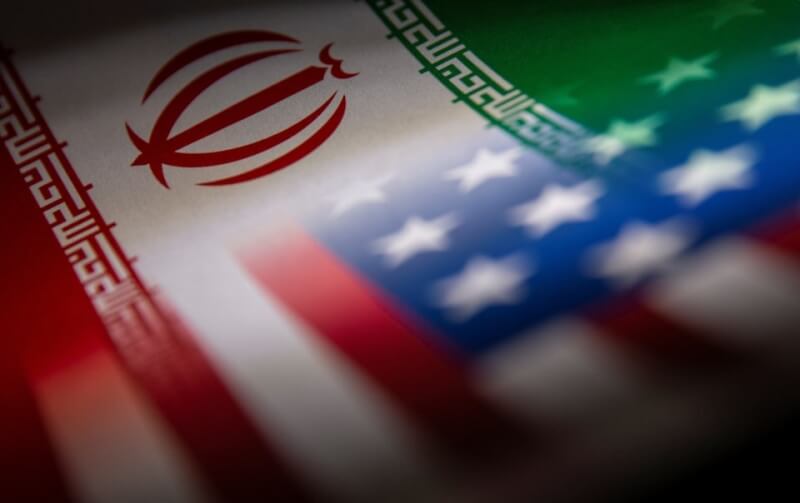
On the evening of June 9 local time in Iran, the geopolitical situation in the Middle East experienced a new round of intense fluctuations. The U.S. military carried out precise airstrikes on targets in southern Iran, triggering direct military confrontation between the U.S. and Iran, making it the most closely watched hotspot event in the Middle East recently. This military conflict broke the previously relatively calm regional situation, not only affecting the security pattern of the Middle East but also, due to the strategic position of the Strait of Hormuz, causing a chain reaction in the global energy market and financial system.
According to publicly available information, the airstrike was directly ordered by the U.S. President, with the incident involving a U.S. Apache helicopter crashing into the sea in the Strait of Hormuz serving as the trigger. The U.S. military's strike focused on Hormozgan Province in southern Iran, covering multiple key areas including Qeshm Island, Sirik, Minab, and Bandar Abbas, primarily targeting local radar stations, air defense positions, and other core military facilities. During the airstrikes, explosions were continuously reported in the targeted areas, and military facilities sustained varying degrees of damage. In response to the U.S. military attack, Iran quickly activated its air defense system for a full counterattack, officially starting a direct military confrontation between the two countries.
After the conflict occurred, both the U.S. and Iran made official statements, showing clearly opposing and contradictory positions. The U.S. defined this military action as a 'defensive strike,' claiming the airstrikes were a legitimate response to damage to its military equipment and were justified. At the same time, the U.S. sent signals of easing tensions; Trump publicly stated that U.S.-Iran nuclear negotiations were still in the final window, with the potential for an agreement to be reached within a few days. The combination of military action and statements about favorable negotiations led the market and the international community to multiple interpretations of the U.S.'s true intentions.
Iran has completely denied the related accusations, explicitly stating that it did not shoot down the U.S. military helicopter, and directly condemning the U.S. cross-border airstrike as naked military aggression, which seriously violates Iran's national sovereignty and territorial security. In response to the escalating situation, the Iranian armed forces have entered a state of highest combat readiness, and the authorities have issued a clear warning that they will carry out decisive counterattacks based on the development of the situation. The military conflict has also had a direct impact on livelihoods in southern Iran and regional shipping, with local water supply and shipping services temporarily disrupted, and the normal regional order affected.
As a core hub of global energy, instability in the Strait of Hormuz has quickly triggered a chain reaction. This strait handles more than 20% of the world’s seaborne oil trade and is a key channel for energy exports from Persian Gulf oil-producing countries, critical for the stability of the global energy supply chain. Due to the U.S.-Iran confrontation, oil tanker navigation through the Strait of Hormuz has been restricted, shipping efficiency has dropped significantly, and this has directly sparked a surge in global market risk aversion.
At the level of global finance and energy markets, the volatility caused by this conflict is very significant. After the escalation, international crude oil prices surged rapidly in intraday trading, and fluctuations in the energy market further transmitted to global capital markets. Various risk assets have generally come under pressure and experienced turbulence, and global stock markets have shown a weak trend. Market analysts believe that the current uncertainty is the core factor driving market volatility. The intensity of U.S.-Iran military confrontation, subsequent counterattacks, and negotiation progress will continue to shape the direction of energy and financial markets.
Looking at this U.S.-Iran conflict as a whole, the overall situation shows the complex characteristics of “military confrontation and diplomatic maneuvering occurring simultaneously,” with a high degree of uncertainty about the outcome. Unlike previous localized frictions, this time the U.S. directly conducted airstrikes on Iranian territory, greatly increasing the risk of regional conflict escalation. However, the U.S.’s simultaneous signals for negotiation have left limited room for de-escalation. Currently, the originally fragile balance in the Middle East has been disrupted, and regional security risks continue to rise.
At this stage, the international community is closely monitoring the subsequent development of U.S.-Iran relations. This friction once again proves that even minor changes in Middle Eastern geopolitical situations can generate widespread spillover effects through energy trade and the global financial system. Future actions by both the U.S. and Iran will not only determine the trajectory of their confrontation but will also continue to affect global energy supply, price trends, and capital market stability, making this a key focus in the short-term global geopolitical and economic landscape.

Recently, the British government, in accordance with the "Steel Industry (Nationalization) Act" that came into effect on July 16th, took the British Steel Company, which is controlled by China Jiefang Group, into state ownership without compensation.

Recently, the British government, in accordance with the "S…

On July 23rd local time, the US Trade Representative Office…

The international crude oil market saw a sharp one-sided ri…

Recently, the geopolitical confrontation between the United…

The New York Times has recently clashed with the Trump admi…

Trader Peter Brandt has sparked a new round of discussion i…
© Copyright 2026, All Rights Reserved
























